Renewable Energy
 Geothermal Energy
Geothermal energy is literally the heat of the earth. This energy source uses the heat that is present below the surface of the earth for heating or for power applications.
Globally, about 16 GW of geothermal power generation capacity was available at the end of 2020, present mainly in about ten countries that have significant geothermal activities required for geothermal power plants - USA, Indonesia, Philippines, Turkey and New Zealand make up the top 5 in installed capacity. Geothermal heating through geothermal heat pumps is being used by many more countries worldwide.
First geothermal power generation and geothermal heating are fairly well-established technologies. The second and subsequent generations of geothermal power generation - using concepts such as enhanced geothermal and submarine geothermal - are still not fully commercialized.
Geothermal power generation requires the presence of hot springs or regions that have significant geothermal activity. As a result, large-scale geothermal power generation is likely to be restricted to a few countries for the 2020-2030 period. Geothermal heating however can become far more widespread, and for the following reason. The layer below the earth’s surface is at a constant temperature throughout the year - thus it is hotter than the surface during winter and colder during summer. Geothermal heating (and cooling) is thus feasible for most regions in the world.
Geothermal heating systems have few disadvantages except for the digging up work needed in the vicinity of implementation. In addition to the lack of exploitable sites, geothermal power plants have however faced other challenges in the form of the environmental hazards such as gaseous emissions, and contamination of aquifers in the vicinity. The next gen geothermal plants use processes for fracturing rocks (similar to processes used for shale oil or gas) and thus carry environmental and geological hazards some of which have not been fully understood yet.
Innovations in geothermal (both power and heat) for the 2020-2030 period will likely be in the domains of heat well design, innovations in various geothermal drilling and power generation equipment, ground water source geothermal heating, and use of digital and data driven systems for geothermal power generation optimization. During this period, the development of binary cycle power plants and improvements in drilling and extraction technology may enable enhanced geothermal systems over a much greater geographical range. Enhanced geothermal demonstration projects are operational in countries like Germany, France, Australia and the US.
Geothermal power currently has a relatively low installed capacity compared to those of solar power and wind power - about 15 GW at the end of 2020. Given that geothermal power plants can only be installed at selective locations, the total potential for geothermal power generation with the conventional technologies is estimated to be only about 80 GW. This potential could increase significantly if developers are able to tap into high geothermal heat at many other locations worldwide using next generation technologies. Estimates however suggest that geothermal has the potential to reach about 1400 TWh of electricity by 2050, from about 120 TWh they currently provide.
Of equal interest - or perhaps is geothermal heating, using heat pumps. From the current energy generation of about 280 TWh per year, it is expected to increase to 1600 TWh per year by 2050 under growth conditions.
With the above 2050 estimates as benchmarks, geothermal heat and power can save a total of 1.2 billion CO2 emissions per annum.
 |
Product Groundwater-sourced geothermal technology |
 |
Technology / Process Thermal aquifer technology |
 |
VALUES Unlike conventional geothermal, which circulates ground heat found far below the surface, the approach taps into aquifers using fewer, shallower wells |
 |
HIGHLIGHTS Cuts energy consumption and carbon emissions by 60% to 80% when compared to natural gas on both the heating and cooling side. |
 |
Online resources Website | LinkedIn |
 |
Keywords Ground water geothermal system | Hydrogeology for sustainable heating and cooling | |
 |
Videos |
|
|
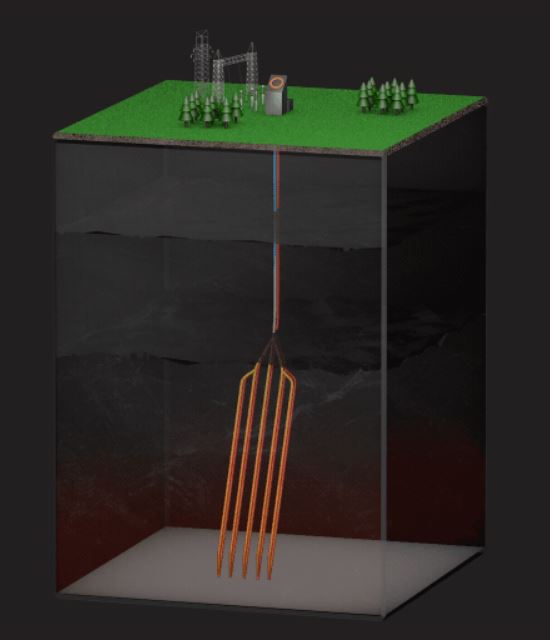
Product Eavor-Loop is a closed-loop geothermal energy extraction system. |
|
Technology / Process Closed-loop geothermal system |
|
|
VALUES
|
 |
TEAM |
|
|
HIGHLIGHTS As a closed-loop system that operates in complete isolation from surrounding environment, the system requires no fracking, produces no GHG emissions, poses no earthquake threats. |
|
Online resources Website | LinkedIn | YouTube | | Twitter |
|
|
Keywords Closed loop geothermal system | Environmental risk-free geothermal system | geothermal for commercial heating applications | |
|
Videos |
|
|
Product Modular geothermal panel-like technology |
|
Technology / Process Ground source heat pumps, energy geostructure, Soil mechanics |
|
|
VALUES
|
|
|
TEAM |
|
|
HIGHLIGHTS It is designed to make maximum use of underground walls and exploit a natural, sustainable resource in places where it would otherwise go untapped. |
|
Online resources Website | LinkedIn | YouTube | | Twitter |
|
|
Keywords Ground source heat pumps | Architecturally integrated geothermal technology | |
|
Videos |
|
|
Product Geothermal power projects developer |
|
Technology / Process Horizontal drilling, distributed fibre optic sensing and advanced computational modelling |
|
|
VALUES Use novel techniques, including horizontal drilling, distributed fibre optic sensing and advanced computational modelling, to deliver more repeatable and cost effective geothermal electricity |
|
|
TEAM |
|
|
HIGHLIGHTS Technology leverages over a decade of innovation in drilling and production from the shale sector |
|
Online resources Website | LinkedIn | | Twitter |
|
|
Keywords Horizontal drilling technology | Data-driven geothermal system | Geothermal fracking technology | |
|
Videos Energy source innovation stream with Fervo Energy: accelerating geothermal energy development |
|
|
Product GreenLoop™ technology - a closed-loop energy system that can access the deep regions of hot, dry rock where most geothermal resources reside |
|
Technology / Process Closed loop geothermal production technique |
|
|
VALUES
|
|
|
HIGHLIGHTS GreenLoop is a better solution than batteries to deal with the intermittency and unpredictability of wind and solar energy. |
|
Online resources Website | LinkedIn | | Twitter |
|
|
Keywords Low risk geothermal system | Advanced well modelling system | |
|
Videos The GreenLoop: Geothermal Energy | Andy Van Horn | 2021 WSGS |
|
|
Product Geothermal equipments - expanding well head valves for high-pressure geothermal wells |
|
Technology / Process Expanding valve design |
|
|
VALUES Equipment specifically designed to operate under high temperature & severe conditions, including wellhead temperatures above 250°C and corrosive media |
|
|
HIGHLIGHTS The expanding gate valve has been previously failing in operation, generating high risk, operational costs and revenue losses. |
|
Online resources Website | LinkedIn | | Twitter |
|
|
Keywords Valves for geothermal wells | Expanding gate valves | |
|
Videos Loki Geothermal - Startup Energy Reykjavik Investor Day 2015 |
|
|
Product Medium-deep geothermal heat wells |
|
Technology / Process Heat well technology |
|
|
VALUES Up to 95% reductions in real estate heating emissions compared to traditional district heating |
|
|
TEAM |
|
|
HIGHLIGHTS The wells at 2000-3000 metres depth produce more energy than conventional geothermal |
|
Online resources Website | LinkedIn | | Twitter |
|
|
Keywords Geothermal heat wells | Zero carbon district heating and cooling solutions | |
|
|
Product Supercritical CO2 turbine Geothermal modelling tool GeoTwin |
|
Technology / Process Downward oriented fracturing Heat cycle technology |
|
|
VALUES Supercritical CO2 turbine to double the amount of electricity that can be created from the geothermal heat. Lower temperatures (100 to 250°C) at depths of 3 to 6 km targeted for low cost energy |
|
|
TEAM |
|
|
HIGHLIGHTS Accurate estimate of the amount of geothermal power that can be generated based on numerous conditions including geology, well configurations, power plant efficiencies. |
|
Online resources Website | LinkedIn | YouTube | | Twitter |
|
|
Keywords Geothermal modelling | Single Well EGS system | Geothermal Battery storage | |
|
Videos |
|
|
Product Fluid Hammer Operating System (FHOS) technology - Drilling technology for geothermal power |
|
Technology / Process Closed loop system |
|
|
VALUES
|
|
|
HIGHLIGHTS Addresses geology issues– for example, geothermal has historically only been viable in shallow access regions such as Iceland and Costa Rica, due to prohibitively high drilling costs. |
|
Online resources Website | LinkedIn | YouTube | | Twitter |
|
|
Keywords Low cost drilling technology | fracking-free geothermal power | |
|
Videos Strada Global: Testing our patented Fluid Hammer Operating System (FHOS) |
|
|
Product Geothermal heating using a water loop system |
|
Technology / Process Geothermal heating |
|
|
VALUES High coefficient of performance, as high as 7 for a water based heat pump |
|
|
TEAM |
|
|
HIGHLIGHTS
|
|
Online resources Website | LinkedIn | | Twitter |
|
|
Keywords Integrated geothermal system | Centralized energy infrastructure | |
 Hydro Power
Hydropower is the oldest source of electricity, with the world’s first commercial power plant powered by hydro started operating in Wisconsin, USA in 1882. (The world’s first coal power plant started operations in 1890).
While hydro power brings to mind large dams and massive turbines, there are also smaller versions of hydro power plants, those that operate at less than 10 MW, and today there are select regions where even micro and pico hydro power plants are running, with capacities at less than 10 kW! However, the lion’s share of hydro power installed capacity and generation are from large hydro power plants, some of which run to over 1000 MW, with China’s Three Gorges Hydro power project having a massive capacity of 22,500 MW.
Globally, hydro power has a massive 1.3 TW (1300 GW) of installed capacity, with well over 90% of this contributed by large hydro power. Small hydro power plants contribute about 80 GW global capacity. Hydro power generates about 4500 TWh of power every year, about 17% of total power generated from all sources making it the largest renewable source of power, by far.
Most forms of hydro power plants are well established technologies including small and micro hydro power generation. The only prominent sector of terrestrial hydro power generation that is still evolving is hydrokinetic power generation, which relies on generating power from the flow of water (kinetic) rather than the fall of water (potential). If one were to consider ocean-based power generation too under hydro power, almost all ocean-based power sources - tidal, wave, ocean thermal and osmotic - contribute very little to the overall power production currently and technologies for some of them like wave, ocean thermal and osmotic pressure based power generation are still evolving.
150 countries worldwide produce electricity from hydropower, though the extent of use varies significantly between these countries. For hydro power to contribute significantly to a country’s electricity needs, the region needs to have certain geographical characteristics. In addition to the presence of water flows, they also need appropriate geological features such as a fall of water from a reasonable height for run-of-river hydro or locations where large dams can be constructed for reservoir-based hydro power. Micro and pico hydro projects need to have small rivulets running in the neighbourhood.
Hydro power is renewable, is low cost, and can provide power at reasonably high capacity factors, up to about 60%. The key challenge with hydro power, especially large hydro power, is the environmental harm and social displacements resulting from large reservoir construction. Such negative consequences have resulted in opposition from both environmentalists and social activists, leading to long lead times for all types of hydro power projects - small or large.
Innovations in terrestrial hydro power in the 2020-2030 period are likely in modular hydropower systems, run of river and damless hydro electric projects, hydrokinetics, small hydroelectric turbines, more efficient turbines and in the use of digital technologies to increase operational efficiencies and more effective maintenance of hydro power plants. Ocean-based hydro projects - especially wave & tidal projects - are also likely to witness significant innovations and explorations, though these are likely to be confined to select geographies.
The carbon footprint of hydropower plants is a bit contentious. While many studies put the CO2 emissions at about 25 g CO2eq/kWh, there are others that give higher estimates. Some studies also suggest that there are significant CH4 emissions from hydro power operations as a result of organic matter decay in anaerobic conditions in the reservoirs.
Taking a conservative approach and assuming the total hydro power carbon footprint to be about half that of natural power generation (about 150 g/kWh), a 1.3 TW of installed capacity that supplies about 17% of total global electricity consumption of about 27,000 TWh implies savings of about 2.5 billion tons of CO2 emissions per annum when compared to conventional thermal power (coal and natural gas) - effectively, every kW of hydro power installed can offset about 2 tons of CO2 per annum.
|
|
Product The Kinetic Keel™ - tidal energy exploration technology. |
|
Technology / Process Water acceleration technology |
|
|
VALUES The technology does not use any type of electrical components and does not attach equipment to the seafloor. |
|
|
TEAM |
|
|
HIGHLIGHTS Has been awarded its second contract with Canadian province of Nova Scotia, which will see it provide 4MW of tidal energy, after an open competition. |
|
Online resources Website | LinkedIn | | Twitter |
|
|
Keywords Tidal energy exploration | |
|
|
Product Portable power plant that generates clean, reliable electricity for riverside communities |
|
Technology / Process PAX Rotor, an IP-protected design based on biomimicry |
|
|
VALUES Easy to use micro hydro device with only 6 main components – most of which are off-the-shelf |
|
|
TEAM |
|
|
HIGHLIGHTS The configuration allows for the generator and power electronics to be housed above the water, reducing costs while improving reliability |
|
Online resources Website | LinkedIn | YouTube |
|
|
Keywords Portable power plant for riverside communities | |
|
Videos |
|
|
Product Small-scale modular hydropower |
|
Technology / Process Turbine consisting of a standard water pump with reversed flow direction |
|
|
VALUES Exploits untapped resources and generates CO2-free renewable electricity without damaging the environment. |
|
|
TEAM |
|
|
HIGHLIGHTS Solutions incorporate reliable, low-cost and easy to maintain generating set with the turbine consisting of a standard water pump with reversed flow direction. |
|
Online resources Website | LinkedIn |
|
|
Keywords Small-scale modular hydropower | |
|
Videos Micro-hydropower energy recovery system at Blackstairs Group Water Scheme |
|
|
Product Modular hydro-turbines |
|
Technology / Process Hydrokinetics |
|
|
VALUES
|
|
|
TEAM |
|
|
HIGHLIGHTS Has developed a proprietary, global resource assessment tool to better characterize and quantify the vast, immediately available in-conduit hydroelectric potential. |
|
Online resources Website | LinkedIn | YouTube | | Twitter |
|
|
Keywords Modular hydroelectric solutions | |
|
Videos |
|
|
Product Automated IoT software for the optimal, real-time planning & dispatch of hydro power plants |
|
Technology / Process IoT software, optimization and machine learning |
|
|
VALUES
|
|
|
HIGHLIGHTS Individual inflow forecasts combine meteorological data and self-learning algorithms with more than 30 input parameters to reduce spill by up to 12%. |
|
Online resources Website | LinkedIn | YouTube | | Twitter |
|
|
Keywords IoT for hydro power plants | Automate hydro power plants | |
|
Videos |
|
|
Product Hydrokinetic turbines for generating power from flowing water |
|
Technology / Process Surface water velocity driven hydrokinetic turbine |
|
|
VALUES Develop suitable as well as techno-economically feasible solutions for emerging problems of society |
|
|
TEAM |
|
|
HIGHLIGHTS Has developed several patents, commercialize various technologies, provide technical consultancies to various government and private institutions and trained numerous students. |
|
Online resources Website |
|
|
Keywords Indigenous Solutions for hydropower | |
|
Videos Surface Water Velocity Driven Hydrokinetic Turbine - Maclec Technical Project Laboratory Pvt. Ltd. |
|
|
Product Low head hydro power systems using Restoration Hydro Turbines |
|
Technology / Process Combination of innovative hardware and AI |
|
|
VALUES Special fish friendly blades are optimized for low head between 2 m - 10 m (6.5 ft - 33 ft) |
|
|
TEAM |
|
|
HIGHLIGHTS Fish-safe and compact, ensuring that installations minimize environmental disturbances |
|
Online resources Website | LinkedIn | | Twitter |
|
|
Keywords Low head hydro power systems | |
|
Videos |
|
|
Product INOD® technology to produce clean electricity by channeling low-temperature waste heat (<100°C) |
|
Technology / Process Osmotic Power |
|
|
VALUES INOD® technology relies on a new generation of nano-scale membranes specifically designed for harnessing osmotic energy. Coupled with proprietary electrode systems, these membranes combine high ionic selectivity with high ionic transport to reach unparalleled performance |
|
|
HIGHLIGHTS It is unique in that it is manufactured entirely from eco-friendly materials and occupies limited floor space. |
|
Online resources Website | LinkedIn | YouTube | | Twitter |
|
|
Keywords Osmotic Power | INOD Technology | |
|
Videos |
|
|
Product Develops damless, eco-friendly water turbines for rivers or canals with small drops. |
|
Technology / Process Micro hydro-power |
|
|
VALUES Cost-effective hydropower plants that can be installed in any river, canal or waterway that has a drop between 1.5 - 5 m. |
|
|
TEAM |
|
|
HIGHLIGHTS Ensures a robust and reliable green energy technology that can be developed and maintained locally while being remotely monitored. |
|
Online resources Website | LinkedIn | YouTube | | Twitter |
|
|
Keywords Damless water turbines for rivers or canals | |
|
Videos |
|
|
Product A turnkey water-to-wire system utilizing horizontal-axis turbines to convert kinetic energy of fast-moving water currents into renewable electricity. |
|
Technology / Process Free flow system turbine |
|
|
VALUES Can provide electricity in a predictable manner for populations near water currents. |
|
|
TEAM |
|
|
HIGHLIGHTS Simple and scalable, can be installed in a wide variety of water settings, including placement directly within population centers. |
|
Online resources Website | LinkedIn | YouTube | | Twitter |
|
|
Keywords Free-flowing currents | |
|
Videos |
 Biofuels
Biofuels typically refer to liquid fuels produced from biomass. Biofuels are of high importance mainly owing to their use as transportation fuels, to partially or fully substitute gasoline and diesel. The two prominent biofuels in this context are ethanol (for gasoline replacement) and biodiesel (for diesel replacement).
More than 100 million tons of ethanol are produced globally every year, and over 30 million tons of biodiesel. These form only a fraction of the total oil used for transport every year - about 4 billion tons of oil is produced every year, with a large share used for transport. While their current contribution is small, biofuels constitute a fast growing market, especially ethanol, with countries such as Brazil running 50% of its transport on ethanol. Other countries aggressively pursuing biofuels include the US, many EU countries, and India - most of these countries use only about 10% of biofuels in their transport fleet.
Ethanol is especially popular in countries that are large producers of sugar and corn - these can be used to make ethanol. Countries that are large scale producers of vegetable oil (palm oil, soybean oil, rapeseed oil, peanut oil) have potential for producing biodiesel.
The first generation production technology for both ethanol and biodiesel are quite well established. However, second and third generation technologies for these two fuels are still undergoing significant innovations and evolutions.
Similar to the use of biomass for heating or for power, use of biofuels in transport constitutes a net zero application of the fuel, as the CO2 emitted during biofuel use was originally captured by the biomass feedstock during its growth.
Biofuels provide a partial or in some cases even full replacement alternative for gasoline and diesel, and in gasoline or diesel blends, they can be used without any major changes to the vehicles or the support infrastructure. However, biofuels have seen significant challenges in scaling, owing to the non-availability of suitable feedstock in large quantities. In addition, use of food crops (sugarcane, corn, palm oil etc.) have resulted in the food vs. fuel debate. Large scale cultivation of crops such as palm for biofuels have also resulted in significant environmental and ecological challenges in countries such as Malaysia and Indonesia.
Innovations in the biofuels domain during the 2020-2030 period can be expected in 2nd generation (especially cellulosic ethanol) and 3rd generation biofuels (especially biomass to liquid tech), scaling up of energy crop cultivation, pyrolysis, carbon capture at ethanol fermentation facilities, and vehicle engine customizations for higher-proportion biofuel use.
The world’s current production of 130 million tons of biofuels (about 100 million tons of ethanol and 30 million tons of biodiesel) would equate to about 250 million tons of CO2 emissions saved per annum, under suitable assumptions for comparative CO2 emissions savings when replacing gasoline/diesel with biofuels.
Many countries worldwide have set higher targets for biofuels blending. India for instance is targeting blending twice the amount of ethanol into gasoline by 2025 as it did in 2020.
Assuming that the overall global biofuels production and use will double between 2020 and 2030, biofuels will have a decarbonization impact of about 500 million tons per annum by 2030.
|
|
Product Biogas project modeling software |
|
Technology / Process Biogas Software |
|
|
VALUES Plan and optimize anaerobic digestion plants with simulation and assessment tools. |
|
|
TEAM |
|
|
HIGHLIGHTS anessa AD•A provides in-depth insights into financial projections, mass and energy balance, greenhouse gas emissions, and multiple scenario planning. |
|
Online resources Website | LinkedIn | | Twitter |
|
|
Keywords Biogas analysis | Biogas plant modelling | |
|
|
Product Oilseed crop for biofuels grown as a cover crop over winter between normal full season corn and soybeans |
|
Technology / Process Cover crops |
|
|
VALUES
|
|
|
TEAM |
|
|
HIGHLIGHTS
|
|
Online resources Website | LinkedIn | YouTube | | Twitter |
|
|
Keywords Cover crops | |
|
Videos |
|
|
Product Organic waste streams to biofuels |
|
Technology / Process Pyrolysis technology |
|
|
VALUES Produces biofuels and biochemicals that have favourable economics with oil |
|
|
TEAM |
|
|
HIGHLIGHTS Converts waste streams including biomass and plastics, into renewable electricity, biochar, and activated carbon. |
|
Online resources Website | LinkedIn |
|
|
Keywords Carbon capture and recovery | Feed-agnostic renewable fuel technology | |
|
|
Product Uses renewable organic wastes such as agro wastes & agro Industrial wastes to produce ‘drop-in’ biofuels |
|
Technology / Process Gasification |
|
|
VALUES Solves the food vs fuel problem that many first generation biofuels present by using agro & industrial waste as feedstock |
|
|
HIGHLIGHTS Main products are: Petrol & LPG substitutes, and biochar. |
|
Online resources Website | LinkedIn |
|
|
Keywords 2nd generation biofuels from agro-industrial wastes | Indigenous gasification technology | |
|
|
Product Ocean-grown giant kelp as biofuel feedstock |
|
Technology / Process Drone technology |
|
|
VALUES Help seaweed move up and down in the water with the help of drones to optimise access to sunlight and nutrients in the open ocean. |
|
|
TEAM |
|
|
HIGHLIGHTS
|
|
Online resources Website | LinkedIn |
|
|
Keywords Growing kelp on farms in the open ocean | |
|
Videos |
|
|
Product Pyrolysis-based distributed biomass to fuel conversion for municipalities, forest managers & farmers |
|
Technology / Process Pyrolysis |
|
|
VALUES
|
|
|
HIGHLIGHTS Robust reactor design combines high yield with high capacity and it can handle a wide variety of biomass qualities. It can be started quickly. |
|
Online resources Website | LinkedIn | YouTube |
|
|
Keywords Pyrolysis based energy | |
|
Videos |
|
|
Product Transform landfill diverted waste into renewable fuels through their unique catalyst |
|
Technology / Process Hydrothernal technology, Non sulfided catalyst |
|
|
VALUES Stakeholders can meet Clean Fuel Standards in a more cost effective and scalable platform for global impact. |
|
|
HIGHLIGHTS
|
|
Online resources Website | LinkedIn | YouTube | | Twitter |
|
|
Keywords Waste to biofuels | Biofuel catalyst | |
|
Videos |
|
|
Product Biogas into liquid fuel technology |
|
Technology / Process Waste heat recycling |
|
|
VALUES Converts biogas to high-grade petrol and diesel fuel. |
|
|
TEAM |
|
|
HIGHLIGHTS Properties of fuels are identical to those of their fossil fuel equivalents, thus enabling use as a direct replacement without the need for engine change. |
|
Online resources Website | LinkedIn | | Twitter |
|
|
Keywords Converting biogas to liquid fuels | Converting biogas to high grade petrol and diesel fuel | |
|
Videos |
|
|
Product Carbon negative renewable natural gas |
|
Technology / Process Bio-electrochemical technology |
|
|
VALUES Allows anaerobic digesters to process three times more waste in the same sized tank while delivering biogas with high energy potential. |
|
|
TEAM
|
|
|
HIGHLIGHTS
|
|
Online resources Website | LinkedIn | | Twitter |
|
|
Keywords Methane rich biogas from waste | Upgrading biogas into biomethane | |
|
Videos |
|
|
Product Uses waste biomass, not food, to generate low cost ethanol |
|
Technology / Process Gasification, CPR™ technology |
|
|
VALUES Technology results in up to a 92% reduction in GHG emissions as compared to gasoline |
|
|
TEAM |
|
|
HIGHLIGHTS Biomass feedstock that can be used include wood by-product and waste, cellulose-rich products, agricultural waste. |
|
Online resources Website | LinkedIn |
|
|
Keywords Ethanol from waste biomass | |
|
Videos Woodland Biofuels moves ahead toward commercialization of cellulosic ethanol technology |
 Biomass for Heating & Power
Biomass is one of the oldest sources of energy known to humans. But with decarbonizing large parts of commercial and industrial heating and power applications on the agenda, biomass has started playing a larger role in being the feedstock that can replace coal for industrial heating and power generation.
Biomass based power generation, while lagging behind others such as solar PV, wind power and hydro power, still is a fairly large 140 GW worldwide. Recent efforts have also resulted in some large scale biomass power plants, with a UK power plant having a massive 730 MW of power generation capacity.
Biomass power can supply firm power - 24x7, so it can be a drop in replacement for coal use. Biomass power and heating can also use agricultural and forest waste, and these are available in large quantities in many parts of the world.
Almost every country in the world has access to biomass that can be used as an energy crop.
Biomass can also be co-fired with coal, and thus provides a clean energy transition pathway that can utilize the current massive global coal power generation capacity.
Even without carbon sequestration, biomass power and heating are considered carbon neutral as the CO2 emitted during their use for energy recovery is essentially CO2 the biomass had captured during its growth.
While biomass based power generation and heating are mature sectors with well established technologies, newer technologies and processes are being tried out. Pyrolysis of biomass is one of them, which can convert biomass into all three types of fuels - solid, liquid and gaseous fuels! Torrefaction is another, which enables feedstock users to obtain biomass that is very similar to high quality coal in calorific value and performance. Some of these processes can convert biomass into a near-equivalent of coal - bio-coal.
And with recent efforts in carbon capture and sequestration at biomass power plants, biomass power even has the potential to become carbon negative.
Innovations can also be expected in use of CO2 capture in biomass power plants (BECCS), modular systems for biomass heating, production of bio-coal, enhanced use of digital technologies along the entire value chain - from the source of biomass until energy utilization or export to the grid.
The main drawback with biomass as an energy source is its availability in a distributed and largely unorganised nature, which leads to unreliable supply chains. For instance, India generates an estimated 350 million tons of agricultural waste a year, a large part of which can be converted to energy, which also provides increased valorization for the farmers. But owing to mainly logistical challenges, only a small fraction of the total available agricultural waste has been put to use so far.
Worldwide, about 140 GW of biomass power generation capacity is available. If one were to consider biomass power to be net zero emissions, this capacity would imply an emissions reduction potential of about 350 million tons CO2 per year.
A doubling of biomass based power generation by 2030 could mean 700 million tons of CO2 emissions reduction per annum. But it could be a lot more than that. China, for instance, has plans to produce about 400 million tons of bio-coal by 2030 to replace coal. If successful, this effort alone would have produced CO2 emission savings of about 750 million tons.
Biomass is also replacing coal for heating applications in many industries worldwide. Global production of biomass pellets quadrupled between 2006 and 2015, growing to about 26 million tons by 2015. This alone would have implied a CO2 emissions reduction of about 50 million tons, and pellets form only a small portion of the total biomass used for industrial heating. About 900 million tons of coal are used worldwide per annum in cement clinkers alone. A large manufacturing firm in the food or beverages industry alone could be using about 30,000 tons of biomass briquettes per year for heating.
|
|
Product Wholesale supplier of wood pellets for heat, energy and animal bedding. |
|
Technology / Process |
|
|
VALUES Saw mill shavings and chips are repurposed to make the wood pellets. |
|
|
HIGHLIGHTS Wood pellets are BSL Authorised, ENPlus certified and FSC certified. Products also include hemp shives, an organic by-product of hemp plants for horse bedding. |
|
Online resources | LinkedIn | YouTube | | Twitter |
|
|
Keywords Biomass pellets for fuel | Premium wood pellets | |
|
Videos |
|
|
Product Cloud-based ecosystem for biomass and biofuel supply chains. |
|
Technology / Process Cloud computing |
|
|
VALUES
|
|
|
TEAM |
|
|
HIGHLIGHTS
|
|
Online resources Website | LinkedIn | YouTube | | Twitter |
|
|
Keywords Digital platform for biomass and biofuel | |
|
Videos |
|
|
Product Sustainable eucalyptus woody biomass to be used for biofuel |
|
Technology / Process Ion chloride extraction technology |
|
|
VALUES
|
|
|
HIGHLIGHTS Unlocks a new disruptive market of non-intermittent renewable energy. |
|
Online resources Website | | Twitter |
|
|
Keywords Eucalyptus woody biomass | |
|
Videos Eucalyptus wood pellets fuel - BiomassTrust patented solution |
|
|
Product Providing scalable, end-to-end biomass electricity generation systems for communities in emerging markets. |
|
Technology / Process Unique combustion process |
|
|
VALUES
|
|
|
TEAM |
|
|
HIGHLIGHTS Patented combustion process allows to burn a wide range of biomass fuels without smoke, odor, or harmful particulates. |
|
Online resources Website | LinkedIn | YouTube | | Twitter |
|
|
Keywords Biomass power generators | Remote power generators | |
|
Videos |
|
|
Product Renewable hydrogen from biomass |
|
Technology / Process Thermolysis and steam-cracking |
|
|
VALUES Green hydrogen from biomass could be more economical than that from electrolysis of water. |
|
|
TEAM |
|
|
HIGHLIGHTS
|
|
Online resources Website | LinkedIn | YouTube | | Twitter |
|
|
Keywords Renewable hydrogen from biomass | Carbon free hydrogen | |
|
Videos |
|
|
Product Grass that can serve as a substitute for wood, bamboo, and fossil fuel-based raw materials |
|
Technology / Process Crushing, Shredding |
|
|
VALUES Regenerative, plant-based raw materials that replace wood, corn, and fossil fuel-based materials in multiple applications. |
|
|
TEAM |
|
|
HIGHLIGHTS Hexas is trying to use Xano Grass fiber to produce biomass for fuel as well as particle board, medium density fiberboard, packaging, bioplastics, and aggregate. |
|
Online resources Website | LinkedIn | | Twitter |
|
|
Keywords Carbon negative clean energy | Remote power supply | |
|
Videos Biomaterials & Sustainability Innovation by Hexas Biomass – With Wendy Owens |
|
|
Product Biomass-based renewable power for rural and offgrid communities |
|
Technology / Process Off-grid energy supply |
|
|
VALUES Provide reliable, low-cost AC power that matches the aspirational needs of customers; for households, community services, small businesses and factories. |
|
|
TEAM |
|
|
HIGHLIGHTS A 24-hour onsite service team and a maximum four-hour response time when issues arise |
|
Online resources Website | LinkedIn | | Twitter |
|
|
Keywords Carbon negative clean energy | Remote power supply | |
|
Videos |
|
|
Product Biomass gasification technology to produce green methane and hydrogen. |
|
Technology / Process Pyro gasification |
|
|
VALUES Distributed generation of green hydrogen from locally available sources. |
|
|
TEAM |
|
|
HIGHLIGHTS
|
|
Online resources Website | LinkedIn | YouTube | | Twitter |
|
|
Keywords Green hydrogen from biomass | Biomass based methane | |
|
Videos |
|
|
Product Agri waste & MSW for heat & power generation |
|
Technology / Process Advanced thermal conversion process |
|
|
VALUES Companies in diverse industries can dispose of their waste sustainably while recovering low-carbon energy |
|
|
TEAM |
|
|
HIGHLIGHTS Converts biomass, agricultural waste and processed municipal solid waste (MSW) into ultra-clean syngas that converts into electricity onsite. |
|
Online resources Website | LinkedIn | YouTube | | Twitter |
|
|
Keywords Biomass gasification for power | Syngas from organic waste | MSW to power | |
|
Videos |
|
|
Product Agricultural waste to sustainable biomass fuels for industrial boilers |
|
Technology / Process Dehydration and mechanical processes |
|
|
VALUES
|
|
|
TEAM |
|
|
HIGHLIGHTS A clean biomass energy product made from discarded sugarcane husks as a fuel source for industrial boilers. |
|
Online resources Website | LinkedIn | YouTube |
|
|
Keywords Biomass briquettes for industrial boilers | |
|
Videos |
 Wind Power
Wind power is one of the earliest commercialised renewable energy sources. While large wind farms are what come to our minds when we think of wind farms, small wind turbines can also be installed at homes and at commercial locations. In addition, wind turbines can also be installed offshore, in the oceans. However, in terms of contribution, large onshore wind turbines contribute a very high percentage of the total wind power capacity installed worldwide as of 2021.
While solar PV has recently overtaken wind as the largest cumulative renewable energy resource, wind power is still a close second, with about 730 GW of wind power plants installed worldwide by the end of 2020. Small wind turbines contribute a very small portion of this and this trend is likely to continue until 2030. Offshore wind, while currently forming only about 5% of total wind power installed capacity worldwide, could scale to much higher capacities during the 2020-2030 period.
Onshore wind farms present a mature industry, having been commercialised worldwide for decades - the first MW scale wind turbine was installed in the US in 1941! Offshore wind farms are a more recent development, and this sector is still evolving in terms of both technology and economics. The small and micro wind sector is also seeing significant innovations currently, though its contribution to overall power generation is unlikely to become significant in the near future.
Wind power plants can be deployed in many locations worldwide that have significant wind speeds. While its geographical applicability is relatively lower when compared to solar PV, in absolute terms, significant annual installations are taking place with contributions from many regions worldwide - 60 GW in 2019, and a dramatic 50% increase to 93 GW global annual installations in 2020. The 2020-2030 period is likely to witness a continuation of this strong annual installation trend.
Wind farms are a mature technology. Wind turbines offer about 25% higher electricity yield per unit (kW or MW) over solar PV. The economics for onshore wind farms have improved significantly during the 2010-2020 period, with wind power costing only about US$ 50/MWh by 2020, and this is expected to decline by 10-15% during the 2020-2025 period. Thanks to advancements in turbine design, electricity yields are increasing from higher capacity factors, making projects bankable even in areas with low wind speeds.
Wind power plants however have the same intermittency challenge that solar PV presents. In many regions worldwide, wind power plants operate at high capacities only for a few months in a year (4-5 months). Wind power thus cannot serve as a baseload power source on its own. Most other challenges from wind turbines - noise, bird kills, and aesthetic challenges for neighbouring communities - could perhaps be overcome with technology advances and through the installations of offshore wind farms.
Some of the most significant innovations in wind power for the 2020-2030 period can be expected to come from offshore wind farms which had only about 35 GW of global installations in 2020 but could be many times that by 2030. Other innovations are happening in the domains of forecasting & scheduling for power generation, use of digital tools in operations and maintenance, light-weight and high performance wind turbine blades, bladeless wind turbines, solar-wind hybrid power plants and vertical axis wind turbines, the last one targetted at the small wind turbine user segment.
Wind power plants have a decarbonization potential that are on par with those of solar power plants, in terms of CO2 emissions savings per kWh of electricity.
From a global cumulative installed capacity of 730 GW at the end of 2020, wind power could have a total installed capacity of about 1500 GW by 2030, using conservative estimates.
This equates to about 1.2 billion tons of CO2 emissions saved by 2030 compared to power from conventional sources.
|
|
Product Drone Inspection services for Wind turbines & Refineries |
|
Technology / Process Photogrammetry Digital Twin |
|
|
VALUES Damage assessment and repair recommendation reports for wind turbines using artificial intelligence within 15 minutes per turbine. Data fusion and artificial intelligence for 3D representation and predicting failure modes. |
|
|
HIGHLIGHTS
|
|
Online resources Website | LinkedIn | YouTube |
|
|
Keywords Drones for wind turbines inspeciton | Data analytics for wind turbines | |
|
Videos |
|
|
Product Vertical axis wind turbine |
|
Technology / Process Biomimicry |
|
|
VALUES Creates wind power right where it’s needed - every road, bridge, building or tower. |
|
|
HIGHLIGHTS
|
|
Online resources Website | LinkedIn | YouTube | | Twitter |
|
|
Keywords Vertical axis wind turbine | |
|
Videos |
|
|
Product Complex Meteorological Services - delivers high-quality meteorological forecasts. |
|
Technology / Process Numerical weather prediction models |
|
|
VALUES Provides the most accurate numerical weather prediction models, and satellite data |
|
|
TEAM |
|
|
HIGHLIGHTS Offer ancillary services such as training or lecturing on chosen topics in meteorology and expert services in meteorology and climatology. |
|
Online resources Website | YouTube | | Twitter |
|
|
Keywords High quality meteorological forecasts | |
|
Videos |
|
|
Product Clobotics IBIS - Automated wind turbine blade inspection and repair. |
|
Technology / Process Drone-based Inspection |
|
|
VALUES
|
|
|
TEAM |
|
|
HIGHLIGHTS Delivers a range of inspection and repair capabilities to help customers drive asset performance. |
|
Online resources Website | LinkedIn | YouTube | | Twitter |
|
|
Keywords Drone based inspection for wind farms | Automated wind turbine inspection | |
|
Videos |
|
|
Product Develops modular wind power towers in laminated wood |
|
Technology / Process Modular wind turbine towers in laminated wood |
|
|
VALUES Enables significantly decreased cost, efficient transportation and streamlined installation of towers exceeding 120 m. |
|
|
TEAM |
|
|
HIGHLIGHTS Being stronger, easier to transport and mount as well as more cost efficient compared to traditional steel constructions |
|
Online resources Website | LinkedIn | | Twitter |
|
|
Keywords Modular wind turbine | |
|
Videos |
|
|
Product Dhalion - autonomous inspection platform for wind turbines. |
|
Technology / Process Robotic systems, AI & Cloud Technologies |
|
|
VALUES Utilizing an intelligent Unmanned Aerial Vehicle, provides existing inspection engineers with a new, cost effective inspection tool that increases number of inspections, and quality. |
|
|
TEAM
|
|
|
HIGHLIGHTS Allows existing O&M teams to complete wind turbine inspections in minutes rather than hours with increased inspection quality. |
|
Online resources Website | LinkedIn | YouTube | | Twitter |
|
|
Keywords Autonomous inspection platform for wind turbines | |
|
Videos |
|
|
Product Ping Monitor: device which continuously monitors wind turbines to detect blade damage. |
|
Technology / Process Blade Monitoring Hardware, Cloud solution |
|
|
VALUES
|
|
|
TEAM |
|
|
HIGHLIGHTS Record changes in acoustic signature to continuously monitor the health of wind turbine blades and use advanced acoustic analysis to detect damage. |
|
Online resources Website | LinkedIn | YouTube | | Twitter |
|
|
Keywords Monitoring device for wind turbine blades | |
|
Videos |
|
|
Product Autonomous underwater vehicle and remotely operated underwater vehicle technologies and support services. |
|
Technology / Process Machine learning, 3D Photogrammetry, Artificial Intelligence |
|
|
VALUES Provides access to valuable sub-sea intelligence for offshore energy service providers, including offshore wind farms |
|
|
TEAM |
|
|
HIGHLIGHTS
|
|
Online resources Website | LinkedIn | YouTube | | Twitter |
|
|
Keywords ROV | Hydrographic subsea services | |
|
Videos |
|
|
Product Develops floating offshore wind technology. |
|
Technology / Process Turret and mooring |
|
|
VALUES
|
|
|
TEAM |
|
|
HIGHLIGHTS Utilising the full energy in higher wind speeds and the multirotor effect, it generates 2.5x more annual energy per swept area than a conventional turbine. |
|
Online resources Website | LinkedIn |
|
|
Keywords Floating offshore wind technology | |
|
Videos Wind Turbine Concept Could Power Up To 80,000 Homes per Unit |
|
|
Product Solution that monitors and analyzes high-resolution wind turbine data through patented algorithms. |
|
Technology / Process IIoT system, intelligent sensor technology, machine learning |
|
|
VALUES
|
|
|
TEAM |
|
|
HIGHLIGHTS
|
|
Online resources Website | LinkedIn | | Twitter |
|
|
Keywords Wind plant optimization tool | Maximizing wind asset performance | |
 Solar Thermal
While the world’s eyes are glued on solar PV power plants, and for justified reasons, the other component of sunlight’s energy - its thermal component - has significant potential as a renewable energy source for decarbonization.
Most know about solar thermal through the simple solar water heaters, but there’s a lot more to solar thermal than just these. Simple solar thermal systems such as solar water heaters can provide temperatures only up to about 70 degrees C. Modified water heaters could perhaps take this close to 100 degrees C, making them more useful for some industries where there could be many low temperature processes (in industries such as food, dairy, chemicals etc.). Such low temperature uses of solar thermal alone could result in a reasonable amount of decarbonization, given the large potential available cumulatively for such low temperature industrial and commercial processes.
The full potential of solar thermal can however be realized only if we are also able to use it for high temperature processes, and to generate power. Solar energy can be used to achieve high temperatures through the use of concentrating solar technologies in which, instead of just simply capturing the heat of sunlight, the sunlight is concentrated through different mechanisms to produce temperatures as high as, or even higher than 500 degrees C. Such high temperatures can be used for industrial process heating or for power generation.
Some low temperature solar thermal systems such as solar water heaters represent mature technologies. However, solar dryers and solar cookers are yet to scale to the real potential that they offer.
Concentrating solar is still an evolving sector, with multiple technologies competing for dominance, economics still challenging, and with very few operational plants at large capacities (above 500 MW). But given its potential, concentrating solar - for both power and heat applications - could be seeing significant innovations and growth during the 2020-2030 period.
Similar to solar PV, solar thermal can be deployed in many regions around the world, and more so in countries in the tropical regions.
Solar thermal has a significant advantage over solar PV, and that is in storage. Storing thermal energy is easier and cheaper than storing electricity. Solar thermal is however not as modular as solar PV. This is especially true for concentrating solar power, where small scale systems are not very efficient at the current stage of technology development.
Global solar water heater capacities alone are about 500 GW thermal, an equivalent of about 1250 GW of solar PV for heating. Assuming that a large portion of these substitute for electric water heaters, the CO2 emissions saved by the current installation of solar water heaters alone are a massive 750 million tons per year under suitable assumptions.
Industrial processes using temperatures upto 400 degrees C emit about 2 billion tons of CO2 emissions every year, a large portion of this in the 150-400 degrees segment. The potential for much higher CO2 emission savings from solar thermal can thus be through the use of concentrating solar for thermal (and for power) applications. While currently, contributions from these two are negligible for decarbonization, improvements in technology and economics could see orders of magnitude increased capacities of high temperature solar applications used for power generation and industrial heating. Concentrating solar displacing fossil fuels for about 10% of total energy requirements of high temperature processes alone could help achieve CO2 emissions reductions above 100 million tons of CO2 per annum by 2030.
Use of concentrating solar for power generation, in addition to being a standalone system, can also work along with the conventional thermal power plants as a hybrid unit, as both these technologies use the same rankine cycle for power generation. Thermal power plants (coal and natural gas) alone emit about 11 billion tons of CO2 every year. Effective scaling of concentrating solar power thus not only has significant CO2 emissions savings potential but it could also provide a transition pathway that utilizes the massive thermal power generation infrastructure.
|
|
Product Solar thermal solution for industrial process heating. |
|
Technology / Process Solar thermal collectors & concentrators |
|
|
VALUES Renewable, low-carbon energy for heat, steam and cooling processes for many industries. |
|
|
TEAM |
|
|
HIGHLIGHTS
|
|
Online resources Website | LinkedIn | YouTube |
|
|
Keywords Solar thermal collector | Concentrating solar thermal | |
|
Videos |
|
|
Product Hybrid solar thermal, solar PV & wind power generation system. |
|
Technology / Process Technology of Fresnel mirrors |
|
|
VALUES Alsolen's solution simultaneously produces electricity, desalinated water, cooling and heat. |
|
|
TEAM |
|
|
HIGHLIGHTS
|
|
Online resources Website | LinkedIn |
|
|
Keywords Thermal energy storage | |
|
Videos |
|
|
Product Concentrating solar energy technology to produce solar heat between 100 and 400°C |
|
Technology / Process Concentrating solar energy technology |
|
|
VALUES Targeting industrial uses where, on average, 75% of energy needs are in the form of heat, particularly in the food industry, chemicals & pharmaceuticals, cosmetics, paper, textiles, etc. |
|
|
TEAM |
|
|
HIGHLIGHTS
|
|
Online resources Website | LinkedIn | YouTube |
|
|
Keywords Concentrating solar energy for heat | Solar industrial heat | |
|
Videos ALTO Solution produit de la chaleur solaire à un prix imbattable |
|
|
Product Solar water heating monitoring solution |
|
Technology / Process Monitoring of solar water heating |
|
|
VALUES Ohm directly tracks solar hot water and back up gas or electric heated water to provide a true picture of how much hot water is directly from the sun.
|
|
|
TEAM |
|
|
HIGHLIGHTS
|
|
Online resources Website | LinkedIn | YouTube | | Twitter |
|
|
Keywords Smart solar water heater | Solar water heater monitoring | |
|
Videos |
|
|
Product Solar thermal solution for medium & high temperature applications |
|
Technology / Process Combination of tube solar collector & reflector |
|
|
VALUES XCPC collectors provide temperatures up to 200 degrees C, in a small enough footprint, useful for commercial and industrial applications. |
|
|
TEAM |
|
|
HIGHLIGHTS
|
|
Online resources Website | LinkedIn | YouTube |
|
|
Keywords Advanced solar thermal technology | |
|
Videos |
|
|
Product Solar-powered Water purification setup. |
|
Technology / Process PV-T panel technology |
|
|
VALUES Solar-generated heat and electricity to power the desalination process of water. |
|
|
TEAM |
|
|
HIGHLIGHTS PV-T panels capture both electrical energy and thermal energy, raising solar energy conversion from an average of ~15% to ~60%. |
|
Online resources Website | LinkedIn | YouTube | | Twitter |
|
|
Keywords Solar thermal water treatement | |
|
Videos The Desolenator – New Solar-Powered Invention Can Make Sea Water Drinkable |
|
|
Product Concentrated solar solution that uses advanced computer vision software to precisely reflect sunlight to a target |
|
Technology / Process Concentrated Solar Power |
|
|
VALUES Powered by artificial intelligence (AI), the modular system aims to deliver low-cost renewable energy in the form of heat, power, or hydrogen fuel |
|
|
HIGHLIGHTS The baseline system will provide industrial-grade heat capable of replacing fossil fuels in industrial processes including the production of cement, steel, and petrochemicals. |
|
Online resources Website | LinkedIn | YouTube | | Twitter |
|
|
Keywords Sunlight Refinery | Concentrated Solar Power | |
|
Videos |
|
|
Product Flat-packable solar thermal collector |
|
Technology / Process Passive solar heating |
|
|
VALUES Fully certified to EU standards, and has been rigorously tested to ensure that it will provide years of service |
|
|
TEAM |
|
|
HIGHLIGHTS
|
|
Online resources Website | LinkedIn | YouTube | | Twitter |
|
|
Keywords Flat-packable solar thermal collector | Passive solar hot water system | |
|
Videos How to assemble the SolarisKit solar collector: The first flat-packable solar thermal collector. |
|
|
Product Solatom is a solar concentrator designed for the generation of heat at a high temperature. |
|
Technology / Process Solar concentrator based thermal energy |
|
|
VALUES Solatom modules are made up of rows of mirrors that follow the sun, reflecting sunlight onto a vacuum tube to achieve high temperatures. |
|
|
HIGHLIGHTS Each module has a thermal power of 15kW. When more capacity is needed, the modules are linked together, increasing the overall power of the assembly. |
|
Online resources Website | LinkedIn | | Twitter |
|
|
Keywords Solar concentrator | |
|
Videos |
|
|
Product Generation of industrial process heat and solar cooling. |
|
Technology / Process Concentrated solar power plant |
|
|
VALUES The proprietary solar thermal energy system is engineered to produce predictable, reliable, and cost-competitive clean energy. |
|
|
TEAM |
|
|
HIGHLIGHTS Trivelli Energia solar thermal energy systems generate power the same way as traditional power plants – by creating high temperature steam to turn a turbine. |
|
Online resources Website | LinkedIn | YouTube | | Twitter |
|
|
Keywords Sunlight Refinery | Concentrated Solar Power | |
|
Videos |
 Distributed Solar PV
Rooftop solar refers to solar power plants that are installed typically on residential, commercial or industrial rooftops.
In the early days of solar power, rooftop solar dominated over utility solar power plants. The situation reversed starting around 2010 with utility solar power plants contributing to about two thirds of total global solar PV installations for the 2010-2020 period. In absolute numbers, rooftop solar installations globally are still significant, about 40 GW per annum.
Rooftop solar power plants represent a fairly mature technology in themselves. However, there are still many innovations happening around inverters and batteries used for these power plants. In addition, regulatory systems for rooftop solar and its integration with the grid are still evolving in many parts of the world.
Rooftop solar power plants can be installed in most parts of the world, including in regions that have only moderate amounts of sunlight.
The key advantages with rooftop solar are its ease of installation, operations and the ability to just plug it into the existing electrical infrastructure in a residence or commercial building. The key challenge for rooftop solar power is its intermittency, necessitating the use of batteries for those who wish to rely on solar power for a substantial portion of the day. In addition, for many industrial and commercial segments with large power requirements that have limited rooftop areas, rooftop solar can provide only a portion of their total electricity requirements - in some cases, this could be less than 10%.
For the 2020-2030 period, innovations in rooftop solar can be expected in the increasing use of digital tools (especially AI & IoT), business models (subscription-based, OPEX/lease models), mounting structures and better roof integrations, use of distributed solar in microgrids, and virtual rooftop solar power plants.
The decarbonization potential for a kW of rooftop solar PV is in theory the same as what it is for large, utility scale solar PV power plants. In practice, rooftop solar power plants could have a slightly higher decarbonization potential as the power generated is consumed at the same location in most cases, eliminating transmission and distribution losses. In many cases, rooftop solar can also reduce the amount of diesel used as a backup power when the grid is down.
About 250 GW of rooftop solar was installed worldwide by the end of 2020. While utility scale solar power plants will dominate capacity additions during the 2020-2030 period, IEA expects rooftop and distributed solar capacity additions to be in the 60-65 GW range for the 2019-2024 period. Assuming conservatively that this will be the trend until 2030, there could be a cumulative 850 GW of rooftop solar PV capacity worldwide by the end of 2030.
850 GW of solar PV would save about 500 million tons of CO2 emissions per year, when compared to power from conventional power sources.
|
|
Product SolShare - hardware for connecting apartments to rooftop solar |
|
Technology / Process Power Division Control System |
|
|
VALUES Behind-the-meter solution is simple to install and affordable, making it the go-to solar solution for apartment buildings. |
|
|
TEAM |
|
|
HIGHLIGHTS The algorithm responds to each participant’s instantaneous usage, directing the solar to where it’s needed to maximize consumption and savings. |
|
Online resources Website | LinkedIn | YouTube | | Twitter |
|
|
Keywords Behind-the-meter solar sharing hardware | Power Division Control System | |
|
Videos |
|
|
Product Rooftop solar + battery storage + EV charging solution |
|
Technology / Process IoT, Cloud computing, data analytics |
|
|
VALUES All in one solar system to generate, store, sell power to the grid and charge EV with solar power. |
|
|
TEAM |
|
|
HIGHLIGHTS Smart technology automatically buys and sells 100% green energy, reducing bills by up to 70%. |
|
Online resources Website | LinkedIn | | Twitter |
|
|
Keywords IoT based solar management | Efficient management of rooftop distributed solar PV | |
|
Videos |
|
|
Product Unused rooftops into a profitable source of clean energy. |
|
Technology / Process Software & financing model for distributed solar |
|
|
VALUES Deploys and manages solar programs for multi-tenant commercial properties, such as shopping centers, office buildings and industrial complexes. |
|
|
HIGHLIGHTS Uses market-leading technology and an innovative financing model to create financial value for property owners and building tenants. |
|
Online resources Website | LinkedIn | | Twitter |
|
|
Keywords Solar power to multi-tenant commercial properties | |
|
|
Product Decentralized renewable energy solution for challenging urban and rural areas |
|
Technology / Process Wind, solar and hybrid power systems |
|
|
VALUES Utilizing small-wind, solar and energy storage to create bespoke renewable solutions; Can reduce the dependency on the grid, only taking power when no renewable energy is available.
|
|
|
TEAM |
|
|
HIGHLIGHTS Offers renewable energy consultation services and feasibility studies across North America, Europe and the Middle East. |
|
Online resources Website | LinkedIn | YouTube | | Twitter |
|
|
Keywords Hybrid PV system | Decentralized renewable energy production | |
|
Videos Powering a Sustainable Future with Small Wind Turbine & Solar PV |
|
|
Product SolarSkin - graphic overlay for solar array |
|
Technology / Process Graphic layers into solar modules |
|
|
VALUES Transforms the look of any solar array, make the array blend in with a roof—no matter what color, pattern, or style. |
|
|
HIGHLIGHTS Achieves the best aesthetic at the highest efficiency of any technology in the market, preserving up to 99% of a project’s energy generation. |
|
Online resources Website | LinkedIn | YouTube | | Twitter |
|
|
Keywords Aesthetic overlay for solar array | |
|
Videos Save money. Choose clean energy. Be the envy of your neighbors |
|
|
Product AI based intelligence to analyse rooftop solar potential and estimate savings virtually. |
|
Technology / Process Artificial Intelligence, Machine Learning, Data analytics |
|
|
VALUES Instant solar estimate for your roof to find out how much you can save on electricity bills.
|
|
|
TEAM |
|
|
HIGHLIGHTS
|
|
Online resources Website | LinkedIn | YouTube | | Twitter |
|
|
Keywords Building Intelligence for Rooftop Solar | |
|
Videos Solar AI Technologies Founder chats with Channel NewsAsia about Singapore's clean energy future |
|
|
Product Full stack Supply chain platform for solar installers. |
|
Technology / Process Mobile application, SaaS platform |
|
|
VALUES
|
|
|
HIGHLIGHTS Software tools for solar proposals, solar project management and O&Mservices are provided. |
|
Online resources Website | LinkedIn |
|
|
Keywords SaaS for Solar installers | |
|
Videos In conversation with Abhishek Pillai on the genesis of Solar Ladder |
|
|
Product IoT-powered platform for customized management of distributed solar photovoltaic (PV) & storage clusters |
|
Technology / Process IoT |
|
|
VALUES Optimizes operations and management of commercial and residential solar photovoltaic clusters. |
|
|
TEAM |
|
|
HIGHLIGHTS Also designs decentralized energy supervision & forecasting tools for corporates and energy authorities engaging with solar & storage |
|
Online resources Website | LinkedIn | YouTube | | Twitter |
|
|
Keywords IoT based smarter solar management | Efficient management of rooftop distributed solar PV | |
|
Videos |
|
|
Product Hydropanels- makes, stores and dispenses clean mineralized water |
|
Technology / Process Hydropanel |
|
|
VALUES One-of-a-kind renewable water technology that uses the power of the sun to extract clean, pollutant-free drinking water from the air. |
|
|
TEAM |
|
|
HIGHLIGHTS A wireless transmitter inside each hydropanel allows our Network Operations Center to monitor water quality and help resolve issues remotely. |
|
Online resources Website | LinkedIn | YouTube | | Twitter |
|
|
Keywords Renewable drinking water system | Solar drinking water system | |
|
Videos |
|
|
Product Sunroof - a solar roof that combines photovoltaic cell with tiles. |
|
Technology / Process |
|
|
VALUES
|
|
|
TEAM |
|
|
HIGHLIGHTS
|
|
Online resources Website | LinkedIn | YouTube |
|
|
Keywords Solar roof tiles | Solar electric power generation | |
|
Videos |
 Utility Scale Solar PV
Utility solar PV refers to large-scale ground mounted solar power plants. The power from these power plants are exported to the grid from where it is bundled with power from the rest of sources.
Globally, utility solar PV power plants have seen some of the most aggressive growths seen in the energy sector in the recent past. From insignificant capacities until about 2010, the global utility solar power plant capacity reached over 550 GW by the end of 2020. This is a stunning growth that has made it overtake global installed capacity of wind power whose commercialization had started much earlier. This strong growth can be attributed mainly to the dramatic fall in the price of solar PV panels as well as in the key balance of system components such as the inverters.
As of 2020, utility solar power plants represent quite a relatively mature segment with robust technology and support solutions
Utility solar power plants can be deployed in most regions of the world that have reasonable sunlight. Even countries such as Germany that have solar radiation that are only half that of very sunny regions (such as the Middle East, India etc.) have been successful in implementing utility scale solar PV projects.
The key challenge for solar PV is its intermittency - it can work only when the sun is up. This necessitates the use of energy storage solutions such as batteries, which can significantly increase the cost of solar power for utility scale solar power generation.
Key innovations in the utility scale solar PV domain for the 2020-2030 period can be expected in improving the economics of battery storage, agro voltaics (agriculture combined with photovoltaics), floating solar power plants, use of digital solutions to enhance many components of the value chain (especially in maintenance & asset management) and effective grid integration of solar power.
About 1,73,000 TW of sunlight constantly strikes the earth, compared to total global electricity installed capacity of about 6.6 TW in 2020 - that’s a factor of over 25,000! This comparison alone shows the immense potential solar PV holds for powering the earth with clean energy, even under very conservative assumptions.
The lifecycle carbon footprint of solar PV is quite low. While solar power generation in itself does not generate any CO2 emissions, CO2 emissions happen from the rest of the value chain (such as PV cells manufacturing) but these emissions are a fraction of those for thermal power plants - about 40 g/kWh compared to about 900 g/kWh for coal and about 450 g/kWh for natural gas power plants.
540 GW of utility scale solar power plant capacity has been installed globally by the end of 2020, already saving about 325 million tons of CO2 emissions per year. Going by the current global installation trends, one can conservatively expect at least 1.5 TW of utility scale solar power installed globally by the end 2030. That would equate to almost 1 billion tons of annual CO2 emissions savings.
Utility solar thus represents one of the most attractive decarbonization avenues, providing significant decarbonization of power at scale.
|
|
Product Solar drone inspection and digital software solutions for solar PV power plants |
|
Technology / Process Aerial & thermographic mapping and inspection |
|
|
VALUES Solar plant inspection and software enable more efficient design, construction, operations & maintenance for solar PV power plants |
|
|
TEAM |
|
|
HIGHLIGHTS
|
|
Online resources Website | LinkedIn | YouTube | | Twitter |
|
|
Keywords Solar PV power plant inspection | Aerial mapping of solar power plant | |
|
Videos |
|
|
Product Power system modelling and optimization software for renewable integration. |
|
Technology / Process Mixed-Integer Programming, Cloud |
|
|
VALUES Automate time-consuming analysis to accelerate renewable energy development and maximise returns. |
|
|
HIGHLIGHTS Accelerate timelines and maximise returns on energy and storage development projects. |
|
Online resources Website | LinkedIn | YouTube |
|
|
Keywords Smarter siting for renewable energy power plants | Renewable energy system modelling software | System modelling software for renewable energy storage | |
|
Videos |
|
|
Product Agrivoltaics solution - solar photovoltaics combined with agriculture |
|
Technology / Process THEIA PV modules, tracking algorithm |
|
|
VALUES
|
|
|
TEAM |
|
|
HIGHLIGHTS
|
|
Online resources Website | LinkedIn | YouTube | | Twitter |
|
|
Keywords Solar for crop protection | |
|
Videos |
|
|
Product Raptor Solar is an advanced software-as-a-service platform for the entire solar lifecycle — from financing and construction through operations. |
|
Technology / Process Machine Learning, Geospatial Technology, API Integration |
|
|
VALUES Advanced software platform to standardize data, analyze insights and collaborate across solar |
|
|
HIGHLIGHTS
|
|
Online resources Website | LinkedIn | YouTube | | Twitter |
|
|
Keywords SaaS platform for entire solar lifecycle | |
|
Videos How to use the DJI M2EA to inspect Solar PV systems with Mapping Mission Flights |
|
|
Product Cloud-based design software for utility-scale solar PV plants |
|
Technology / Process Cloud based software |
|
|
VALUES Streamline the design and planning processes of PV plants to reduce the number of hours engineering teams spend by 85%. |
|
|
TEAM |
|
|
HIGHLIGHTS Automate and optimise the feasibility study, analysis, design, and engineering of photovoltaic plants in all its stages. |
|
Online resources Website | LinkedIn | YouTube | | Twitter |
|
|
Keywords Solar PV power plant design software | Automating solar power plant planning and design | |
|
Videos |
|
|
Product Provides software, hardware and analytics for utility scale solar power plants. |
|
Technology / Process Analytics, Sensors, IoT |
|
|
VALUES Real-time and automated diagnostic and prescriptive solutions make solar power plants more reliable and generate higher yields. |
|
|
TEAM |
|
|
HIGHLIGHTS Their solution can easily plug into an existing monitoring platform to sustainably maintain a developer's solar assets. |
|
Online resources Website | LinkedIn | YouTube | | Twitter |
|
|
Keywords Solar power plant analytics | Solar power plant diagnostics | |
|
Videos |
|
|
Product Technology to recycle end of life solar panels for solar asset owners. |
|
Technology / Process Recycling process for solar assets. |
|
|
VALUES 95% of valuable materials extracted from each panel can be returned to the solar panel supply chain. |
|
|
TEAM |
|
|
HIGHLIGHTS Offers services in construction breakage, O&M and repowering old systems. |
|
Online resources Website | LinkedIn | YouTube | | Twitter |
|
|
Keywords Circular solar economy | Solar panel recycling | |
|
Videos |
|
|
Product Delivery of turnkey and profitable offshore floating solar solutions. |
|
Technology / Process Offshore floating solar |
|
|
VALUES Enabling large-scale solar power plant installations for coastal regions with land scarcity. |
|
|
TEAM
|
|
|
HIGHLIGHTS
|
|
Online resources Website | LinkedIn | YouTube |
|
|
Keywords Turnkey offshore floating solar solution | |
|
Videos |
|
|
Product PV monitoring software |
|
Technology / Process AI |
|
|
VALUES
|
|
|
TEAM
|
|
|
HIGHLIGHTS No special hardware is necessary. Up to 87% cheaper than other solutions |
|
Online resources Website | LinkedIn | YouTube | | Twitter |
|
|
Keywords PV monitoring | Optimization of PV assets | |
|
Videos |
|
|
Product Terabase platform - Utility scale solar project development software |
|
Technology / Process SCADA, Digital twin |
|
|
VALUES Enhances solar project development via a Single Source Of Truth, collaborative environment for site assessment, project development, design, and optimization. |
|
|
TEAM
|
|
|
HIGHLIGHTS
|
|
Online resources Website | LinkedIn | YouTube | | Twitter |
|
|
Keywords Utility scale solar project | GIS based solar project | |
|
Videos |
 Energy Efficiency
 Digital for Decarbonization
The use of digital and IT solutions has been an important - though less talked about - factor for the success of many decarbonization efforts worldwide. Given that enhanced efficiencies in operations and energy consumption alone can significantly drive down CO2 emissions in industrial, agricultural and domestic sectors, the importance of digital for decarbonization should not come as a surprise.
The contribution of digital to decarbonization is vast, diverse, and touches a wide range of sectors and applications. It utilizes many different sets of digital tools - from simple databases, to sophisticated VR/AR, to highly complex AI/ML/big data platforms.
Use of digital is perhaps one of the most potent avenues for decarbonization in the short and medium term. As many of the applications are wrap-arounds for the existing infrastructure and processes, and as many of them can quickly identify inefficiencies and carbon emissions, expect significant funding and investments to happen in this sector during the 2020-2030 period.
Digital technologies for decarbonization is a rapidly evolving field, with continuous innovations that utilize many digital tools and concepts. While some applications of digital can be expected to stabilize during the 2020-2025 period (especially monitoring and control applications), this sector will continuously have many other disruptive innovations for a large part of the 2020-2030 period and even beyond.
The main disadvantages for use of digital tools revolve around lack of awareness for many end use sectors, and the difficulties that many innovative but small solution developers face in accessing key end use segments for pilots and business development.
For the 2020-2030 period, while the scope of innovations in the use of digital for decarbonization will be vast, expect significant focus on grid optimization, demand response, systems, IT use for carbon credit and carbon offset markets, for building energy efficiency, for preventing GHG leaks from select industries such as oil & gas, and monitoring of forest and other large natural carbon sinks.
Almost every industrial activity, in every country and region, can use digital to drive efficiencies, streamline operations and reduce GHG emissions.
Digital technology could help reduce the world’s carbon emissions by about 17%, according to a report from the International Telecommunications Union, a United Nations body.
That would be almost 9 billion tons of CO2 emissions equivalent per annum. Impressive.
|
|
Product SaaS based tool for for mapping, measuring, and monitoring carbon sequestration |
|
Technology / Process Remote sensing technology with AI & satellite imagery |
|
|
VALUES Analyzes satellite imagery using deep learning to map, measure and monitor carbon sequestration in nature-based projects. |
|
|
TEAM
|
|
|
HIGHLIGHTS Simple technology to measure carbon stocks and sell certified carbon credits and purchase trusted carbon credits. |
|
Online resources Website | LinkedIn | YouTube | | Twitter |
|
|
Keywords Remote sensing technology | AI & satellite imagery for carbon sequestration | |
|
|
Product AI engine to optimise HVAC systems in real-time |
|
Technology / Process AI-based HVAC system energy efficiency, Advanced deep learning models |
|
|
VALUES Improves occupant comfort by 60%, decreases carbon footprint of buildings by 20-40%. Reduction in energy costs of up to 25%, low to no CAPEX. |
|
|
TEAM |
|
|
HIGHLIGHTS No need for sensors, SaaS-based pricing model, maps existing system to understand thermal behaviour. |
|
Online resources Website | LinkedIn | YouTube | | Twitter |
|
|
Keywords Optimising HVAC operations in real-time | AI-based HVAC and lighting control | SaaS-based pricing model | |
|
Videos BrainBox AI: The World's Most Advanced AI for Commercial HVAC |
|
|
Product A software for cities to plan, simulate and execute their low carbon transition process |
|
Technology / Process SaaS, cloud-based simulation & decision making system |
|
|
VALUES Helps to develop a climate strategy, engage stakeholders and manage project delivery |
|
|
HIGHLIGHTS
|
|
Online resources Website | LinkedIn | YouTube | | Twitter |
|
|
Keywords Low carbon cities | Climate transition software for cities | |
|
Videos |
|
|
Product Personal Carbon Manager Business Carbon Manager |
|
Technology / Process Carbon Footprint Model |
|
|
VALUES Environmentally Extended Input-Output model for Country-specific emission data and fast spend carbon footprinting |
|
|
HIGHLIGHTS
|
|
Online resources Website | LinkedIn | YouTube | | Twitter |
|
|
Keywords Carbon Footprint Management | |
|
Videos |
|
|
Product Energy Data API platform that aims to develop a ready-to-go approach to building GHG inventory data. |
|
Technology / Process Geospatial analytics, Open and automated APIs |
|
|
VALUES By gathering large sets of GHG data and bringing multiple stakeholders together, it seeks to create a cleantech marketplace that connects governments, residents and businesses. |
|
|
TEAM |
|
|
HIGHLIGHTS By linking to science-based emission reduction targets, they allow climate leaders to make data-driven decisions in a timely fight against climate change. |
|
Online resources Website | LinkedIn | YouTube | | Twitter |
|
|
Keywords Monitoring energy consumption data | Monitoring energy consumption data for corporates | Monitoring energy consumption data for government entities | |
|
Videos |
|
|
Product Artificial intelligence based intelligent net zero platform for businesses committed to go carbon negative. |
|
Technology / Process Artificial Intelligence |
|
|
VALUES With granular data, pinpoint equipment using excess energy and make informed energy efficiency investment decisions. |
|
|
TEAM |
|
|
HIGHLIGHTS Building AI climate solutions for 62.000 Nordic companies with more than 50 million data points. |
|
Online resources Website | LinkedIn | | Twitter |
|
|
Keywords AI based industrial energy efficiency | |
|
|
Product Using AI for natural ecosystems for forestry, biodiversity & climate change remediation |
|
Technology / Process IoT, AI based ecosystem monitoring technology |
|
|
VALUES Improves forest health, resilience and bioeconomical performance by introducing lean processes to a broad ecosystem management community. |
|
|
HIGHLIGHTS Solution includes environmental assessment, biodiversity quantification, risk assessment and ecosystem health tracking |
|
Online resources Website | LinkedIn | YouTube | | Twitter |
|
|
Keywords AI based monitoring technology | |
|
Videos |
|
|
Product Load balancing service to reduce energy cost in buildings |
|
Technology / Process Cloud-controlled, ML-based HVAC system |
|
|
VALUES Adjusts HVAC energy consumption in real time by connecting remotely to buildings through building management systems. |
|
|
HIGHLIGHTS Targeting the real estate sector, which is responsible for 30% of global CO2-emissions. |
|
Online resources Website | LinkedIn |
|
|
Keywords HVAC Demand response service | Machine learning to control HVAC systems | Remote control of HVAC by cloud software | |
|
|
Product Decarbonization software platform to measure, analyze, price, and reduce emissions |
|
Technology / Process Enterprise emissions data analysis & reporting |
|
|
VALUES Mitigate climate change by enabling more intelligent carbon emission measurement, reporting, mitigation & scenario analysis for industries |
|
|
HIGHLIGHTS Focus on carbon-intensive industries, such as industrial processes, manufacturing and buildings. Pepsico, Microsoft, AkzoNobel are some of their clients. |
|
Online resources Website | LinkedIn | | Twitter |
|
|
Keywords Carbon emission measurement and pricing | Intelligent carbon emission measurement | |
|
Videos |
|
|
Product Energy forecasting and predictive maintenance for solar PV power plants |
|
Technology / Process AI and Machine Learning , Real-time monitoring of weather conditions through hi-res satellite imagery |
|
|
VALUES Contribute to increasing the power plant profitability, decrease costs, automate critical tasks and achieve goals. |
|
|
TEAM |
|
|
HIGHLIGHTS Direct submission to regulators - capable of sending automated energy forecasting directly to client’s electric regulators |
|
Online resources Website | LinkedIn | YouTube | | Twitter |
|
|
Keywords Energy Forecasting of solar PV | Predictive Maintenance of solar PV plants | |
|
Videos |
 Heat Pumps
Heat pumps do something simple but effective - they move heat from where it is available in excess or economically to where it is needed. Running on electricity, heat pumps can provide coefficients of performance much higher than 1 mainly because they are able to utilize waste heat efficiently.
Heat pumps can be either air source heat pumps, water source heat pumps or geothermal heat pumps. In all these cases, heat pumps derive heat from the respective sources and transport them to domestic or industrial applications that need them. Heat pumps are typically useful for low temperature applications, up to about 75 degrees C. Industries such as food, dairy, chemicals, pharma and automotives have processes operating at these temperatures. Heat pumps can also work in combination with air conditioners so that the same equipment can cool in summer and provide heating in winter.
Heat pumps can be used in many countries, and even in some cold regions. Heat pumps are an established technology; and geothermal heat pumps have existed for decades. What is new is the range of applications emerging for heat pumps, and also use of new sources such as river or drainage water.
Some key challenges in heat pumps mainly revolve around specific maintenance issues, lack of effective maintenance support, and lack of awareness among many industrial segments.
For the 2020-2030 period, key innovations in heat pumps will revolve around enhancing heat pump performance, low maintenance heat pumps, geothermal heat pumps, use of alternative refrigerants in heat pumps, and hybrid of heat pumps and air conditioners.
Heat pumps provide an excellent example of utilizing wasted energy for useful purposes and represents a decarbonization avenue with significant potential for large scale use.
Global installed industrial heat pump capacity is about 100 GW. At their current installations for industries, they could already be saving about 175 million tons CO2 emissions per annum.
For residential and service building segments, heat pumps contribute only about 10% of the total energy supplied to these globally, though its contribution could be much higher in future. Globally, about 700 TWh thermal is used for residential heating alone, which emits about 200 million tons of CO2 emissions annually. Significantly higher use of heat pumps for these segments can abate a large part of these emissions, especially in the EU.
|
|
Product Inverter pool heat pumps |
|
Technology / Process DC Inverter Swimming Pool Heat Pump |
|
|
VALUES InverPad combines inverter compressor, DC brushless fan motor and dedicated pool heating control chipset, to achieve total control over the speed of the heat pump. |
|
|
TEAM |
|
|
HIGHLIGHTS The unique backward airflow system draws air from the sides and releases it at the back, eliminating any possible noise to provide a silent pool heating experience. |
|
Online resources Website | LinkedIn | YouTube | | Twitter |
|
|
Keywords Heatpumps | |
|
Videos Mr. Silence - Bomba de calor inverter para piscinas - Aquark |
|
|
Product Blue Heart Energy has developed a thermoacoustic technology that radically improves the performance of heat pumps. |
|
Technology / Process Thermoacoustic technology for heat pumps |
|
|
VALUES A sustainable solution that does not require any refrigerants and is meant to accelerate the energy transition. |
|
|
TEAM |
|
|
HIGHLIGHTS Blue Heart has been conceived to smoothly replace the cold circuit of every heat pump, becoming its engine of reference. |
|
Online resources Website | LinkedIn | YouTube | | Twitter |
|
|
Keywords Heat pumps | Thermoacoustics | |
|
Videos |
|
|
Product The Dandelion geothermal system replaces residential AC and heating equipment with a heat pump |
|
Technology / Process Geothermal space heating and cooling |
|
|
VALUES Geothermal heating & cooling for $0 down payment |
|
|
HIGHLIGHTS Virtual site survey process helps to determine the best location, size, and design for the geothermal system. |
|
Online resources Website | LinkedIn | | Twitter |
|
|
Keywords Geothermal space heating | |
|
Videos |
|
|
Product Hybrid cooling and heating system for homes |
|
Technology / Process Heat pumps |
|
|
VALUES
|
|
|
TEAM |
|
|
HIGHLIGHTS Simple, easy to install package |
|
Online resources Website | LinkedIn | YouTube | | Twitter |
|
|
Keywords Heat pump air conditioners | Climate friendly heat pump refrigerant | |
|
Videos |
|
|
Product Harvest Thermal Pod - space heating and hot water with a single heat pump. |
|
Technology / Process Integrated smart heat pump technology |
|
|
VALUES The water is heated at times when electricity is cheapest and cleanest, thus reducing CO2 emissions and lowering heating & hot water costs |
|
|
TEAM |
|
|
HIGHLIGHTS
|
|
Online resources Website | LinkedIn | | Twitter |
|
|
Keywords Heat pumps for both hot water and space heating | |
|
Videos Jane Melia from Harvest Thermal intro to their disruptive solution |
|
|
Product High temperature heat pumps |
|
Technology / Process High temperature heat pumps, piston machine technology |
|
|
VALUES
|
|
|
HIGHLIGHTS
|
|
Online resources Website | LinkedIn |
|
|
Keywords Efficient industrial heating | High temperature heat pump | |
|
|
Product Energy efficient air source heat pumps |
|
Technology / Process Process control for heat pumps |
|
|
VALUES Demonstrable 26% savings in operating costs compared to other air heat pumps and much more energy-efficient than most ground source heat pumps. |
|
|
TEAM |
|
|
HIGHLIGHTS A new type of process control has resulted in the higher efficiencies |
|
Online resources Website |
|
|
Keywords Efficient heat pump | air source heat pumps | |
|
|
Product HVAC systems with unique financing and service model |
|
Technology / Process HVAC systems with unique financing and service model |
|
|
VALUES Uses the latest heat pump technology, powered by clean electricity with a built-in air filtering system. |
|
|
TEAM |
|
|
HIGHLIGHTS
|
|
Online resources Website | LinkedIn | YouTube | | Twitter |
|
|
Keywords HVAC system | Heat pumps | |
|
Videos |
|
|
Product A turbine heat pump that is an all-electric 1-to-1 replacement for gas boilers in buildings |
|
Technology / Process Electric turbine heat pump |
|
|
VALUES High efficiency, low carbon thermal energy to supply hot water and home heating. |
|
|
HIGHLIGHTS
|
|
Online resources Website | LinkedIn | YouTube |
|
|
Keywords Heat pump | Home & water heating | |
|
Videos |
|
|
Product A high-efficiency, non-toxic refrigerant HVAC, hot-water and refrigeration system, all in one device. |
|
Technology / Process Simultaneous heating, cooling and cryogenic tech |
|
|
VALUES Concurrent heating and cooling from a single thermal energy source cuts CO2 emissions and energy costs by as much as half across residential and commercial applications. |
|
|
TEAM |
|
|
HIGHLIGHTS Is green hydrogen-ready—paving the way for a future of a truly carbon-free HVAC solution. |
|
Online resources Website | LinkedIn | YouTube | | Twitter |
|
|
Keywords Heating system | HVAC system | |
|
Videos |
 Smart Grids
A smart grid refers to an electricity grid ecosystem (power generators, transmission and distribution networks) that is intelligent, responsive and efficient.
Smart grids represent a wide range of technologies, processes and even business models. At the base of it all is the effort to ensure that the grid and its key stakeholders - power generator, distributor and consumer - act in unison to make the whole grid efficient. A smart grid will also ensure lower CO2 emissions from the ecosystem’s higher efficiency.
Depending on the component of the smart grid being considered, it could either be fairly well developed or in its nascent stages. Some of them - such as grid monitoring and analytics - have evolved significantly in the last few years, while some others - such as those in the intersection of grid and the e-mobility ecosystem - are still in their development stages.
Smart grids are applicable for almost every country. However, owing to the cost of implementation, as well as the differing nature and stakeholder patterns in different countries, some countries could see much quicker developments than the rest of world during the 2020-2030 period.
The key challenges smart grids face are the high costs of implementation, the diverse set of stakeholders and complex nature of the overall ecosystem - all these could stand in the way of quick implementations.
Innovation in smart grids for the 2020-2030 period will be around the extensive use of a variety of digital tech (IoT, AI/Big Data especially), analytics, focus on power transmission & distribution efficiencies, demand response systems, integration with the renewable energy & e-mobility ecosystems, and capacity building for utilities for smart grid implementation and maintenance.
As power generation constitutes the single largest contributor to CO2 emissions (about 35%), a grid that makes power generation, distribution and use efficient can go a long way in providing significant decarbonization benefits in the 2020-2030 period.
Even in developed countries such as the US, transmission & distribution electricity losses are about 5%. It is much higher in many countries. Studies have shown that incorporating intelligence into the grid can decrease T&D losses by up to 50%. Translating this to a global scenario, under conservative assumptions, this could imply energy generation savings of about 1000 TWh per annum, about 500 million tons of annual CO2 emissions.
But the decarbonization potential of smart grids goes beyond this. In an increasing renewable power contribution to the grid scenario, a high level of grid intelligence combined with the ability to shape end user electricity demand as a function of time will lead to much smoother integration of low carbon electricity with the grid. The positive effects on power decarbonization could be significant.
|
|
Product Artificial intelligence based energy optimization for smart grids and fleet optimization |
|
Technology / Process Artificial Intelligence |
|
|
VALUES Grid energy optimization platform balances the cost, availability, and carbon footprint of different energy sources with energy demand in real-time. |
|
|
TEAM |
|
|
HIGHLIGHTS
|
|
Online resources Website | LinkedIn | | Twitter |
|
|
Keywords Grid energy optimization platform | Artificial Intelligence for Clean Energy | |
|
Videos |
|
|
Product Software applications that enable a smarter energy distribution |
|
Technology / Process AI and Big Data Software for smarter distributed energy |
|
|
VALUES Allows utilities,& other stakeholders to deliver clean, affordable and reliable energy by managing networked distributed energy resources. |
|
|
TEAM |
|
|
HIGHLIGHTS Flexibility management applications enables utilities and energy service providers to build next-generation renewable-friendly energy networks |
|
Online resources Website | LinkedIn | | Twitter |
|
|
Keywords Grid energy optimization | smarter distributed energy | Grid performance and optimise for effective management | |
|
Videos Harnessing Flexibility to Deliver Cheap, Clean, Reliable Energy |
|
|
Product Energy forecasting & data analytics |
|
Technology / Process Forecasting & data analytics platform for energy system |
|
|
VALUES
|
|
|
TEAM |
|
|
HIGHLIGHTS
|
|
Online resources Website | LinkedIn | YouTube | | Twitter |
|
|
Keywords Energy forecasting & data analytics platform | Consumption of self-produced energy | |
|
Videos |
|
|
Product Energos.ai is an open platform with edge AI, for retailers to become energy operators. |
|
Technology / Process Artificial Intelligence |
|
|
VALUES
|
|
|
TEAM |
|
|
HIGHLIGHTS The company has operations in United States, Australia, South East Asia and India. |
|
Online resources Website | LinkedIn | | Twitter |
|
|
Keywords Optimize energy output | AI energy efficiency analytics | |
|
|
Product SaaS for smart grid analytics |
|
Technology / Process SaaS platform, Smart Grid Analytics |
|
|
VALUES Help energy suppliers and grid operators to improve their operation and asset management. |
|
|
TEAM |
|
|
HIGHLIGHTS Helps the industry participants to improve their operations, using data-driven and AI-powered solutions. |
|
Online resources Website | LinkedIn | YouTube | | Twitter |
|
|
Keywords Grid energy optimization Saas platform | Grid performance and optimization for effective management | |
|
Videos |
|
|
Product SaaS intelligence platform for energy retailers, utilities and grid operators |
|
Technology / Process Advanced analytics, AI and machine learning |
|
|
VALUES
|
|
|
TEAM |
|
|
HIGHLIGHTS Advanced AI and machine learning are the foundation of platform |
|
Online resources Website | LinkedIn | YouTube | | Twitter |
|
|
Keywords Load Forecasting | Grid Edge Management | Load Scheduling | |
|
Videos |
|
|
Product Intelligence on grid infrastructure, load, market prices, behavior, and environmental data. |
|
Technology / Process Data analytics |
|
|
VALUES Identify areas of business opportunity, energy reduction and cost improvements |
|
|
TEAM |
|
|
HIGHLIGHTS
|
|
Online resources Website | LinkedIn | | Twitter |
|
|
Keywords Distributed energy intelligence | Energy analytics | Grid intelligence | |
|
|
Product API for grid balancing |
|
Technology / Process Application programming interface |
|
|
VALUES Access wholesale markets through a single API and help build the flexible, renewable grid of the future. |
|
|
TEAM |
|
|
HIGHLIGHTS During peak hours when demand for energy is high, grid operators offer financial incentives to reduce energy use in order to balance the grid. |
|
Online resources Website | LinkedIn |
|
|
Keywords Grid balancing with API | Financial incentives to reduce unwanted energy use | |
|
Videos Thomas Folker, CEO of Leap Energy | The One-Stop Shop for Grid Services |
|
|
Product Plug-and-play grid management technology. |
|
Technology / Process Utility digitization and data analytics |
|
|
VALUES Using data and powerful technology to deliver cost-savings strategies, asset management and improved system performance. |
|
|
TEAM |
|
|
HIGHLIGHTS Enables demand response, distributed energy resource integration, conservation voltage reduction |
|
Online resources Website | LinkedIn | YouTube | | Twitter |
|
|
Keywords Grid energy optimization | Business models to eradicate energy poverty | |
|
Videos |
|
|
Product Distributed energy management platform for grids |
|
Technology / Process Artificial Intelligence / Machine Learning |
|
|
VALUES Helps utilities digitize, decarbonize and decentralize |
|
|
TEAM |
|
|
HIGHLIGHTS
|
|
Online resources Website | LinkedIn | YouTube | | Twitter |
|
|
Keywords Distributed energy management | IoT to manage energy demand | |
|
Videos |
 Energy Efficient Industrial Equipment
Every industrial equipment and machinery presents opportunities in energy efficiency - in varying degrees. Focussed efforts around energy efficiency improvements for key equipment could bring in significant energy and monetary savings.
Electric motors alone consume about 40% of all electricity produced. While electric motors are already quite efficient (85-90%), even a 5% additional improvement could make a big difference given the omnipresence of motors the world over, especially for large scale industrial applications. Many other industrial equipment have or operate at low efficiencies, and thus the cumulative energy efficiency opportunity for industrial equipment and machinery is significant.
For many industrial equipment, energy efficiency enhancement had been an ongoing part of their evolution over the past many decades, even before climate change and decarbonization became important. These efficiency improvements were driven mainly by market needs to improve performance and economics. Most of these efforts were however mostly incremental in nature. Given the urgency of climate action by industries, there is a clear need for effective - and if need be even disruptive innovations - to dramatically increase efficiencies for particular industrial applications.
A key challenge for this sector is the lack of knowledge and awareness among industrial users about energy efficiency possibilities in industrial equipment such as cooling towers, heat exchangers, separation/filtration equipment, blowers etc.
Innovations in this domain for the 2020-2030 period are likely to be in the incorporation of sensors into industrial equipment, more efficient equipment for insulation, efficient water management and cooling equipment, efficient motors, turbines and compressed air systems, and use of business models such as ESCO (energy as a service) to drive faster adoption of energy efficient equipment.
Electric motors for industrial uses alone consume about 6500 TWh of electricity per year, about 25% of total electricity produced worldwide, and resulting in CO2 emissions of about 3 billion tons.
Furnaces of all sizes together consume about 10,000 TWh of energy per year, resulting in CO2 emissions of about 2 billion tons.
These two alone thus contribute to about 5 billion tons of CO2 emissions, indicating the potential for CO2 emissions reduction from key industrial equipment.
|
|
Product Industrial insulation |
|
Technology / Process Thermal Insulation Technology |
|
|
VALUES High temperature insulation with use in energy, petrochemical and refining companies, pre-formed to fit the curvature of your tank, vessel, exchanger or other equipment. |
|
|
TEAM |
|
|
HIGHLIGHTS
|
|
Online resources Website | LinkedIn |
|
|
Keywords Thermal Insulation Technology | High temperature insulation | |
|
Videos |
|
|
Product Twin screw turbine that converts waste heat & steam to electricity |
|
Technology / Process Twin screw turbine |
|
|
VALUES A wide range of industries can cut down energy costs and carbon emissions using this technology |
|
|
HIGHLIGHTS
|
|
Online resources Website | LinkedIn | | Twitter |
|
|
Keywords Industrial waste heat utilization | Waste heat to power | Energy efficient turbine | |
|
Videos Heliex Power - Environmental Product or Service Award Category |
|
|
Product Lighter weight and less expensive electric motors with PCB stator technology |
|
Technology / Process Printed Circuit Board stator technology, IoT |
|
|
VALUES
|
|
|
TEAM |
|
|
HIGHLIGHTS
|
|
Online resources Website | LinkedIn | YouTube | | Twitter |
|
|
Keywords PCB stator | |
|
Videos |
|
|
Product A new linear motor technology for more efficient and environmentally-friendly compressor and pumping applications |
|
Technology / Process Linear electric motor |
|
|
VALUES Lowers the environmental footprint of their compression, pumping, heating, cooling and refrigeration needs. |
|
|
TEAM |
|
|
HIGHLIGHTS High-energy bi-directional linear electric motor using attractive and repulsive magnetic interactions and an optimised magnetic flux guidance, enabling efficient "long-distance" magnetic interactions |
|
Online resources Website | LinkedIn | YouTube |
|
|
Keywords Energy efficient motor | Energy efficient compressors | Energy efficient pumps | |
|
Videos |
|
|
Product Re-packaged CO2 for industrial consumers |
|
Technology / Process CO2 capture technology |
|
|
VALUES CO2 capture process that utilizes existing industrial equipment to pull CO2 out of the air and re-packages it for sale to industrial CO2 consumers. |
|
|
TEAM |
|
|
HIGHLIGHTS Partnering with industrial equipment owners to deploy this carbon capture process onto their equipment. |
|
Online resources Website | LinkedIn | | Twitter |
|
|
Keywords CO2 capture technology | Re-packaged CO2 for industrial consumers | |
|
|
Product Energy efficient industrial heating through a unique burning technology |
|
Technology / Process Flameless gas burner |
|
|
VALUES
|
|
|
TEAM |
|
|
HIGHLIGHTS
|
|
Online resources Website | LinkedIn | YouTube |
|
|
Keywords Energy efficient heating | Flameless burning | |
|
Videos |
|
|
Product Micro-expansion turbine to generate power for remote, off-grid environments |
|
Technology / Process Micro-Expansion Turbine |
|
|
VALUES
|
|
|
TEAM |
|
|
HIGHLIGHTS Uses only excess gas pressure to generate power, nothing is burned or vented and no CO2 is released. |
|
Online resources Website | LinkedIn |
|
|
Keywords Micro-Expansion Turbine System | |
|
|
Product Real-time data on the energy consumption of your machines with wireless energy sensors. |
|
Technology / Process Real time data access and analytics |
|
|
VALUES Industries can reduce their carbon footprint and energy bill by eliminating energy waste in a smart and easy way |
|
|
TEAM |
|
|
HIGHLIGHTS
|
|
Online resources Website | LinkedIn | YouTube |
|
|
Keywords Data analytics | Sensor-based tracking | |
|
Videos |
|
|
Product Heating and cooling solutions using advanced water vapor-driven turbo compressor technology. |
|
Technology / Process STAC's turbo compressors |
|
|
VALUES Water as the natural refrigerant makes for sustainable cooling and heating with zero emissions |
|
|
TEAM |
|
|
HIGHLIGHTS
|
|
Online resources Website | LinkedIn | | Twitter |
|
|
Keywords Turbo compressors for heating and cooling | Sustainable Thermal Advanced Cooling Systems | |
|
|
Product Energy efficient motors |
|
Technology / Process Smart Motor System |
|
|
VALUES Full-stack, integrated, open systems can support commercial and industrial EVs, building operations, and agriculture to optimize how the world uses energy. |
|
|
TEAM |
|
|
HIGHLIGHTS Eliminating the global electricity consumption that is wasted by legacy electric motors, thus accelerating the world’s transition from fossil fuels. |
|
Online resources Website | LinkedIn | YouTube | | Twitter |
|
|
Keywords Industrial electric vehicles | Smart Motor System | |
|
Videos The world will electrify. This technology can power our sustainable future |
 Low Carbon Thermal Power
Thermal power plants are the dominant source of electricity generation the world over currently. Outside of nuclear, thermal power predominantly comprises coal-based and natural gas based power generation.
Thermal power plants alone generate about 35% of all man-made CO2 emissions globally. Low carbon processes and technologies incorporated into thermal power plant value chains can thus have a significant positive impact on decarbonization
About 4 TW (4000 GW) of thermal power generating capacity is available worldwide, generating almost 70% of the total 27,000 TWh of electricity produced annually.
A focus on low carbon thermal power presents a frontal attack on the single largest source of CO2 emissions, and thus could bring significant decarbonization gains for the 2020-2030 period.
A range of low-carbon avenues is available along the thermal power generation value chain. A shift from coal to natural gas alone can have a significant effect on CO2 emissions, as the latter emits only half the CO2 as the former for every kWh generated. For coal power plants, shifting from conventional to supercritical technology and further on to IGCC technology could significantly increase efficiency and lower the amount of CO2 emissions for every kWh. Combining clean power sources such as biomass or solar CSP to work as hybrids with coal power plants presents another avenue for decarbonizing coal-based power generation. Finally, capturing and sequestering or utilizing the CO2 emissions from thermal power plants leads to significantly less CO2 emitted into the atmosphere.
Most of the decarbonization avenues are applicable to coal or natural gas power plants anywhere in the world from a technology perspective. However, economics, differing national policies and availability of sources such as biomass will influence the way different countries move towards low carbon thermal power plants.
For the 2020-2030 period, Innovations for reducing the carbon footprint of thermal power generation will be around use of digital to increase efficiencies, cooling tower efficiencies, smart grid & grid analytics, waste heat recovery and carbon capture, storage or utilization
About 3600 GW of thermal power (non nuclear) generation capacity is available worldwide, generating about 18,000 TWh of electricity per annum, and resulting in about 12 billion tons of CO2 emissions.
Coal power plants have a global capacity of about 2.1 TW, generate about 40% of total electricity worldwide, they emit about 75% of all CO2 emissions from electricity generation, or about 9 billion tons per annum.
Natural gas generated about 25% of total global electricity, and about 20% of CO2 emissions from electricity production, or about 2.5 billion tons per annum.
Through equipment efficiency enhancements, heat recovery, co-firing with biomass , better fuel processing etc., if the overall fossil fuel requirements for coal or natural gas thermal power plants are reduced by just 5%, it could mean CO2 emissions savings of 600 million tons per annum for the same amount of electricity generated.
|
|
Product Photonic coatings for overhead power lines to reduce line temperatures & losses |
|
Technology / Process Photonic Science |
|
|
VALUES Increases the performance of electricity networks while reducing energy losses, cost and emissions all at the same time. |
|
|
TEAM |
|
|
HIGHLIGHTS Simultaneously reflects over 90% of solar radiation whilst increasing the amount of heat that escapes from overhead power lines. |
|
Online resources Website | LinkedIn | YouTube |
|
|
Keywords Reducing power grid losses | Electricity grid efficiency | |
|
Videos |
|
|
Product Modular electrified boiler that takes the heat in the air that’s already there and turns it into decarbonized steam |
|
Technology / Process Electrified Boiler |
|
|
VALUES AtmosZero has developed a high-efficiency drop-in replacement for fossil-fueled boilers focused on decarbonizing low and medium temperature industrial process heat. |
|
|
TEAM |
|
|
HIGHLIGHTS |
|
Online resources Website | LinkedIn | | Twitter |
|
|
Keywords Electric Boilers | |
|
|
Product Efficient small gas turbines |
|
Technology / Process IRG2 (Intercooled and recuperated, generator on both shafts)-process |
|
|
VALUES
|
|
|
TEAM |
|
|
HIGHLIGHTS
|
|
Online resources Website | LinkedIn | YouTube | | Twitter |
|
|
Keywords Efficient small gas turbines | |
|
Videos Aurelia Turbines ready to reform sustainable energy generation |
|
|
Product Pristine™ - Dehydration technology for coal |
|
Technology / Process Dehydration |
|
|
VALUES
|
|
|
HIGHLIGHTS Products from Pristine and Pristine-M treatment are significantly more efficient, less polluting and more cost-effective than untreated coal. |
|
Online resources Website | LinkedIn | YouTube | | Twitter |
|
|
Keywords Coal enhancement technology | Efficient fuel source | |
|
|
Product Building AI to help industries achieve zero unplanned failures in energy industry |
|
Technology / Process Artificial Intelligence |
|
|
VALUES
|
|
|
TEAM |
|
|
HIGHLIGHTS Leverage early signals and asset-specific diagnostics to minimize or eliminate asset unplanned downtime |
|
Online resources Website | LinkedIn | YouTube | | Twitter |
|
|
Keywords AI for energy industry | |
|
Videos |
|
|
Product Real-time, operational intelligence and analytics for high-voltage power grids. |
|
Technology / Process Real-time, operational intelligence and analytics, Power Harvesting Technology |
|
|
VALUES Unique line monitoring solutions enhance the ability of transmission and distribution system operators to meet the challenges of optimized performance, reduced cost, increased safety. |
|
|
TEAM |
|
|
HIGHLIGHTS Monitoring stations are installed directly on power lines and generate power using otherwise wasted energy. |
|
Online resources Website | LinkedIn | YouTube | | Twitter |
|
|
Keywords Real time autonomous monitoring of power grids | |
|
Videos |
|
|
Product Net zero natural gas power plant |
|
Technology / Process Oxy-combustion |
|
|
VALUES
|
|
|
TEAM |
|
|
HIGHLIGHTS
|
|
Online resources Website | LinkedIn | | Twitter |
|
|
Keywords Oxy-combustion of CNG | lower-cost power with zero emissions | |
|
Videos |
|
|
Product Energy efficiency services for industrial facilities with a focus on boilers & combustion processes |
|
Technology / Process Smart boilers & heating systems |
|
|
VALUES Smart Boiler - developed to integrate to the fire-tube boilers to optimize steam production. |
|
|
TEAM |
|
|
HIGHLIGHTS Provides high quality, low cost and customized sensors, electronics and measurement systems. |
|
Online resources Website | LinkedIn |
|
|
Keywords Energy efficiency Improvement in Industrial plants | |
|
|
Product Power plant testing & optimization |
|
Technology / Process Thermodynamic analysis |
|
|
VALUES
|
|
|
TEAM Mario Angel Andrade Gonzalez - Lead performance engineer |
|
|
HIGHLIGHTS Also provides similar services for renewable energy power plants such as wind farms and solar CSP power plants |
|
Online resources Website | LinkedIn | YouTube |
|
|
Keywords Thermal performance engineering | thermal power plant optimization | |
|
Videos |
|
|
Product Power plant waste heat to electricity |
|
Technology / Process Thermodynamics |
|
|
VALUES Developing a proprietary system to convert any source of waste heat into a zero-carbon power plant and generate electricity from the wasted energy. |
|
|
TEAM |
|
|
HIGHLIGHTS Technology utilises wasted heat from power plant to create a controllable vortex, which is then used to turn a wind turbine and generate electricity. |
|
Online resources Website | LinkedIn | YouTube | | Twitter |
|
|
Keywords Wasted heat into electricity | zero-carbon power plant | |
|
Videos |
 Industrial Waste Heat Recovery
Almost every industry that uses significant amounts of heat in its operations wastes a good portion of that heat - in some industries, this could amount to quite a lot. If such heat is captured and utilized, it could mean a win-win for the company and for the environment.
Waste heat recovery solutions are applicable for any industry that uses significant amounts of heat for their operations - and this could mean over 75% of businesses in the manufacturing and process sectors.
Depending on the industry, the waste heat available can be low grade / low temperature waste heat, moderate or even high temperature waste heat in industries such as cement and steel. Significant potential for innovation and implementation exist to recover all types of industrial waste heat..
Waste heat recovery systems need to be customized for specific applications. While these are well developed for certain systems (for instance, boilers, diesel and gas engines), solutions are still evolving for many others (chillers, compressors etc).
Waste heat recovery solutions are a smart way to do good for the environment while doing economic good for companies and businesses. A key challenge is the nascent state of this industry for many waste heat capture applications. And as waste heat recovery systems need to be customized for specific applications, lack of standards and established solution providers hampers growth in this avenue.
Innovations in the industrial waste heat recovery domain for the 2020-2030 period will be around industries using high temperature processes, use of digital tools, technologies to convert heat into cold, and advances in heat recovery from low temperature and low grade waste heat
Waste heat recovery presents one of the most effective energy efficiency avenues that can result in significant decarbonization in the 2020-2030 period.
About 38% of all energy used in the industrial sectors globally is released as waste heat. CO2 from industrial activities is about 35% of all CO2 emissions, or about 12 billion tons per annum.
The above data indicate that about 4.5 billion tons of CO2 emissions result from industrial wasted heat every year.
Other estimates suggest that globally, industrial waste heat could constitute 7000-8000 TWh per annum. Under suitable assumptions, this indicates annual CO2 emissions in the range of 2.5-3 billion tons from industrial waste heat.
Even if we take the mean value from the above estimates, about 3 billion tons of CO2 emissions per annum from industrial waste, it is a very large amount, and also indicates the potential that industrial waste heat recovery holds for decarbonization.
|
|
Product Cooling technology that reduces energy consumption of ships by recycling waste heat for the marine transport industry. |
|
Technology / Process Water and lithium bromide based recycling |
|
|
VALUES By heat-driven cooling, the fuel-generated electricity used for cooling is reduced by over 90%. |
|
|
TEAM |
|
|
HIGHLIGHTS Award-winning, patented refrigeration tech for ships to use waste heat for cooling crew’s quarters and service areas. |
|
Online resources Website | LinkedIn |
|
|
Keywords Waste heat recovery in ships | Cooling technology for waste heat recovery in ships | |
|
Videos |
|
|
Product A boiler with a power plant inside |
|
Technology / Process Micro steam turbine |
|
|
VALUES SmartWatt Boiler satisfies the heating requirements of buildings while generating onsite power |
|
|
TEAM |
|
|
HIGHLIGHTS Designed around the geometry of a regular condensing boiler, the SmartWatt Boiler has a similar cost structure and maintenance cycle identical to regular heating systems. |
|
Online resources Website | LinkedIn | YouTube | | Twitter |
|
|
Keywords Energy efficient boiler | Combined heat and power | |
|
Videos |
|
|
Product High Temperature Heat pumps |
|
Technology / Process Refrigeration Cycle |
|
|
VALUES Recover waste heat from as low as 70°C, delivering high-grade heat up to 150°C resulting in 80% energy reduction, 25% fuel bill reduction, and CO2-free heat. |
|
|
TEAM |
|
|
HIGHLIGHTS
|
|
Online resources Website | LinkedIn | YouTube | | Twitter |
|
|
Keywords High Temperature Heat Pumps | Waste Heat Recovery | |
|
Videos |
|
|
Product Thermal energy storage system that can also be used to store and reuse industrial waste heat |
|
Technology / Process Uniquely designed energy storage material with thermal conductivity and high specific capacity |
|
|
VALUES
|
|
|
TEAM |
|
|
HIGHLIGHTS Energy storage material compatible with a variety of heat transfer media - air, flue gas, liquid salt or even thermal oil. |
|
Online resources Website | LinkedIn | YouTube | | Twitter |
|
|
Keywords Thermal energy storage system for industrial heat | Thermal energy storage system for electric power | |
|
Videos |
|
|
Product Water-based electronic cooling system that can also capture and reuse heat energy |
|
Technology / Process Precision engineered water cooling solution |
|
|
VALUES
|
|
|
TEAM |
|
|
HIGHLIGHTS Combining thermodynamics & thermal-fluid sciences, the solution integrates with excessive-heat-producing electronics, to cool, capture and reuse thermal energy |
|
Online resources Website | LinkedIn | | Twitter |
|
|
Keywords Sustainable electronic cooling | Sustainable data center cooling | Sustainable HPC cooling | |
|
|
Product Waste heat recovery from engines & industrial facilities |
|
Technology / Process Second generation Organic Rankine Cycle (ORC) technology |
|
|
VALUES Reduced fuel consumption, lower energy costs, reduced emissions |
|
|
TEAM
|
|
|
HIGHLIGHTS
|
|
Online resources Website | LinkedIn | YouTube | | Twitter |
|
|
Keywords Waste heat to carbon neutral electricity | Decarbonisation of long distance shipping | Waste for geothermal applications | |
|
Videos |
|
|
Product Digitally enabled waste heat recovery solution for industrial and commercial chillers & compressors |
|
Technology / Process Thermal energy storage technology |
|
|
VALUES
|
|
|
TEAM
|
|
|
HIGHLIGHTS
|
|
Online resources Website | LinkedIn | YouTube | | Twitter |
|
|
Keywords Waste heat recovery from air compressors | Waste heat recovery from hot gases | Waste heat recovery from chiller units | |
|
Videos |
|
|
Product Heat transformer - transforms waste heat to process heat for petrochemical, chemical industry and refineries |
|
Technology / Process Physicochemical process - reversible polymerisation of phosphates to capture waste heat |
|
|
VALUES
|
|
|
HIGHLIGHTS
|
|
Online resources Website | LinkedIn | YouTube | | Twitter |
|
|
Keywords Megawatt scale waste heat recovery | Energy efficiency breakthrough | Industrial heat transformer | Waste heat recuperation | |
|
Videos |
|
|
Product Thermoacoustic cooler converting heat into cold |
|
Technology / Process Thermoacoustic energy converter |
|
|
VALUES
|
|
|
TEAM |
|
|
HIGHLIGHTS Takes waste heat and turns it into sound, then turning that sound into cold
|
|
Online resources Website | LinkedIn |
|
|
Keywords Thermoacoustic cooling | Sound-energy based cooling | |
|
Videos |
|
|
Product Project developers specialising in generating clean, baseload electricity and heat from industrial waste heat and geothermal resources |
|
Technology / Process Organic Rankine Cycle (ORC) systems |
|
|
VALUES
|
|
|
TEAM |
|
|
HIGHLIGHTS
|
|
Online resources Website | LinkedIn | YouTube | | Twitter |
|
|
Keywords Electricity and heat from industrial waste heat | Electricity and heat from geothermal sources | |
|
Videos |
 Energy Efficient Buildings
Buildings consume almost 40% of all electricity. That is a cause for concern as well as an opportunity to leverage.
What if we are able to bring in significant efficiencies to the way buildings use energy and are able to bring down their energy use significantly without sacrificing comfort? That could result in significant CO2 emissions reduction.
Typically, HVAC constitutes about 40% of a building’s total energy consumption, with 10% from lighting, and about 20% from appliances and equipment such as water heaters, freezers, cloth washers & dryers etc. Such a consumption profile helps solution providers to target key segments such as HVAC for effective savings on energy consumption and high return on investments for the owners of the building.
Some energy efficiency solutions such as efficient air conditioners are fairly well developed, while some others such as the use of digital technologies for monitoring and controlling energy use have evolved quite rapidly during the last few years. A few others, especially energy efficient building heating solutions, are seeing significant innovations especially in countries such as the UK and others in Europe with substantial space heating requirements.
Apart from its decarbonization potential, building energy efficiency measures also provide attractive returns on investment for the building owners, creating a win-win for all stakeholders.
Solution-specific challenges exist - radiant cooling solutions, for instance, might need significant changes to the building infrastructure. Challenges also exist in terms of level of awareness of some effective solutions and the high upfront costs
Innovations during the 2020-2030 period are likely to happen around the use of IoT for monitoring and control, use of AI/Big Data for building customized applications, material and equipment innovations in thermal storage.
Buildings consume almost 40% of all electricity. As global electricity generation emits about 35% of total CO2 emissions, or about 12 billion tons, energy use for buildings alone emits close to about 5 billion tons of CO2 annually.
Just a 10% reduction in building energy consumption owing to increased efficiency, can save about 500 million tons of CO2 emissions per year. Need we say more for the decarbonization potential of building energy efficiency?
|
|
Product Building management systems with IoT and cloud computing |
|
Technology / Process Predictive analytics using Internet of Things (IoT) and cloud computing |
|
|
VALUES
|
|
|
TEAM |
|
|
HIGHLIGHTS Intelligent, low-cost solution solves comfort and energy issues in commercial buildings |
|
Online resources Website | LinkedIn | YouTube | | Twitter |
|
|
Keywords Predictive analytics for building energy efficiency | Building management systems with Internet of Things | |
|
Videos |
|
|
Product Automated design platform for intelligent building performance, 3D visualisation, and parametric optimization |
|
Technology / Process Web app |
|
|
VALUES Build smarter, more accurate models in a tenth of the time to win work and reduce design cycles. |
|
|
HIGHLIGHTS Allows for a parametric cost vs energy optimization, automated inputs for all energy codes, easy geometry imports, quick façade guidance and strategy comparison and more |
|
Online resources Website | LinkedIn | YouTube | | Twitter |
|
|
Keywords Automated design platform for buildings | |
|
Videos |
|
|
Product HVAC Load Reduction® (HLR®) solutions - resource efficient electrification for tall building decarbonization in cold climates |
|
Technology / Process Ceiling mounted HEPA filter, Sorbent Ventilation Technology™ |
|
|
VALUES
|
|
|
TEAM |
|
|
HIGHLIGHTS Deployed in nearly 10 million sqf of commercial, academic, and government buildings, enVerid’s HLR technology is ASHRAE-compliant, LEED-compliant. |
|
Online resources Website | LinkedIn | YouTube | | Twitter |
|
|
Keywords Building energy efficiency | Building indoor air quality | HVAC energy efficiency | |
|
Videos |
|
|
Product Commercial real estate platform for energy retrofit projects |
|
Technology / Process Analytics Platform |
|
|
VALUES Provide end-to-end building energy analytics to support the development, insurance, and financing of commercial building energy retrofit projects. |
|
|
HIGHLIGHTS Solution includes: Remote Energy Audit Tool, Rapid Building Energy Modeling & Energy Retrofit Simulation |
|
Online resources Website | LinkedIn |
|
|
Keywords End-to-end building energy analytics | |
|
|
Product Turnkey engineering and contracting firm, specializing in improving the energy efficiency of commercial and industrial buildings. |
|
Technology / Process Waste heat capture & use in buildings |
|
|
VALUES Capture wasted heat from buildings and then compress this heat and channel the recycled energy towards heating and/ or cooling the building. |
|
|
TEAM |
|
|
HIGHLIGHTS Offers customized mechanical and electrical solutions that help to maximize their energy and operational savings in areas such as water heating, process cooling, air condition |
|
Online resources Website | LinkedIn | YouTube |
|
|
Keywords Improving energy efficiency of commercial and industrial Buildings | |
|
Videos EY emerging entrepreneur of the year 2019 Malaysia: Mr Aaron Patel, iHandal Energy Solutions Sdn Bhd |
|
|
Product Cozy™ - Smart insulation for radiator temperature control |
|
Technology / Process Wireless sensor technology |
|
|
VALUES
|
|
|
TEAM |
|
|
HIGHLIGHTS Won the Grand Prize at – the MIT Clean Energy Prize with $220,000 in prize money. |
|
Online resources Website | LinkedIn | | Twitter |
|
|
Keywords Indoor efficient thermal management | Radiator efficiency control | |
|
Videos |
|
|
Product Cloud-Based Lighting & Energy Retrofit Software |
|
Technology / Process Cloud-based and mobile software |
|
|
VALUES Designed from the ground up by lighting experts who have actually done lighting and energy-savings projects, it is built to work simply and effectively. |
|
|
TEAM |
|
|
HIGHLIGHTS Easy to use and customizable cloud-based lighting and energy retrofit software helps small to mid-size contractors and ESCOs become more efficient, accurate and scalable. |
|
Online resources Website | LinkedIn | | Twitter |
|
|
Keywords Cloud-based lighting | Energy retrofit software | |
|
|
Product IoT based energy-efficiency-as-a-service platform |
|
Technology / Process Energy optimization algorithm |
|
|
VALUES Monitor energy and process parameters, discover optimum operational points and eliminate energy waste by controlling equipment with cost-effective IoT devices. |
|
|
TEAM |
|
|
HIGHLIGHTS Control equipment from anywhere, any time and eliminate energy waste with customized optimization algorithms. |
|
Online resources Website | LinkedIn | | Twitter |
|
|
Keywords IoT-based energy management software platform | Cooling as a service business model | |
|
Videos |
|
|
Product AI/IoT platform for smart and energy-efficient buildings. |
|
Technology / Process AI & IoT platform for building energy efficiency |
|
|
VALUES Capture highly-granular sub-second energy data down to the circuit level. |
|
|
TEAM |
|
|
HIGHLIGHTS Comprehensive reports include energy forecasts, alerts about faulty equipment, maintenance reminders, energy usage information for every device. |
|
Online resources Website | LinkedIn | YouTube | | Twitter |
|
|
Keywords AI-powered Smart buildings | IoT based building energy efficiency. | |
|
Videos |
|
|
Product Intelligent home automation system |
|
Technology / Process IoT products, sensors |
|
|
VALUES
|
|
|
TEAM |
|
|
HIGHLIGHTS Intelligent software and IoT products use the latest self learning technology, along with a multitude of sensors |
|
Online resources Website | LinkedIn | YouTube | | Twitter |
|
|
Keywords Intelligent and convenient net zero homes | |
|
Videos |
 Energy Storage
 Thermal & Mechanical Storage
While battery storage dominates discussions around storage, there are storage systems other than electrochemical. Thermal and mechanical storage systems are the two other prominent storage solutions.
Prominent among mechanical storage solutions is pumped hydro storage in which electricity during non-peak periods is used to pump water up to a reservoir and the water runs down during peak periods to turn a turbine and generate electricity. Prominent among thermal energy storage for large scale applications is storing heat in phase change materials (such as molten salt). In these systems, heat - or electricity converted to heat - melts the salt, and when the energy is needed, the salt is allowed to convert into a solid, when it releases the heat back again for use as heat or to run a turbine to generate power.
Pumped hydro systems have some large capacity implementations worldwide. The Bath County Pump Station in the United States for instance is a massive 3000 MW of pumped storage hydroelectric power plant. A few CSP power plants use reasonably large phase change materials based thermal storage capacities.
While pumped storage is a fairly well established mechanical storage technology, technologies such as compressed air storage, flywheel based storage are less so in the context of large scale renewable energy storage. Thermal storage solutions that use phase change materials are still undergoing evolution for large scale use for power or heat storage. One PCM-based thermal storage segment where significant innovations are happening is in the use of water/ice as a phase change material - many buildings worldwide are experimenting with using electricity to convert water into ice during non-peak power periods and using the ice to provide cooling during peak hours.
Other than simple heat storage systems (a residential hot water tank, for example) and pumped hydro storage, use of other mechanical and thermal storage systems for large scale heat or power storage so far has been quite selective, and have been mainly experimented and implemented in developed economies.
For the 2020-2030 period, innovations in this domain can be expected in ice-based PCM storage, utility scale storage using thermal or mechanical systems, liquid energy storage, hybrid storage systems, compressed air, CO2-based thermal storage and flywheel storage. Also expect increasing use of digital technologies to integrate these storage solutions and optimize them with the rest of energy and power ecosystems.
Pumped hydro storage has an impressive total global installed throughput capacity of over 181 GW, and a total installed storage capacity of over 1.6 TWh.
Thermal energy storage had a total global capacity of 234 gigawatt hour (GWh) of installed capacity in 2019 and this could increase to over 800 GWh by 2030.
Pumped storage and thermal energy storage together could thus account for about 2.5 TWh of energy storage capacity by 2030.
Such significant storage capacities can play a critical support role in enabling the optimal utilization corresponding renewable & sustainable energy sources (hydro power, solar thermal, waste heat, surplus solar or wind power etc.) and thus become a critical enabler for large scale decarbonization.
|
|
Product eTanker -Thermal and compressed air energy systems to store energy |
|
Technology / Process Electricity from Heat and pressurized air |
|
|
VALUES Lower the cost of long-duration energy storage, turning renewable energy sources like wind and solar into reliable, on-demand power. |
|
|
TEAM |
|
|
HIGHLIGHTS Uses compressed air and thermal energy storage to achieve costs that are half that of the cheapest batteries currently available, with long-lasting, proven industrial components. |
|
Online resources Website | LinkedIn | | Twitter |
|
|
Keywords Thermal compressed air energy systems | |
|
Videos Cheesecake Energy (Grid Storage): Presentation at Greenbackers SuperPitch @COP26 |
|
|
Product CO2 based grid energy storage |
|
Technology / Process Thermodynamic |
|
|
VALUES
|
|
|
TEAM |
|
|
HIGHLIGHTS CO2 is one of the few gases that can be condensed and stored as liquid under pressure at ambient temperature. |
|
Online resources Website | LinkedIn | YouTube |
|
|
Keywords CO2 based grid energy storage | CO2 based thermodynamic process | |
|
Videos |
|
|
Product Utility-scale energy storage. |
|
Technology / Process Gravity and kinetic energy to store and dispatch energy, Machine-vision software |
|
|
VALUES Clean and reliable electricity through innovative gravity and kinetic based energy storage technologies. |
|
|
TEAM |
|
|
HIGHLIGHTS Combines innovative design, advanced materials science, and proprietary machine-vision software for storage and dispatch of electrical power by lifting and lowering composite bricks, |
|
Online resources Website | LinkedIn | YouTube | | Twitter |
|
|
Keywords Utility-scale energy storage | |
|
Videos |
|
|
Product Grid-scale mechanical energy storage |
|
Technology / Process Mechanical energy storage technology |
|
|
VALUES Shares many of the best attributes of lithium batteries and pumped storage – offering fast, versatile electricity storage which can be located exactly where it is required. |
|
|
TEAM
|
|
|
HIGHLIGHTS
|
|
Online resources Website | LinkedIn | YouTube | | Twitter |
|
|
Keywords Grid-scale mechanical energy storage | |
|
Videos Latest Gravitricity Explainer Extended Animation Spring 2020 |
|
|
Product Liquid-air energy storage |
|
Technology / Process Air liquefaction |
|
|
VALUES Can dispatch enough electricity to power more than 200,000 homes for 12 hours for a two-week period. |
|
|
TEAM |
|
|
HIGHLIGHTS Boosts efficiency even further and gives us a wider scope of applications, including thermal generation plants, steel mills and LNG terminals. |
|
Online resources Website | LinkedIn | YouTube | | Twitter |
|
|
Keywords Liquid-air energy storage | |
|
Videos |
|
|
Product Energy storage facilities using Compressed Air, Gravity, and Water. |
|
Technology / Process Compressed Air Energy Storage |
|
|
VALUES Advanced-Compressed Air Energy Storage (A-CAES) solution works by converting excess grid energy into compressed air. |
|
|
TEAM |
|
|
HIGHLIGHTS Accelerating the integration of renewable generation into the grid and reducing the reliance on fossil generation. |
|
Online resources Website | LinkedIn | YouTube | | Twitter |
|
|
Keywords Long-duration energy storage | Compressed Air Energy Storage | |
|
Videos |
|
|
Product Electro-thermal energy storage system |
|
Technology / Process Electro-thermal energy storage |
|
|
VALUES
|
|
|
TEAM |
|
|
HIGHLIGHTS
|
|
Online resources Website | LinkedIn | YouTube | | Twitter |
|
|
Keywords Pumped heat energy storage | Utility scale energy storage system | |
|
Videos System Simulation Software | Malta Inc. Energy Storage Leverages Modelon Software |
|
|
Product Energy storage by storing water to deliver energy. |
|
Technology / Process Sub-surface pumped hydro storage |
|
|
VALUES Sub-surface pumped hydro storage enables large-scale deployment of renewable energy and allows for predictable, dispatchable delivery of power from intermittent renewable energy resources. |
|
|
TEAM |
|
|
HIGHLIGHTS Widely deployable and integrates seamlessly with existing generating facilities |
|
Online resources Website | LinkedIn | | Twitter |
|
|
Keywords Sub-surface pumped hydro storage | Energy storage by storing water | |
|
Videos |
|
|
Product Flywheel energy storage system |
|
Technology / Process Flywheel energy storage system |
|
|
VALUES A modular, scalable kinetic energy storage system which is low-cost, has a long lifespan, and can be configured for both high power applications (such as EV charging) and long duration applications |
|
|
TEAM |
|
|
HIGHLIGHTS A highly efficient, low-cost, and clean alternative to lithium-ion batteries in industrial applications, enabling larger integration of renewables. |
|
Online resources Website | LinkedIn | YouTube | | Twitter |
|
|
Keywords Flywheel energy storage system | Grid energy storage system | |
|
Videos |
|
|
Product Pumped hydro storage |
|
Technology / Process Pumped hydro storage |
|
|
VALUES HD Fluid R-19™ which has 2.5x the density of water - environmentally benign, non-toxic, non-corrosive, and non-reactive. |
|
|
TEAM |
|
|
HIGHLIGHTS
|
|
Online resources Website | LinkedIn | YouTube | | Twitter |
|
|
Keywords High density fluid for energy storage | |
|
Videos |
 Battery Storage
Renewable energy sources are clean and low (or no) carbon. But the two most prominent renewable energy sources - solar and wind power - are both intermittent, and worse, there is no sun at night. Significant volatility is present in the generation of wind power as well, even over a day. If the world has to rely for a large part of their needs on these renewable sources of energy, it needs to be able to store electricity in order to eliminate, or at least minimize, the intermittency challenge. Battery storage is by far the most prominent of all electricity storage systems today.
The global battery energy storage market is expected to witness some of the fastest growths any industry will see during the 2020-2030 period, from about 5 GWh in 2020 to over 300 GWh by 2030, a 60 fold growth in ten years. This growth will be primarily driven by battery use in renewable energy power plants and electric mobility.
Some of the main battery technologies used for power and mobility sectors - lead acid, lithium-ion to name the two most prominent - are very well established. A few others are close to commercialization while some promising battery technologies such as solid state batteries are still in the research stage. One can expect innovations to happen across almost all types of batteries during the 2020-2030 period.
By “firming” low carbon power sources, and by enabling electric mobility which could also be powered by renewable power, batteries present a powerful support for decarbonizing the world. Some of the key challenges for batteries include the high cost of Li-ion batteries (though it is coming down fast) and challenges with battery disposal post end of life (though emerging Li-ion recycling technologies could take care of this challenge too).
While the scope for battery innovations during the 2020-2030 period will be diverse, high impact innovations can be expected around grid scale batteries, cost decreases in Li-ion batteries, fast charging Li-ion batteries, redox flow batteries, innovations in battery management systems, battery testing & standardization, and battery recycling.
Estimates suggest that battery installed capacity could grow from about 30 GWh in 2020 to over 500 GWh by 2030, a 15-20 fold increase.
While these numbers indicate the impressive installation leaps that battery storage will take over the next decade, a large portion of this growth - and its real decarbonization potential - will emerge from its extended ecosystem effects.
With renewable power (excluding hydro power) capacities expected to be about 4 TW by 2030, the decarbonization potential for these sources is immense. But in order to realize the full potential of renewable power sources, power storage in batteries will play a critical role.
|
|
Product Scrap silicon based battery |
|
Technology / Process Nanotechnology |
|
|
VALUES
|
|
|
HIGHLIGHTS Advano’s unconventional full-stack approach satisfies the the customization requirements of manufacturers |
|
Online resources Website | LinkedIn | | Twitter |
|
|
Keywords Li-Ion battery with high energy density | Efficient lithium ion batteries | |
|
Videos |
|
|
Product Cloud based battery intelligence as a service solution |
|
Technology / Process IoT, Big Data, Cloud computing |
|
|
VALUES
|
|
|
TEAM |
|
|
HIGHLIGHTS An IoT solution with integrated big data analytics in the cloud that provides battery intelligence to utilities. |
|
Online resources Website | LinkedIn | YouTube | | Twitter |
|
|
Keywords Battery Intelligence as a Service | Battery analytics | |
|
Videos |
|
|
Product High energy density lithium-ion battery |
|
Technology / Process Multilayer Electrode technology |
|
|
VALUES High energy density cells with patented electrode architectures deliver 3X faster charging, 70% more power, and longer service life than existing batteries. |
|
|
TEAM |
|
|
HIGHLIGHTS A powders-through-testing manufacturing facility enables rapid cycles of designing, building, and testing commercially-relevant pouch cells. |
|
Online resources Website | LinkedIn | YouTube | | Twitter |
|
|
Keywords High energy density batteries | Batteries with better temperature control | |
|
Videos |
|
|
Product Grid energy storage system - rechargeable iron-air battery |
|
Technology / Process Rechargeable iron-air battery (metal - air battery technology) |
|
|
VALUES Multi-day energy storage systems that will enable a reliable and fully-renewable electric grid year-round. |
|
|
TEAM |
|
|
HIGHLIGHTS Made from iron, this front-of-the-metre battery will enable a cost-effective, renewable energy grid year-round |
|
Online resources Website | LinkedIn | | Twitter |
|
|
Keywords Grid energy storage system | Rechargeable iron-air battery | |
|
Videos |
|
|
Product Solid-state lithium metal batteries |
|
Technology / Process Solid-state lithium metal battery technology |
|
|
VALUES
|
|
|
TEAM |
|
|
HIGHLIGHTS Performs well at low, ambient and high temp with no cooling system required. Reuse/recyclable at end-of-life |
|
Online resources Website | LinkedIn | YouTube | | Twitter |
|
|
Keywords Solid-State Lithium Metal batteries | Safe and lightweight lithium battery | |
|
Videos |
|
|
Product Battery components for driving farther and charging faster |
|
Technology / Process All-solid-state battery platform |
|
|
VALUES Eliminate liquid-state components to improve electric vehicle fire safety, driving range, charge time, and overall lifespan. |
|
|
HIGHLIGHTS
|
|
Online resources Website | LinkedIn | YouTube |
|
|
Keywords Solid state batteries | Fast charging batteries | Long range batteries | |
|
Videos |
|
|
Product Solid-state lithium-metal batteries for electric vehicles |
|
Technology / Process Solid-State Lithium Metal battery technology |
|
|
VALUES
|
|
|
TEAM |
|
|
HIGHLIGHTS The battery is manufactured anode free in a discharged state, and the anode forms in situ on the first charge. |
|
Online resources Website | LinkedIn | YouTube | | Twitter |
|
|
Keywords Solid-state lithium metal batteries | Safe and lightweight lithium battery | |
|
Videos Quantumscape CEO on going public and why his battery technology will change the EV market |
|
|
Product Grid-scale energy storage solution |
|
Technology / Process Nanocoated salt based thermochemical storage |
|
|
VALUES
|
|
|
TEAM |
|
|
HIGHLIGHTS The energy storage system is built upon industrial scalable components and technologies which has been used in the energy, processing and chemical industry for many decades. |
|
Online resources Website | LinkedIn | YouTube | | Twitter |
|
|
Keywords Large-scale energy storage | Nanocoated salt based battery | Grid scale energy storage | |
|
Videos SaltX Energy Storage Technology - enabling continuous production from Concentrated Solar Power |
|
|
Product High-performance silicon-graphite composite anode and polymer binder materials |
|
Technology / Process Silicon composite-based anode technology |
|
|
VALUES Delivers 50% to 100% higher capacity than conventional graphite anodes and Its anode materials can provide more than 50% higher cell energy density than current Li-ion batteries |
|
|
HIGHLIGHTS
|
|
Online resources Website | LinkedIn | YouTube |
|
|
Keywords Hydrophilic based binder | Battery Material technology | |
|
Videos |
|
|
Product Vanadium redox flow batteries |
|
Technology / Process Vanadium redox flow battery |
|
|
VALUES Vanadium flow batteries can provide stable performance for more than 25 years |
|
|
TEAM |
|
|
HIGHLIGHTS
|
|
Online resources Website | LinkedIn | YouTube |
|
|
Keywords Redox flow battery | Efficient grid energy storage | |
|
Videos |
 Green hydrogen
Hydrogen as a store of energy has been explored for a long time. Given its abundance (in the form of water), and given its potential to be a clean source of power (the only by-product of the hydrogen-oxygen reaction for power generation is pure water), hydrogen presents significant potential as a clean source of energy.
Until 2020, there were insignificant capacities of hydrogen power plants worldwide. But estimates suggest that these could be as high as 25 GW by 2025 and much higher by 2030. Global capacity of electrolysers, which are needed to produce hydrogen from electricity, doubled over the last five years to reach just over 300 MW by mid-2021.
Around 350 projects currently under development could bring global capacity. up to 54 GW by 2030. Another 40 projects accounting for more than 35 GW of capacity are in early stages of development. If all those projects are realised, global hydrogen supply from electrolysers could reach more than 8 million tons by 2030. While significant, this is still well below the 80 Mt required by that timeline in the pathway to net zero CO2 emissions by 2050 set out in the IEA Roadmap for the Global Energy Sector. A net-zero world would need 306 million tonnes of green hydrogen per year by 2050, almost four times the current total hydrogen production from fossil sources.
There are two key aspects in the green hydrogen value chain that need significant innovation and evolution. One is the cost of electrolyzers and the other is the cost of green electricity needed for electrolysis. The cost of electrolyzers could decrease owing to economies of scale in their production and the costs of green power (solar or wind power, to a large extent) have already decreased significantly in the last decade and has potential for further reduction.
It is expected that new and cheaper materials will significantly reduce electrolyser costs - for instance, research suggests that the overall capital cost of PEM electrolyser equipment per kilowatt (kW), currently between $800 and $1,400, could fall to about $200/kW by 2050.
Green hydrogen production costs have fallen by 40% since 2015 and are expected to fall by a further 40% through 2025. Green hydrogen produced with renewable resources costs between about $3/kg and $6.55/kg. Fossil-based hydrogen costs about $1.80/kg. Recent analysis suggests $2/kg is a potential tipping point that will make green hydrogen and its derivative fuels competitive multiple sectors
Hydrogen, owing to its versatility to be used as a fuel for power generation on its own, or as a feedstock for chemicals and liquid transport fuels, presents a very high potential to result in dramatic decarbonization of the global economy over the next 50-75 years.
Almost any country can benefit from the hydrogen economy, as all that are needed for green hydrogen production are water and renewable electricity.
Hydrogen is a versatile fuel with high calorific value. Liquified hydrogen could even be used to power aircraft, something that batteries find very challenging owing to their low energy densities. Hydrogen is also a feedstock with a significant potential to propel the Power2X economy.
The main challenges with green hydrogen are its high cost (currently almost three times that of fossil generated hydrogen) and also the lack of infrastructure for logistics (storing and distribution) and end use equipment (engines, heating equipment and power generation equipment).
Hydrogen demand stood at 90 million tons in 2020, practically all for petroleum refining and fertilizer production. Produced by the conventional SMR process, this alone releases about 800 million tons of CO2. If even 10% of hydrogen production just for the current applications come from zero carbon sources, that alone has an abatement potential of 80 million tons.
But the real decarbonization potential of green hydrogen is in the emerging applications of hydrogen.
If green hydrogen were further used to decarbonize hard-to-decarbonize sectors such as steel and cement (which together release 5 billion tons of CO2 per year), and if it were further used to produce chemicals and fuels through the power-to-X construct, its decarbonization potential increases multifold.
|
|
Product Small-scale, distributed, short-haul green hydrogen production |
|
Technology / Process Distributed, small-scale hydrogen production |
|
|
VALUES BayoTech's modular, scalable, and rapidly deployable hydrogen generation makes it easy to produce and transport clean hydrogen locally. |
|
|
TEAM |
|
|
HIGHLIGHTS
|
|
Online resources Website | LinkedIn | YouTube | | Twitter |
|
|
Keywords Distributed hydrogen production | Small scale green hydrogen production | |
|
Videos |
|
|
Product Develops, builds, owns, and operates an integrated value chain for green hydrogen. |
|
Technology / Process Green hydrogen as a service |
|
|
VALUES Goal is to be a provider of Green Hydrogen-as-a-Service - an all-inclusive and safe delivery of certified zero-emission green hydrogen |
|
|
TEAM |
|
|
HIGHLIGHTS
|
|
Online resources Website | LinkedIn |
|
|
Keywords Green hydrogen | |
|
|
Product Hydrogen energy storage technology for zero-emission, safe and reliable power supply with proprietary AI algorithm. |
|
Technology / Process Hydrogen energy storage technology |
|
|
VALUES Proprietary AI algorithms provide cost-efficient management and optimal storage/response operations for hydrogen |
|
|
TEAM |
|
|
HIGHLIGHTS The patent-pending reactor works by storing hydrogen in solid-state with the release of hydrogen on-demand. |
|
Online resources Website | LinkedIn | YouTube | | Twitter |
|
|
Keywords Green hydrogen | |
|
Videos H2GO Power Technology Demo on 2020 BBC Christmas Lectures at the Royal Institute |
|
|
Product Producing affordable green hydrogen production at scale. |
|
Technology / Process Electrolysis |
|
|
VALUES
|
|
|
TEAM
|
|
|
HIGHLIGHTS
|
|
Online resources Website | LinkedIn | YouTube | | Twitter |
|
|
Keywords Green Hydrogen production | |
|
Videos |
|
|
Product HYON provides hydrogen fuel for ships |
|
Technology / Process Hydrogen System Integrator |
|
|
VALUES HYON combines hydrogen technology with leading maritime expertise to provide ideal solutions for maritime applications. |
|
|
HIGHLIGHTS HYON offers complete range of solutions for the maritime sector; from production and storage in port areas, through maritime hydrogen bunkering systems to the onboard systems of H2 storage. |
|
Online resources Website | LinkedIn | | Twitter |
|
|
Keywords Hydrogen System Integrator | Green hydrogen | |
|
Videos Maritime hydrogen projects. What's happening in Norway and why this is finally going alive |
|
|
Product Zero-emission, low-cost clean hydrogen, green ammonia, and high-value carbon black. |
|
Technology / Process Methane pyrolysis technology |
|
|
VALUES Their technology uses 100% renewable electricity to convert traditional or renewable natural gas or renewable biogas into Clean Hydrogen and carbon. |
|
|
TEAM |
|
|
HIGHLIGHTS The Methane pyrolysis process is a clean, sustainable process that produces zero local emissions and significantly reduces life-cycle emissions by 96%. |
|
Online resources Website | LinkedIn |
|
|
Keywords Green hydrogen | Green ammonia | Carbon black | |
|
Videos |
|
|
Product Planetary Hydrogen Ocean Air Capture technology converts CO2 into an “antacid' to fight ocean's increasing acidity while producing green hydrogen |
|
Technology / Process Hydrogen Ocean Air Capture (OAC) technology |
|
|
VALUES The system can consume as much as 40 Kg of CO2 and permanently stores it for every 1 Kg of hydrogen it produces. |
|
|
TEAM |
|
|
HIGHLIGHTS By adding a mineral salt, the electrolysis cell creates a mineral hydroxide which in turn binds with carbon dioxide, producing an “ocean antacid” very similar to baking soda. |
|
Online resources Website | LinkedIn | | Twitter |
|
|
Keywords Green hydrogen | Alternative fuels | |
|
Videos |
|
|
Product Raven take any organic waste and convert it to clean hydrogen and synthetic Fischer-Tropsch fuels through a patented Steam/CO2 Reformation process. |
|
Technology / Process Hydrogen production from organic waste, Fischer-Tropsch process |
|
|
VALUES Turns waste destined for landfill into clean hydrogen and synthetic fuels. |
|
|
TEAM |
|
|
HIGHLIGHTS They use steam and a chemical process, not combustion, to process mixed feedstock (biogenic, plastics, and/or methane) into saleable products. |
|
Online resources Website | LinkedIn | YouTube | | Twitter |
|
|
Keywords Green Hydrogen | Fischer-Tropsch | Synthetic fuels | Syngas | |
|
Videos |
|
|
Product A new process to generate low-cost and low emission hydrogen from sour gases. |
|
Technology / Process Green hydrogen manufacturing from water and hydrogen sulfide |
|
|
VALUES An energy-efficient process to capture hydrogen from water and hydrogen sulfide. |
|
|
TEAM |
|
|
HIGHLIGHTS Specifically applicable in the following industries: Biorefining, Natural gas processing, Fuel refining. |
|
Online resources Website | LinkedIn |
|
|
Keywords Green hydrogen manufacturing | |
|
|
Product Green hydrogen |
|
Technology / Process Modular capsule technology |
|
|
VALUES Developing a conversion kit to retrofit existing regional airplanes with a hydrogen-electric powertrain improving both performance and cost. |
|
|
TEAM |
|
|
HIGHLIGHTS With their modular capsule technology, hydrogen is transported and distributed via the existing global freight network. |
|
Online resources Website | LinkedIn | YouTube | | Twitter |
|
|
Keywords Green Hydrogen | |
|
Videos |
 Agriculture & Food
 Agro Waste Management
Significant amounts of agricultural produce are wasted post their harvest - either on the farms or before they reach the destination where they are stored or consumed. Such wastage, in addition to resulting in significant economic losses to farmers, greenhouse gas emissions (from the energy needed to the amount of harvest that has been lost and also from the biomethanation of some portion of such waste), also results in serious negative implications for society.
Estimates suggest that a staggering 400 million metric tons of grain alone (about 20% of global grain production) were lost in 2018. For many smallholder farmers in Asia, rice post production processes from harvesting to milling are estimated to incur losses of 20 to 30% of the rice grain produced. In addition to other aspects, this also implies a significant economic loss to these farmers, many of whom are in developing or underdeveloped countries. Estimates are likely to be similar (or worse) for perishable food items like fruits and vegetables.
Main causes of this postharvest loss include lack of temperature management, rough handling, poor packaging material, and lack of education on how to maintain the harvest.
The losses occur at different stages of the supply chain for different regions, complicating unified solutions development. In Peru for instance, most farmers dry their crops in the field, directly on the ground, which exposes them to rodents, birds, and insects, resulting in losses. On the other side of the world, in Thailand, the largest fraction of wastage occurs during handling and storage.
In addition to crop loss post harvest, agriculture also generates significant amounts of crop waste after harvest. For instance, India generates about 350 million tonnes of agricultural waste every year.
All these make post harvest agricultural waste an important domain to work on.
For the 2020-2030 period, key innovations in this domain can be expected in solutions for post harvest crop storage & protection, platforms that enable farmers to sell surplus harvest profitably, and solutions for recovering value from a wide range of agricultural residues & waste.
According to the FAO, food loss and waste globally account for about 4.4 gigatonnes of greenhouse gas emissions each year; and a significant portion of this is from on-farm agricultural emissions and losses before the food reaches the market or consumer shelves.
The magnitude of such post harvest losses can be seen from just this estimate: a staggering 400 million metric tons of grain (about 20% of global grain production), were lost in 2018 worldwide.
Post harvest waste is thus a double whammy - the world needs to produce this much more grains and the associated greenhouse gases, and a good portion of the post harvest waste could also end up emitting CO2 or even methane when they degrade in the environment.
Similarly, residual agricultural waste (paddy straw, corn cobs, sugarcane thrash, cotton stalks…) could either decompose on farms and release methane or if burned (as they are in some countries like India), release CO2. A study estimates that crop stubble burning alone could release about 150 million tons of CO2 annually, worldwide.
All these present significant decarbonization opportunities while at the same time enhancing incomes for key aggri stakeholders, especially farmers.
|
|
Product Time-release, residue-less biological treatments that prevent mould from attacking crops, both pre- and post-harvest. |
|
Technology / Process Plant derived antifungal compounds |
|
|
VALUES
|
|
|
TEAM |
|
|
HIGHLIGHTS AgroSustain’s research team comprises highly qualified PhDs with expertise in fields as diverse as chemistry, plant biochemistry, and molecular and evolutionary biology. |
|
Online resources Website | LinkedIn | YouTube | | Twitter |
|
|
Keywords Natural fungicides for sustainable food production | Natural coatings for sustainable food production | |
|
Videos Partnership between AgroSustain and Giovanelli Fruchtimport AG |
|
|
Product Agri waste to textile fibres |
|
Technology / Process Material science |
|
|
VALUES High quality environment-conscious yarns made from blending fibres from food crop waste of plants like hemp oil seed plant waste with any desired materials like cotton, modal, lyocell, recycled polyester etc. |
|
|
TEAM |
|
|
HIGHLIGHTS Proprietary technologies and processes are sustainable, conscious of their resource footprint on energy, chemicals and water. |
|
Online resources Website | LinkedIn |
|
|
Keywords Agriculture waste to natural fibres | |
|
Videos |
|
|
Product Converts agricultural residues into unique, self-binding, durable natural fibers |
|
Technology / Process Mechanical Process - wet moulding technology |
|
|
VALUES
|
|
|
TEAM |
|
|
HIGHLIGHTS Patented process allows for an extremely low raw material volume loss during the conversion process. |
|
Online resources Website | LinkedIn | YouTube | | Twitter |
|
|
Keywords Agro-residues to natural fibres | Biodegradable natural fibres from agro residues | |
|
Videos Advantage, benefits, process, USP, portfolio and raw materials |
|
|
Product pathogen killing gas environment |
|
Technology / Process High-voltage atmospheric cold plasma |
|
|
VALUES
|
|
|
TEAM |
|
|
HIGHLIGHTS Technology can remove toxins, molds and pests; and extend shelf-life for perishable foods by up to a week. |
|
Online resources Website | LinkedIn |
|
|
Keywords Cold plasma tech | |
|
Videos Future Food Tech: Clean Crop Technologies tackles food waste with cold plasma |
|
|
Product EV-8 - fully portable refrigeration unit for perishable food |
|
Technology / Process PhaseTek™ - evaporative cooling |
|
|
VALUES
|
|
|
TEAM
|
|
|
HIGHLIGHTS By creating a refrigeration solution that runs on nothing other than sun and water they create dependable cold-chain solutions without dependence on costly infrastructure. |
|
Online resources Website | LinkedIn | YouTube | | Twitter |
|
|
Keywords Refrigeration solution for agricultural produce | |
|
Videos |
|
|
Product Fruit care solutions for use in the packingline and storage - fruit cleaners, water sanitizers, decay control, coatings, anti-oxidants and ethylene management |
|
Technology / Process Thermal Fogging, Chemical engineering |
|
|
VALUES
|
|
|
TEAM |
|
|
HIGHLIGHTS Develops and provides a comprehensive offering of organic and conventional products for use in storage and the packing line |
|
Online resources Website | LinkedIn | YouTube |
|
|
Keywords Postharvest solutions | Food waste minimization | |
|
Videos |
|
|
Product Door to door transport system for fresh delivery of fruits and produce |
|
Technology / Process Ozone technology |
|
|
VALUES
|
|
|
TEAM |
|
|
HIGHLIGHTS Combines on demand ozone generation capabilities real-time monitoring and controlled atmosphere |
|
Online resources Website | LinkedIn | YouTube | | Twitter |
|
|
Keywords Controlled atmosphere technology | |
|
Videos Purfresh Controlled Atmosphere & Ozone Atmosphere Company Overview |
|
|
Product Insect-based protein production for animal feed |
|
Technology / Process Insect breeding, bioconversion process |
|
|
VALUES
|
|
|
TEAM |
|
|
HIGHLIGHTS Black soldier fly (Hermetia illucens) can grow on a wide range of residual organic streams, making them ideal candidates to upcycle organic waste streams into biomass that can be re-used in the food system. |
|
Online resources Website | LinkedIn |
|
|
Keywords Animal feed based on organic waste | Insect-based waste management | |
|
Videos |
|
|
Product Protein-rich animal feed from lignocellulosic waste |
|
Technology / Process Combination of microbial and mechanical processing |
|
|
VALUES
|
|
|
HIGHLIGHTS Named by The Australian as one of the Top 100 Innovators. |
|
Online resources Website | LinkedIn | | Twitter |
|
|
Keywords Value added biocommodities | Agricultural waste feedstock for animals | |
|
Videos |
|
|
Product Goldilocks® - a natural lignin that can produce circular CO2-neutral replacement for petroleum |
|
Technology / Process Thermal solvolytic process |
|
|
VALUES A scalable, sustainable avenue to replace crude oil as a platform product for materials, chemicals and fuels. |
|
|
TEAM |
|
|
HIGHLIGHTS Lignin is mixed with a solvent and heated, and this results in their product which can be used for different applications. |
|
Online resources Website | LinkedIn | YouTube | | Twitter |
|
|
Keywords Lignin oligomers | Solvent soluable natural lignin | Biobased chemicals | |
|
Videos |
 Low Carbon Food
The food value chain is one of the largest sectoral contributors to global greenhouse emissions.
All food items carry a carbon footprint. For some foodstuffs like meat and dairy that directly depend on livestock, the carbon footprint is very high, mainly owing to significant methane emissions upstream of the value chain. Total global emissions from livestock are about 7.2 billion tons CO2 equivalent, a good percentage of these being grown for food. The world consumes about 1.5 billion pigs, 570 million sheep, 475 million goats, 320 million cattle, and about 160 million tons of seafood every year.
Solutions to find emissions reduction strategies, or alternatives/substitutes to foods with high carbon footprint will have a significant impact on global decarbonization.
For the 2020-2030 period, innovations with impact can be expected in the domains of cultured meat, plant-based meat, plant-based pet nutrition, plant-based dairy & eggs.
While it is early days yet for reliable estimates, claims from the industry suggest that cell-based meat could cut down CO2 emissions from the meat value chain by over 80%. While methane emissions from livestock have hogged the limelight in the context of emissions from the food sector, the decarbonization for low carbon food should go far beyond meat.
The world produces about 1.5 trillion eggs a year (about 85 million tons), which alone would be responsible for about 150 million tons of CO2 a year (at about 1.6 Kg CO2/Kg of eggs). Fishing (industrial and small scale) emits about 200 million tons of CO2 every year.
Decarbonization is possible for each of the above.
Moving to vegetarian food, rice cultivation alone emits over 1.4 billion tons of CO2 per annum, a good portion of this owing to the large amounts of water use and enhanced use of fertilizers. In a business as usual scenario, emissions from rice cultivation could be about 2 billion tons per annum. A McKinsey analysis of GHG abatement showed that it is possible to abate close to 50% of CO2 emissions from rice by 2050 using mainly three approaches - rice paddy water management, adoption of dry direct seeding and improving fertilization practices.
|
|
Product Mycoproteins - fungi based food |
|
Technology / Process Fermentation |
|
|
VALUES
|
|
|
TEAM |
|
|
HIGHLIGHTS
|
|
Online resources Website | LinkedIn | | Twitter |
|
|
Keywords Fungi-based protein | Waste-free meat alternative | B2B ingredient | Protein factory | |
|
Videos |
|
|
Product Plant based liquid egg |
|
Technology / Process |
|
|
VALUES With a calorific value less than that of an egg and with many added vitamins like D3 and B12, the replacer is a very healthy protein source. |
|
|
HIGHLIGHTS Shelf stability is another difficult aspect they are working on, which would in turn solve many logistical limitations. |
|
Online resources Website | LinkedIn | YouTube |
|
|
Keywords Plant-based egg | Clean protein alternative | |
|
Videos Evo Foods - Plant-Based Liquid Egg Based In India - Full Startup Pitch - FoodBytes! 2020 |
|
|
Product Plant-based meat substitute |
|
Technology / Process Cell culture |
|
|
VALUES Textured vegetable proteins using pure vegetarian ingredients and producing all kinds of vegetarian alternatives for mutton, chicken, fish, egg and other meat. |
|
|
TEAM |
|
|
HIGHLIGHTS Mock-meat based Indian foods such as keema, bhurji, biryani & more |
|
Online resources Website | LinkedIn | YouTube | | Twitter |
|
|
Keywords Plant-based sustainable meat | vegetable proteins | Vegan meat | |
|
Videos |
|
|
Product Plant-based sustainable meat (chicken, beef & pork) |
|
Technology / Process Cell culture |
|
|
VALUES
|
|
|
HIGHLIGHTS Their products imbibe Mediterranean heritage and cuisine – for instance use olive oil. |
|
Online resources Website | LinkedIn | YouTube | | Twitter |
|
|
Keywords Plant-based meat | Vegetable proteins | Vegan meat | |
|
Videos |
|
|
Product Plant-based dairy products - Cheese, Ghee |
|
Technology / Process Mixing, moulding, shredding |
|
|
VALUES
|
|
|
TEAM |
|
|
Keywords Vegan cheese | Vegan ghee | Vegan dairy products | |
|
Videos |
|
|
Product Cultured meat hamburger |
|
Technology / Process Cell agriculture - use fetal bovine serum (FBS) as a source of micronutrients for cell proliferation. |
|
|
VALUES Burger harvested directly from cow cells, rather than raising and slaughtering a whole animal. |
|
|
TEAM |
|
|
HIGHLIGHTS They can make 80,000 burgers just a sample cell sample |
|
Online resources Website | LinkedIn | YouTube | | Twitter |
|
|
Keywords Meat alternative | Lab grown beef | |
|
Videos |
|
|
Product Plant-based meat substitutes - steak & pork alternative |
|
Technology / Process Advanced food printing, Micro-extrusion technology and Tissue engineering |
|
|
VALUES
|
|
|
TEAM |
|
|
HIGHLIGHTS
|
|
Online resources Website | LinkedIn | YouTube | | Twitter |
|
|
Keywords Plant-based steak | vegetable proteins | Vegan meat | |
|
Videos |
|
|
Product Cultivated meat and seafood |
|
Technology / Process Cellular agriculture technology. |
|
|
VALUES Delicious, sustainable, and healthy seafood by using technology to grow meat from healthy cells instead of animals. |
|
|
TEAM |
|
|
HIGHLIGHTS Produce crustaceans like shrimps, crabs, lobsters and are the first in the world to do so using cellular agriculture technology. |
|
Online resources Website | LinkedIn | YouTube | | Twitter |
|
|
Keywords Lab-grown meat | cultivated meat | and seafood | |
|
Videos |
|
|
Product Sustainable meat – alternative for chicken |
|
Technology / Process Cells cultivator technology |
|
|
VALUES In addition to low CO2 emissions, products made naturally in a controlled environment without any additives, flavours or preservatives. |
|
|
TEAM |
|
|
HIGHLIGHTS A small sample of healthy chicken cells is placed in a nutrient-rich environment and this grows into pure clean meat, ready to cook. |
|
Online resources Website | LinkedIn | YouTube | | Twitter |
|
|
Keywords Meat alternative | Lab cultured chicken | Sustainable white protein | |
|
Videos |
|
|
Product Pea-based milk |
|
Technology / Process Fermentation process |
|
|
VALUES
|
|
|
HIGHLIGHTS
|
|
Online resources Website | LinkedIn | YouTube | | Twitter |
|
|
Keywords Plant-based milk | |
|
Videos |
 Smart Farming
Agriculture is a large source of greenhouse gas emissions - and it is not just CO2 emissions, but also methane and N2O emissions. With the world’s population on the increase and the subsequent need for more food and clothing, the importance and extent of agriculture - and its greenhouse emissions - will increase even further.
Smart farming - also called precision farming or precision agriculture - use scientific methodologies combined with digital tools for farming. The goal of smart farming is to ensure that agriculture is able to produce the same, or even better, yields with fewer inputs and with less harm to the overall ecosystem. All these imply much less greenhouse gas emissions compared to the business-as-usual scenario.
While there is a cost attached to smart farming (mainly in the form of investment in the smart farming technology & equipment), it could pay for itself fairly quickly given the extent to which smart and precision farming practice can reduce input costs (15-20%) and increase crop yields (by over 30%, and in some cases by over 50%).
Smart farming and precision agriculture are not exactly new. Farmers in many countries have been using scientific observations and estimates for their cultivation processes. What has changed is the use of new technologies such as drones, IoT & sensors, and also concepts such as AI and Big Data. All of these enable farmers to understand their farming ecosystem at a granular level, dynamically, resulting in much higher efficiencies.
The 2020-2030 period will be a period of significant growth for the smart farming sector worldwide. Esmart farming innovations around extensive use of digital through IoT, AI & Big Data, focus on soil health & field diagnostics, and genomics.
The agriculture sector is responsible for about 9 billion tons of CO2 equivalent emissions per annum. Of these, 6.5 billion tons of emissions occur annually from farming, livestock activities as well as land use change activities. In addition, agriculture is also responsible for about 2.2 billion tons CO2eq of N2O emissions annually, mainly owing to the release of N2O from fertilizer use.
If smart farming can increase yields for the same amount of land use (and thus lower CO2 emissions) and also lower amounts of fertilizers used (and hence lower N2O emissions) on scale, its potential for decarbonization for the 2020-2030 period is immense.
|
|
Product Indoor vertical farming solution |
|
Technology / Process Vertical farming, artificial intelligence and plant biology |
|
|
VALUES
|
|
|
HIGHLIGHTS At AeroFarms, horticulture intersects with genetics, engineering, food safety, data science, and nutrition, to provide a unique understanding of plant biology. |
|
Online resources Website | LinkedIn | YouTube | | Twitter |
|
|
Keywords Hydroponics | Aeroponic farming | |
|
Videos |
|
|
Product Crop analytics using drone technology, sensors, and machine-learning |
|
Technology / Process ML, Drone technology |
|
|
VALUES Provides nationwide reliable, actionable crop health and pest maps that drive financially smart treatment decisions. |
|
|
TEAM |
|
|
HIGHLIGHTS Data gathered and geolocated with pinpoint accuracy,driving smart, cost-effective, and sustainable treatments |
|
Online resources Website | LinkedIn | | Twitter |
|
|
Keywords Data-driven field insights | Machine-learned crop analytics | |
|
Videos Automated Crop Monitoring and Field Insights, Over and Under the Canopy |
|
|
Product Crop management platform that uses in-field data for decision-making |
|
Technology / Process Data Analytics, Remote monitoring and control, AI and Machine learning |
|
|
VALUES Captures granular data missing from other remote-sensing systems and delivers rich analysis to any device |
|
|
TEAM |
|
|
HIGHLIGHTS Continually calibrated against reference stationed at more than 50 research sites around the world, spanning a broad spectrum of agricultural climate zones. |
|
Online resources Website | LinkedIn | YouTube | | Twitter |
|
|
Keywords Agricultural predictive analytics | Data-driven decision making platform for farmers | Crop intelligence for better decision making | |
|
Videos |
|
|
Product Precision irrigation analytics and aerial imagery for agriculture |
|
Technology / Process Aerial spectral imagery, Advanced analytics |
|
|
VALUES
|
|
|
TEAM |
|
|
HIGHLIGHTS Pinpoint irrigation issues that affect uniformity—such as clogs, leaks and pressure failures—before they impact crop health and bottom line. |
|
Online resources Website | LinkedIn | YouTube | | Twitter |
|
|
Keywords Advanced irrigation management | |
|
Videos |
|
|
Product AI & ML to drive digitization, predictability and traceability & sustainability ag-ecosystem |
|
Technology / Process AI & ML Saas platform |
|
|
VALUES Maximize per acre value by data derived from satellite imagery,combination with IoT and field intelligence. |
|
|
TEAM |
|
|
HIGHLIGHTS
|
|
Online resources Website | LinkedIn | YouTube | | Twitter |
|
|
Keywords Data derived from satellite imagery | AI for earth observation | |
|
Videos How does CropIn enable Agribusinesses to monitor their farms efficiently? |
|
|
Product CropX is an ag-analytic cloud-based software to boost crop yields |
|
Technology / Process Cloud based software solutions integrated with wireless sensors, Precision farming |
|
|
VALUES
|
|
|
TEAM
|
|
|
HIGHLIGHTS Manage irrigation and fertilization in a precise, predictive & effective manner |
|
Online resources Website | LinkedIn | YouTube |
|
|
Keywords Advanced adaptive irrigation technology | Agricultural analytics | Crop-specific recommendations | |
|
Videos |
|
|
Product EarthOptics TillMapper™ is a precision soil mapping system that provides growers with a customized tillage prescription |
|
Technology / Process Precision farming |
|
|
VALUES Identifies where each individual field is compacted, and to what depths the compaction runs.
|
|
|
TEAM |
|
|
HIGHLIGHTS Tillage prescription can be adjusted according to grower preferences for compaction threshold and specific crop. |
|
Online resources Website | LinkedIn | YouTube | | Twitter |
|
|
Keywords Tillage prescription | |
|
Videos |
|
|
Product Increasing farm productivity with actionable farming operations data |
|
Technology / Process AI based control center for specialty crops |
|
|
VALUES User-friendly dashboard seamlessly reports a full range of field data points,improving transparency and efficiency in the field. |
|
|
TEAM |
|
|
HIGHLIGHTS Smart spraying module and scouting app,harvest tracking dashboard, smart tools have helped transform growers into hyper-efficient, data-driven operations. |
|
Online resources Website | LinkedIn | YouTube | | Twitter |
|
|
Keywords Control Center for specialty crops | smart spraying module and scouting app | |
|
Videos |
|
|
Product Digital agronomy solutions |
|
Technology / Process Big data, hyperspectral imaging |
|
|
VALUES For large-scale monitoring and diagnostics of crops for smart farming |
|
|
TEAM |
|
|
HIGHLIGHTS Enabled by a unique combination of technological capabilities, including leadership in hyperspectral imaging, remote sensing, and AI. |
|
Online resources Website | LinkedIn | YouTube | | Twitter |
|
|
Keywords Digital agriculture solutions | Remote sensing and artificial intelligence | |
|
Videos Advanced digital agriculture solutions for sugarcane growers |
|
|
Product Soil intelligence system for fertilizer management |
|
Technology / Process AI + ML crop and fertilizer managing platform |
|
|
VALUES Monitor pest populations and weed activity in order to get data to a producer as quickly as possible. |
|
|
HIGHLIGHTS Based on cutting edge technology like nano-satellite mapping, rover bots and AI-based mobile & web applications |
|
Online resources Website | LinkedIn | YouTube | | Twitter |
|
|
Keywords Soil Intelligence System | AI for crop & fertilizer Management | |
|
Videos Rahul Gundala, Co-Founder and CTO of SenseGrass on Data-driven precision farming |
 Regenerative Agriculture
Broadly, regenerative farming is an approach that tries to conserve, rather than exploit, the natural ecosystems.
Over 10% of the total land area on earth is used for crop production, and about 40% of total land area is classified as agriculture-suitable land by the FAO. Using regenerative practices is perhaps the only sustainable approach while utilizing such a massive area.
There is no formally accepted definition of what constitutes regenerative farming. However, key focus areas for this type of farming are topsoil regeneration, increasing biodiversity, and improving the water cycle. Specific processes include integrated pest management, use of cover crops and intercropping, sustainable tilling and harvesting, optimized grazing, and effective use of agroforestry practices.
Along with other benefits, regenerative farming practices hold significant promise especially for the soil sequestration of CO2.
While there could be short term challenges under this approach, with the right processes, and when done taking a holistic view of farmland operations, regenerative farming can increase the profitability of farms, while reducing risk and crop loss.
Despite broad scientific consensus on its multiple benefits, regenerative farming practices are not yet practised on a large scale worldwide. But the 2020-2030 period could see a big change in this context. For this period, expect significant innovations in regenerative agriculture to be centered around carbon trading, soil carbon measurement, cover crops, composting, agroforestry approaches, and efficient livestock integration with farming.
While most experts favour the regenerative approach to agriculture for its inherent sustainability, there is diversity of views when it comes to its decarbonization potential.
One estimate by the US National Academies of Sciences, Engineering, and Medicine estimates that soil sequestration has the potential to eliminate over 250 million metric tons of CO2 per year in the US alone, equivalent to 5% of U.S. emissions.
At the same time, regenerative agriculture is more nuanced, and currently, there are no reliable empirical data that correlate regenerative agriculture to CO2 sequestration.
At this stage of the sector evolution, one can state that regenerative agriculture presents many proven sustainability benefits for agriculture, and will play an important role - directly or indirectly - in cultivation of crops with a low carbon footprint.
|
|
Product Carbon trading platform for agricultural commodities |
|
Technology / Process Satellite imagery, Carbon offset |
|
|
VALUES Provides farmers with an economic incentive to switch from traditional arable farming to regenerative agricultural methods by issuing them a “CO2e-certificate” which can be sold between farmers and potential buyers. |
|
|
TEAM |
|
|
HIGHLIGHTS Launched and live in Denmark and Romania |
|
Online resources Website | LinkedIn | YouTube | | Twitter |
|
|
Keywords Satellite imagery based regenerative farming | Carbon offset market for farmers | |
|
Videos |
|
|
Product Regenerative pasture-raised chicken & meat company on a mission to build a better food system |
|
Technology / Process Pasture raised poultry and heritage breeding |
|
|
VALUES Slow-growth raises the nutritional value of the meat - have higher levels of Omega 3s and vitamin A, lower levels of cholesterol and saturated fats , and higher levels of antioxidants and iron. |
|
|
TEAM |
|
|
HIGHLIGHTS
|
|
Online resources Website | LinkedIn | YouTube | | Twitter |
|
|
Keywords Pasture raised poultry | Heritage breeding company | |
|
Videos |
|
|
Product Regenerative meat sourced from farmers practising regenerative agriculture |
|
Technology / Process Regenerative farming |
|
|
VALUES Reverse effects of climate change by rebuilding organic matter in soil and restoring degraded soil biodiversity |
|
|
TEAM |
|
|
HIGHLIGHTS
|
|
Online resources Website | LinkedIn | YouTube |
|
|
Keywords Regenerative meat | Organic meat | |
|
Videos |
|
|
Product Micromining Innovation engine to unearth commercially viable novel microbes |
|
Technology / Process Data mining for finding microbes |
|
|
VALUES Genomics combined with rigorous data science to unlock the potential of soil microbes for more sustainable agriculture. Micromining Innovation Engine empowers the team to identify useful phenotypes from novel microbes within a short span of time |
|
|
HIGHLIGHTS New microbial solutions creating new bioproduct leads for carbon sequestration, agriculture, pharmaceutical discovery, biomaterials, and bioremediation. |
|
Online resources Website | LinkedIn | YouTube | | Twitter |
|
|
Keywords Microbes for carbon sequestration | |
|
Videos |
|
|
Product Agroforestry planning management and monitoring software for farmers and agricultural advisors. |
|
Technology / Process Precision farming, Land use mapping using satellite imagery |
|
|
VALUES
|
|
|
HIGHLIGHTS Services range from initial land mapping and system design to financial analysis and implementation. |
|
Online resources Website | LinkedIn | YouTube | | Twitter |
|
|
Keywords Agroforestry planning and maintenance | Farm land management and monitoring solutions | |
|
Videos |
|
|
Product Crop monitoring platform providing crop insights, sustainability insights and MRV platform. |
|
Technology / Process Crop monitoring & reporting digital platform |
|
|
VALUES Empowers the food and agriculture industries to adopt, scale and monetize resilient agricultural practices. |
|
|
TEAM |
|
|
HIGHLIGHTS
|
|
Online resources Website | LinkedIn | YouTube | | Twitter |
|
|
Keywords Crop monitoring & reporting | Carbon markets for regenerative agriculture | |
|
Videos |
|
|
Product Global agroforestry hub and service provider |
|
Technology / Process Regenerative farming |
|
|
VALUES Connect growers with buyers, offer impactful projects to financial institutions and foundations and provide opportunities for holistic carbon offsetting. |
|
|
TEAM |
|
|
HIGHLIGHTS Model farms: Model farms are small plots with intertwined species focused on growing one or two main cash crops. |
|
Online resources Website | LinkedIn | YouTube | | Twitter |
|
|
Keywords Agroforestry hub | Carbon offset through regenerative farming | |
|
Videos |
|
|
Product Producer, researcher, and technology developer for regenerative organic agriculture |
|
Technology / Process Agroforestry and intensive silvopasture |
|
|
VALUES Provides know-how and technology as a service platform for commercialization of regenerative organic farming |
|
|
TEAM |
|
|
HIGHLIGHTS Enables farms to approximately double their water retention capacity and sequester up to 41 tonnes of carbon per hectare each year. |
|
Online resources Website | LinkedIn | YouTube |
|
|
Keywords Integrated crop-livestock management | |
|
Videos |
|
|
Product Tailor-made biochar and active-chars products for enhanced plant growth, healthier animals, and cleaner air & water. |
|
Technology / Process Biorefineries, Flameless combustion system and a rotating kiln |
|
|
VALUES Creates valuable biochar based products from bio-waste streams in agriculture and forestry |
|
|
TEAM |
|
|
HIGHLIGHTS Their bio-refineries are modular and can be adapted to local needs and usage. |
|
Online resources Website | LinkedIn |
|
|
Keywords Biochar for plant growth and animal health | Active char for cleaner air and water | |
|
|
Product An in-situ soil organic carbon and bulk density measurement technology |
|
Technology / Process Spectral analysis, NIR soil spectroscopy, stratified sampling protocol design algorithms,machine learning and agricultural statistics |
|
|
VALUES
|
|
|
TEAM |
|
|
HIGHLIGHTS Combines technologies that are already published and well-validated by the founding scientific team. |
|
Online resources Website | LinkedIn | | Twitter |
|
|
Keywords Carbon sink measurement technology | |
|
Videos |
 Sustainable Forestry
Forests represent a large and massive carbon sink. As a result, any process that destroys forests results in both lowered CO2 capture and higher CO2 emissions resulting from the additional biomass waste generated from deforestation. On the other hand, processes that nurture forests through preservation, or through expansion of the forest areas can have a significant positive influence on decarbonization.
Emissions from deforestation and forest degradation account for about 10% of total greenhouse gas emissions, and forest preservation and afforestation hold significant potential for decarbonization. But forest preservation and other sustainable forestry practices are easier said than done. Many large industries have depended on forests for their raw material and feedstock for decades. In addition, nearly 1.6 billion people worldwide depend on these forests for food, water, shelter and energy.
The importance of sustainable forestry for decarbonization has not been lost on many key stakeholder segments, and as a result we today have over a dozen influential organizations focussed on this sector, operating in different regions. These may not be enough, given the magnitude of the efforts needed, but they definitely provide a good starting point.
In the last few years, one of the prominent approaches to sustainable forestry has been its integration with corporate carbon offsets, leading to a large and steady flow of financial support for these efforts.
Many innovative efforts are underway too. For the 2020-2030 period, expect such innovations especially in use of drones for forest monitoring and analytics, carbon trading exchanges & solutions, digital tools for conservation, large-scale platforms for coordinating reforestation, and micro-forestry.
A mature tree (about 10 years old) will absorb about 20 Kg of carbon dioxide from the atmosphere every year.
12-15 billion trees are cut down per year, leading to almost ten million hectares of forest lost each year to deforestation. The world is estimated to have about 3 trillion trees.
Even if we completely stop deforestation and plant an equivalent 12-15 billion new trees (saplings) a year, the total additional decarbonization effect will be about 3 billion tons of CO2 sequestered annually in about ten years from now - just under 6% of total annual CO2 equivalent emissions globally.
The above estimates show that just stopping deforestation or even massive tree plantations are not the silver bullets for global decarbonization as they are made out to be by some, but they nevertheless represent a key decarbonization avenue.
There are of course many other sustainable ecosystem & biodiversity benefits from forests that go beyond decarbonization.
|
|
Product Liquid Natural Clay (LNC) - climate-smart agri-tech solutions to combat desertification, soil degradation, and water scarcity |
|
Technology / Process Liquid Natural Clay (LNC) - unique formulation of clay processed into a liquid compound |
|
|
VALUES
|
|
|
HIGHLIGHTS Enables degraded soil to retain water and nutrients, increases crop yields, biomass production, and carbon uptake, while reducing water and fertilizer consumption by up to 50% |
|
Online resources Website | LinkedIn | YouTube | | Twitter |
|
|
Keywords Technology to combat desertification | Climate smart agritech solutions | |
|
Videos Agriculture Innovation Mission for Climate Smart Agriculture |
|
|
Product Develops GainForest™, a decentralized green fund linking machine learning with real-world climate action to fight deforestation. |
|
Technology / Process Satellite imagery, Artificial Intelligence and blockchain technology |
|
|
VALUES Goal is to reverse the deterioration of nature by enabling dignified and sustainable work for forest communities using trust-enhancing technologies |
|
|
TEAM |
|
|
HIGHLIGHTS GainForest is teaming with Microsoft and UN on a sustainability project that uses Microsoft Azure, artificial intelligence (AI) and blockchain to reduce deforestation in Amazon. |
|
Online resources Website | LinkedIn | YouTube | | Twitter |
|
|
Keywords Decentralized green fund to fight deforestation | |
|
Videos |
|
|
Product Integrated tech-driven microforestry platform |
|
Technology / Process Remote monitoring and AI |
|
|
VALUES
|
|
|
TEAM |
|
|
HIGHLIGHTS Micro forestry plantation technology has created a sustainable wood supply for Africa at an 80% cost disruption over traditional plantations. |
|
Online resources Website | LinkedIn | YouTube | | Twitter |
|
|
Keywords Microforestry model | Integrated tech-based plantation | |
|
Videos |
|
|
Product Technology-driven reforestation company |
|
Technology / Process Drones, artificial intelligence and monitoring applications |
|
|
VALUES
|
|
|
TEAM
|
|
|
HIGHLIGHTS Offers corporations and organizations a sustainable and transparent way to take climate action and compensate carbon emissions through nature restoration. |
|
Online resources Website | LinkedIn | YouTube | | Twitter |
|
|
Keywords Reforestation tool for corporates | Advanced large scale reforestation | Automated reforestation for degraded land | |
|
Videos |
|
|
Product Drones as a service - full lifecycle forestry management services |
|
Technology / Process Enhanced seeding, On-demand air support |
|
|
VALUES
|
|
|
TEAM |
|
|
HIGHLIGHTS
|
|
Online resources Website | LinkedIn | YouTube | | Twitter |
|
|
Keywords Forestry management using drones | Afforestation using drones | Planting seeds using drones | Reducing human labour in afforestation using drones | |
|
Videos |
|
|
Product Data-Driven Forest Carbon Exchange |
|
Technology / Process Remote-sensing, AI, High-resolution forest mapping |
|
|
VALUES Provides greater transparency for carbon credits that has measurable and immediate impact. |
|
|
TEAM |
|
|
HIGHLIGHTS With AI-powered forest Basemap, NCX democratizes access to natural capital markets by opening up participation to landowners of all sizes |
|
Online resources Website | LinkedIn | YouTube | | Twitter |
|
|
Keywords Forest carbon exchange | Carbon marketplace for land-owners | Sustainable forest management | Carbon credit system | |
|
Videos |
|
|
Product AI and remote sensing based forest conservation and reforestation tool Assisting in investing to get carbon credit |
|
Technology / Process LiDAR imaging, high resolution imaging, AI |
|
|
VALUES
|
|
|
TEAM |
|
|
HIGHLIGHTS
|
|
Online resources Website | LinkedIn | YouTube | | Twitter |
|
|
Keywords Forest carbon credit purchase projects | |
|
Videos |
|
|
Product Interactive reforestation platform |
|
Technology / Process AI based monitoring, reporting and verification (MRV) |
|
|
VALUES Provides monitoring, reporting and verification (MRV) tools to enable companies to follow the projects they fund in near-real time |
|
|
TEAM |
|
|
HIGHLIGHTS Online marketplace for incentivizing companies and individuals to easily offset their carbon footprint by acquiring and tracking forest shares and carbon credits. |
|
Online resources Website | LinkedIn | YouTube | | Twitter |
|
|
Keywords Reforestation platform | Restoring biodiversity | Forest-carbon offsets | Corporate forests | Nature-based investment opportunities | |
|
Videos |
|
|
Product Satellite based forests monitoring tool |
|
Technology / Process Combination of optical and radar satellites, such as Airbus’ SPOT constellation |
|
|
VALUES Customised dashboard and deforestation alerts, meaningful analytics and evidence-based reporting tools. |
|
|
TEAM |
|
|
HIGHLIGHTS Uses high-resolution optical and radar satellite imagery to provide unbiased monitoring of forest cover change and help reduce deforestation. |
|
Online resources Website | LinkedIn | YouTube | | Twitter |
|
|
Keywords Satellite based forest monitoring | |
|
Videos |
|
|
Product SmartForest solution — a system that uses electronic sensors to monitor forest growth in real-time |
|
Technology / Process IoT, Data analytics, Geostatistics |
|
|
VALUES Provides a digital platform for automated management of forest operations. |
|
|
TEAM |
|
|
HIGHLIGHTS At present, it monitors over 100,000 hectares of forests |
|
Online resources Website | LinkedIn | YouTube | | Twitter |
|
|
Keywords IoT based forest monitoring | Online forest monitoring software | |
|
Videos |
 Waste Management
 Solid Waste Management
Solid waste refers to waste from residential, commercial and industrial establishments, a large part of which currently goes to the landfill.
Over 2 billion tons of municipal solid waste alone are generated each year worldwide. Interestingly, about 9 billion tons of commercial & industrial solid waste (includes construction & demolition waste) are also generated annually.
Such large amounts of waste result in overflowing landfills and stinking cities. They also represent a poor mindset of people worldwide who generate so much in the first place.
But solid wastes are not just about a poorly used resource ending up in a landfill. They also indirectly represent greenhouse gas emissions that had gone into producing those products. In addition, a good portion of these wastes also generate methane while in landfills. Methane is a potent greenhouse gas with a global warming potential that is 25 times that of CO2.
Managing solid waste in an efficient and optimal manner thus presents a significant decarbonization avenue.
While it might be difficult to utilize some portions of the solid waste, value can be recovered from many portions. One of the most attractive avenues is recycling, as a recycled product consumes significantly less energy and less emissions than making the product from scratch - the reduction could be as high as 75% in some cases. Note however that recycling rates are rather poor in many regions worldwide. In the US for instance, less than 10% of plastics were recycled in 2018, though the EU reported a rather impressive 42% for that year.
Some portions of solid waste can be composted and converted into a fertilizer. Other solid wastes can be converted to energy. While combustion is perhaps the simplest way to recover energy from solid waste, it may not be the optimal - thermal processes such as pyrolysis or gasification could recover much higher value from waste.
Solid waste management as a decarbonization avenue is relevant worldwide, but it is far more relevant for developed economies that generate a lot more solid waste per capita, and also generate waste that comprises a high proportion of recyclables.
Avenues such as composting are well developed and represent simple avenues to sustainably manage solid waste. Within recycling, technologies are well developed for certain types of solid waste.
But given the diverse waste streams from domestic, commercial and industrial segments, and with poor waste segregation and disposal habits in many parts of the world, recovering value from waste is currently quite expensive, hampering large scale value recovery.
For the 2020-2030 period, innovations in this domain will be around business models, introduction of intelligence and “smartness” in waste collection mechanisms, recycling technologies, use of digital solutions to derive efficiencies at multiple points along the solid waste management value chain and more effective sorting/segregation technologies and practices.
Based on the volume of waste generated, its composition, and how it is managed, it is estimated that 1.6 billion tonnes of carbon dioxide (CO2) equivalent greenhouse gas emissions were generated from solid waste treatment and disposal in 2016, or 5 percent of global CO2 emissions. Food waste accounts for nearly 50% of these emissions.
Emissions are driven primarily by disposing of waste in open dumps and landfills without landfill gas collection systems. The US landfills alone emitted about 115 million tons CO2 equivalent of methane in 2019.
Solid waste related emissions are anticipated to increase to about 2.4 billion tonnes of CO2-equivalent per year by 2050 if no improvements are made in the sector.
|
|
Product Unique mobile app that rewards recycling of all consumer packaging at regular recycling bins. |
|
Technology / Process Mobile application for recycling things with a barcode |
|
|
VALUES Everything that has a barcode can be deposited with the Bower app, simply scan the barcode on the packaging and receive the deposit value – points or money – directly in your mobile phone. |
|
|
TEAM |
|
|
HIGHLIGHTS Use the points you collect to redeem value checks or coupons that give you discounts on future purchases. Can donate your collected money to charity, send to a friend or redeem bank account. |
|
Online resources Website | LinkedIn | YouTube | | Twitter |
|
|
Keywords Mobile app that rewards recycling | |
|
|
Product Suite of software that supports circular economy and resource recovery activities |
|
Technology / Process Recycling management software |
|
|
VALUES Software facilitates recycling regardless of recovery stream or complexity of the program. |
|
|
TEAM |
|
|
HIGHLIGHTS
|
|
Online resources Website | LinkedIn | YouTube | | Twitter |
|
|
Keywords Suite of software for recycling | |
|
Videos |
|
|
Product Greyparrot AI Waste Recognition System |
|
Technology / Process AI based waste sorting |
|
|
VALUES
|
|
|
TEAM |
|
|
HIGHLIGHTS Deployed on moving conveyor belts in sorting facilities, to automate waste composition analysis |
|
Online resources Website | LinkedIn | YouTube | | Twitter |
|
|
Keywords Data driven solid waste management | AI based waste sorting technology | |
|
Videos Mikela Druckman | Greyparrot - AI Innovation for Waste Management |
|
|
Product Automated AI enabled Air Sorter technology |
|
Technology / Process AI, Robotics, Cloud computing, and Air Sorter |
|
|
VALUES
|
|
|
TEAM |
|
|
HIGHLIGHTS Products like robot sorter, IRS AI vision, air sorter and smart bins are automating the picking, sorting and segregation of waste materials. |
|
Online resources Website | LinkedIn | YouTube | | Twitter |
|
|
Keywords Digital solution for waste sorting | Creating value for recyclables | |
|
Videos |
|
|
Product At-home pickup recycling solution |
|
Technology / Process Closed-loop recycling |
|
|
VALUES The Lasso app makes recycling logistics easy by tracking your storage and letting you know when to schedule a pickup |
|
|
TEAM |
|
|
HIGHLIGHTS Helps you track and offset carbon in real-time. |
|
Online resources Website | LinkedIn | YouTube | | Twitter |
|
|
Keywords Closed loop home recycling unit | |
|
Videos |
|
|
Product Smart robotic bin |
|
Technology / Process Source Recycling Technology , Artificial Intelligence |
|
|
VALUES Turns plastic waste into valuable raw material at the source or the collection point, near the consumer location. |
|
|
TEAM |
|
|
HIGHLIGHTS Bring source recycling technology into every home worldwide turning waste into commodities & making recycling “truly work”. |
|
Online resources Website | LinkedIn | YouTube |
|
|
Keywords Smart Robotic Bin | AI based bin | |
|
Videos |
|
|
Product Recycling access to remote communities |
|
Technology / Process Recycling |
|
|
VALUES Bring easy recycling to homes through peer to peer model and technology that allows it to easily expand to the most remote locations. |
|
|
TEAM |
|
|
HIGHLIGHTS Provide a recycling service tailored to meet specific customer requirements. |
|
Online resources Website | LinkedIn | | Twitter |
|
|
Keywords Peer to peer model recycling | Recycling facility for remote communities | |
|
Videos |
|
|
Product Recycling solution with an end-to-end cloud-based, full-service digital solution |
|
Technology / Process Cloud computing, e-commerce and mobile application |
|
|
VALUES Promotes efficient and effective recycling of local plastic waste. |
|
|
TEAM |
|
|
HIGHLIGHTS Works with all stakeholders in the waste management value chain in India |
|
Online resources Website | LinkedIn | YouTube |
|
|
Keywords Digital solution for recycling | |
|
Videos |
|
|
Product Recyclables collection technology |
|
Technology / Process Operations management software |
|
|
VALUES Allowing individuals to sell their scrap and scrapable materials at premium prices through a multi-use platform (USSD, Mobile and Web). |
|
|
TEAM |
|
|
HIGHLIGHTS Deploying a fund and operations management software to informal small and medium scale businesses whom are involved in material collection to mitigate typical losses involved in the supply value chain. |
|
Online resources Website | LinkedIn | YouTube | | Twitter |
|
|
Keywords Digital solution for waste sorting | Scrapable materials at premium price | |
|
Videos |
|
|
Product Analytical technology to improve quality control of plastic recycling |
|
Technology / Process Analytical technology for plastic recycling |
|
|
VALUES Makes it possible to measure the type and quality to a high degree of accuracy, allowing plastic recyclers to optimize processes and increase commercial value of their flows. |
|
|
TEAM |
|
|
HIGHLIGHTS Provides a unique material fingerprint of polymers that increases its commercial value |
|
Online resources Website | LinkedIn | | Twitter |
|
|
Keywords Plastic recycling analytics | |
 Reducing Food Waste
Over a billion tons of edible food are wasted every year. While that’s a shocking number when we consider that millions go hungry worldwide, such wastage also implies significant amounts of CO2 emissions, as each ton of food that is wasted carries with it a significant carbon footprint.
Some estimates suggest that consumers in rich developed countries throw out almost as much food every year as the entire food production of sub-Saharan Africa! A good percentage of the food that’s thrown away goes to the landfill. In addition to the CO2 emissions during its production, the wasted food ending up in landfills releases significant amounts of methane, a gas about 25 times as potent as a greenhouse gas as CO2.
Even in cities in developed countries, significant portions of the population live in poverty and hunger. While redistributing the wasted food in these regions looks like a simple idea, it is logistically quite challenging. A parallel challenge is the perishable nature of food, which implies that it needs to be used within a short period of time. A host of solutions - many of them with an IT/digital component - have started enabling such a distribution in urban regions.
Another way to reduce food waste is to ensure that there is minimal wastage in the first place. Here again, solution providers are using simple approaches, as well as sophisticated big data and AI to assist medium and large stakeholders (large restaurants, supermarkets etc) to dramatically cut down food waste.
While food waste is a reality all over the world, the amount of food waste from the developed economies is perhaps an order of magnitude higher than that from developing and underdeveloped economies which have more sustainable ways of living - owing to cultural practices as well as economic compulsions.
For the 2020-2030 period, innovations for food waste reduction will come from food sharing apps, solutions to protect perishable foods, use of artificial intelligence to reduce excess food production at residential and commercial kitchens, and increasing use of “imperfect” (ugly looking) fruits, vegetables and other food items.
Global food loss and waste generate 4.4 billion tons of CO2 equivalent, or about 8% of total GHG emissions. These emissions include emissions from both post harvest food crop waste before it reaches the market shelves, and from waste of processed food on the shelves.
Worldwide, about 35% of all food crops produced are wasted. While in developing and underdeveloped countries, a large part of this wastage happens in the post harvest segment before the food reaches the shelves, in the developed countries, a dominant portion of the food waste is from foods on the shelves of supermarkets or homes.
|
|
Product Applies plant derived coatings on fruits and vegetables to increase their shelf life. |
|
Technology / Process Adding a layer of tasteless, odourless, plant-based protection on the surface of fruits and vegetables |
|
|
VALUES Creates an optimal microclimate inside every piece of produce, leading to extended shelf life and transportability. |
|
|
TEAM |
|
|
HIGHLIGHTS Keeps moisture inside the produce and oxygen out, slows the spoil rate thereby supporting the plant’s natural abilities to protect against environmental stressors. |
|
Online resources Website | LinkedIn | YouTube | | Twitter |
|
|
Keywords Plant derived coatings | Increased shelf life of fruits and vegetables | |
|
Videos Apeel CEO talks fighting a global $2.6 trillion food waste issue |
|
|
Product Food recovery & logistic solution for redistribution of excess perishable food. |
|
Technology / Process Data Analytics, E-commerce |
|
|
VALUES Allows businesses to safely donate their excess food, access enhanced tax deductions, and receive powerful data to inform food purchasing decisions. |
|
|
HIGHLIGHTS Diverted over 3 million pounds of food from the landfill, saved over 18 million lb of CO2 emission. |
|
Online resources Website | LinkedIn | YouTube | | Twitter |
|
|
Keywords Food wastage reduction technology | |
|
Videos |
|
|
Product Food analytics platform that reduces waste |
|
Technology / Process AI/ML & computer vision technology |
|
|
VALUES Reduce procurement and disposal costs, amount of manual inventory and food waste counts. |
|
|
HIGHLIGHTS Applies 3D video, machine learning, and computer vision classify and quantify food waste instantly. |
|
Online resources Website | LinkedIn | | Twitter |
|
|
Keywords Food Analytics software platform for food quality | AI & ML for food quality monitoring | |
|
|
Product Delivers good food and produce that gets rejected by grocery stores mainly for cosmetic reasons |
|
Technology / Process Mobile application for groceries. |
|
|
VALUES Reduces the amount of good food and agricultural produce that otherwise goes to landfill |
|
|
TEAM
|
|
|
HIGHLIGHTS
|
|
Online resources Website | LinkedIn | YouTube | | Twitter |
|
|
Keywords Food with minor cosmetic defects | Grocery food rejects | |
|
Videos |
|
|
Product Mobile app that connects neighbours for food-sharing, aiming to reduce food waste |
|
Technology / Process Mobile app |
|
|
VALUES Resourceful, minimises food waste for businesses |
|
|
TEAM |
|
|
HIGHLIGHTS OLIO can also be used for non-food household items too. |
|
Online resources Website | LinkedIn | YouTube | | Twitter |
|
|
Keywords Free sharing app for food | |
|
Videos The making of 'Let's not waste our wonderful world' TV advert | OLIO |
|
|
Product AI-powered food waste monitor for professional kitchens |
|
Technology / Process AI Technology with image processing |
|
|
VALUES Reduce food waste by up to 50%, resulting in a 5% improvement in profit margin on purchasing costs. |
|
|
TEAM
|
|
|
HIGHLIGHTS
|
|
Online resources Website | LinkedIn | YouTube |
|
|
Keywords Plug and play installation food monitoring unit | Real time produce monitoring with image processing | |
|
Videos |
|
|
Product RipeLocker - Low-pressure vacuum containers for perishable foods |
|
Technology / Process Low-pressure vacuum containers system |
|
|
VALUES Patented container system manages pressure, humidity, oxygen, etc, to extend the life of perishables. |
|
|
TEAM |
|
|
HIGHLIGHTS Remotely-monitored system responds to changes in the storage environment, and makes adjustments to prevent damage and decay. |
|
Online resources Website | LinkedIn | | Twitter |
|
|
Keywords Container system for preserving foods | Remotely-monitored system for food containers | |
|
|
Product Sales and analytics platform for food & packaged goods industry to optimize liquidation processes for the secondary market. |
|
Technology / Process Workflow automation B2B sales platform software |
|
|
VALUES Hepls manage closeouts, discounted sales, and/or liquidation processes effectively |
|
|
HIGHLIGHTS Founded by alumni of MIT, Spoiler Alert works with some largest brands, including Campbell's, HelloFresh, and KeHE Distributors. |
|
Online resources Website | LinkedIn | YouTube | | Twitter |
|
|
Keywords Workflow automation software for CPG brands | A growing network of CPG discount channels | |
|
Videos |
|
|
Product Agricultural biotech startup building biosensors that can predict the ripeness of fruit |
|
Technology / Process Ethylene sensors, IoT networks, Data analysis |
|
|
VALUES
|
|
|
TEAM |
|
|
HIGHLIGHTS Raised more than $3 million in seed funding from Mark Cuban |
|
Online resources Website | LinkedIn |
|
|
Keywords Biosensors predicting ripeness of fruit | |
|
Videos |
|
|
Product Automated food waste technology |
|
Technology / Process Artificial Intelligence |
|
|
VALUES AI tools help chefs run more profitable and sustainable kitchens by capturing, tracking and managing food waste with ease. |
|
|
TEAM |
|
|
HIGHLIGHTS After a period of training, it automatically recognises the wasted food items, saving staff time |
|
Online resources Website | LinkedIn | YouTube | | Twitter |
|
|
Keywords AI based food waste reduction tech | Food waste management | |
|
Videos Winnow - Cutting-edge tech that can halve food waste and reduce costs in just a few clicks |
 Materials
 Industrial Resource Efficiency
Natural resource extraction, processing and manufacturing sectors are responsible for about 50% of greenhouse gas emissions. Not surprisingly hence, for most industries with large greenhouse gas emissions, a large portion of their carbon footprint is upstream.
Improving resource efficiencies in these upstream industrial sectors can have a cascading positive impact on decarbonization. Consider a car that has been designed and manufactured with resource efficiencies in mind so that it weighs 10% less than usual. Not only does this mean fewer CO2 emissions per vehicle during mining of the raw materials and manufacturing operations, it also means less fuel consumption for the car for the long period (10 years or more) that it is used.
Industrial resource efficiency is one of the least discussed of decarbonization avenues, but it could also be one of the most attractive for many businesses to strive for. As with energy efficiency, resource efficiency can result in benefits that businesses understand - excellent financial returns.
Many avenues are available for resource efficiencies, and some of them had already been implemented over the past many decades, across many industries. But with the increased emphasis on a product’s carbon footprint, focus on waste management, and advent of Industry 4.0, industrial resource efficiencies can reach newer heights, to the benefit of all stakeholders.
Improvements are possible through changes in inputs, better process controls, equipment modification, changes in technologies used, onsite reuse and recycling, value recovery from side streams, and improved product design and production.
Materials are an important source of greenhouse gases.
Emissions from the production of materials (all materials inclusive - from metals to wood and plastics) increased from 5 billion tons of CO2-equivalent in 1995 to 11 billion tons in 2015, with their share of global emissions rising from 15% to 23%. This is a substantial proportion that puts material production greenhouse emissions in the same league as those from agriculture, forestry and land-use change. Interestingly, the materials production sector has received much less attention in the context of decarbonization.
Given the large share of CO2 emissions from materials industrial resource efficiency when implemented comprehensively can have a significant bearing on the total global CO2 emissions.
|
|
Product Digital match-making tool & platform for industrial waste resources exchange |
|
Technology / Process Waste recovery, data analysis |
|
|
VALUES
|
|
|
TEAM |
|
|
HIGHLIGHTS An online matchmaking tool using innovative software, for material resource exchange that would otherwise be discarded, by bringing different parties together to exchange value. |
|
Online resources Website | LinkedIn | YouTube |
|
|
Keywords Online material exchange platform | Solid waste management | |
|
Videos |
|
|
Product Sustainable ingredients from production sidestreams. |
|
Technology / Process Two-step technology: recovery of target compounds in resin form & utilization |
|
|
VALUES
|
|
|
TEAM |
|
|
HIGHLIGHTS Applying this technology to food manufacturing results on more productivity per unit of raw food, less waste and a CO2 emission reduction of about 40% of the relevant process. |
|
Online resources Website | LinkedIn | YouTube | | Twitter |
|
|
Keywords Ingredients recovered from sidestreams | Sustainable fragrances | Sustainable flavors | Upcycling liquid waste streams | Recover compounds from food sidestreams | |
|
Videos |
|
|
Product Light Weight Aggregates (LWA) for Sustainable Construction |
|
Technology / Process Recycling of low quality glass fines, |
|
|
VALUES Turns low quality glass waste streams into circular sustainable products to improve concrete and mortars in the construction & infrastructure sectors. |
|
|
TEAM
|
|
|
HIGHLIGHTS
|
|
Online resources Website | LinkedIn |
|
|
Keywords Sustainable construction materials | Recycled mineral glass sources | |
|
|
Product “The Greyhound System” - distributed recycling and additive manufacturing system |
|
Technology / Process Plasma cold hearth melting system |
|
|
VALUES Produce AM grade powder from metal waste streams of old parts, failed builds, used powder, and machined waste. |
|
|
TEAM |
|
|
HIGHLIGHTS
|
|
Online resources Website | LinkedIn | | Twitter |
|
|
Keywords On-site metal recycling tech | Metal scrap to additive powder | |
|
Videos |
|
|
Product RhizoSorb technology, a fertilizer additive designed to increase efficiency |
|
Technology / Process Soil chemistry to maximize nutrient uptake |
|
|
VALUES
|
|
|
TEAM |
|
|
HIGHLIGHTS Mission is to enhance the efficiency of global phosphorus use, it being the second-largest nutrient used in food production worldwide. |
|
Online resources Website | LinkedIn | YouTube | | Twitter |
|
|
Keywords Enhancing efficiency of global phosphorus use | Solving agronomic challenges | Increased fertilizer efficiency | |
|
Videos |
|
|
Product AI-enabled autonomous optimization for continuous manufacturing |
|
Technology / Process Artificial Intelligence, Predictive Analysis |
|
|
VALUES Decision automation platform uses real-time artificial intelligence to help reduce energy consumption, raw materials, chemical usage and cost. |
|
|
TEAM |
|
|
HIGHLIGHTS Autonomous control solution delivers automated process improvement recommendations and parameter control changes digitally and in real-time to machines and production lines. |
|
Online resources Website | LinkedIn | YouTube | | Twitter |
|
|
Keywords Real-time predictive analytics for complex manufacturing problems | |
|
Videos ProcessMiner University: Impact of AI and Autonomous Control in Pulp & Paper Manufacturing |
|
|
Product Turn industrial side-streams into sustainable and innovative products. |
|
Technology / Process Upcycling |
|
|
VALUES
|
|
|
TEAM |
|
|
HIGHLIGHTS Help organisations make more efficient use of their side and waste streams, and therefore bring resources that might otherwise have gone straight to landfill |
|
Online resources Website | LinkedIn | | Twitter |
|
|
Keywords Material matchmaking service for industries | Responsible handling of resources | |
|
Videos |
|
|
Product Real-time textile inspection software using artificial intelligence and computer Vision |
|
Technology / Process Artificial intelligence, Computer Vision, Sensors |
|
|
VALUES Using cameras and sensors on production machines, Smartex detects and avoids the defective production to close to 0%. |
|
|
HIGHLIGHTS It is the first and only solution to address 100% inspection inside Circular Knitting Machines. |
|
Online resources Website | LinkedIn | YouTube | | Twitter |
|
|
Keywords Artificial intelligence based knitting system | Business intelligence for textile industry | |
|
Videos |
|
|
Product Lypors™ - Smart sand, an alternative to natural sand |
|
Technology / Process Upcycling industrial waste by-products |
|
|
VALUES
|
|
|
TEAM |
|
|
HIGHLIGHTS Helps, saving endangered rivers, beaches and coastal areas from excessive sand mining |
|
Online resources Website | LinkedIn | YouTube |
|
|
Keywords Turning fly ash to sand | Recycling industrial wastes into high value product | |
|
Videos |
|
|
Product Zinc and scrap steel recycling |
|
Technology / Process Low temperature furnace technology |
|
|
VALUES Produce high purity zinc metal and a valuable iron oxide product, extracting greater value from EAF dust
|
|
|
TEAM |
|
|
HIGHLIGHTS Zincovery’s process relies on clean electricity to recover zinc within the EAF dust. |
|
Online resources Website | LinkedIn |
|
|
Keywords Zinc recycling technology | Tackling galvanised steel waste | |
|
Videos |
 Product Use Efficiency
Similar to energy efficiency, resource use efficiency could significantly impact decarbonization. While recycling has emerged as a prominent pathway to recover value from waste, a more valuable approach is to derive the most value out of a product before disposal for the longest possible time, through proper maintenance, repairing or refurbishing it.
Estimates suggest that consumers in developed countries throw away 60% of their clothing within the first year, and fast fashion creates waste worth almost $500 billion a year. This is shocking, given that most items of clothing can be used for many years.
Throwing away perfectly good-to-use products goes far beyond fashion - consumer electronics, furniture, vehicles and more. And it’s not just consumers alone, but many other players in the ecosystem are to blame for this - the OEMs themselves, the retail sector and more recently, the e-commerce portals, all of which want their customers to purchase many more of their goods than necessary.
Every good produced has a carbon footprint. While recycling does reduce the overall carbon footprint of a product, it is thus obvious that the best way to reduce CO2 emissions is not to produce something that is not needed. The good news is that many consumer product firms have started orienting their corporate philosophy and actions towards educating their consumers on more sustainable product use.
For the 2020-2030 period, expect innovations in this domain in clothing rentals, reusable sanitary products, apparel & gadget repair, furniture remanufacturing, reusable packaging for FMCG goods, markets for second hand, refurbished & resale.
The way we produce, consume, and dispose of our goods and food accounts for 45% of our greenhouse gas emissions (Ellen MacArthur Foundation). The business case for the increased reuse of materials, so that the embodied carbon is used to its fullest extent rather than wasted cannot be more clear.
Let’s take the example of textiles & apparel. Close to 100 million tons of textile & apparel waste are generated each year, with only a small percentage recycled - a single cotton T-shirt emits about 2.5 Kg of CO2 over its production and use cycle, not even considering the methane it could emit from rotting in a landfill. A large portion of this waste could have been used for a much longer period, either with no repairs (the price of fast fashion) or with some repairs. Under suitable assumptions, just extending the use of apparel by an extra 50% of time could lead to CO2 emissions savings in excess of 100 million tons a year globally.
If we extend the above analyses to other goods and sectors, the real decarbonization potential from product use efficiency becomes quite clear.
|
|
Product Online marketplace for refurbished devices |
|
Technology / Process E-commerce |
|
|
VALUES Enables high reuse through a transparent grading system that takes into account both appearance and technical condition of the refurbished devices. |
|
|
HIGHLIGHTS Every seller goes through a screening process before joining the platform. |
|
Online resources Website | LinkedIn | YouTube | | Twitter |
|
|
Keywords E-waste management | E-waste minimization | |
|
Videos Ask Me Anything with Thibaud Hug de Larauze, Cofounder & CEO at Back Market |
|
|
Product Boox boxes for zero waste shipping |
|
Technology / Process Recyclable material design |
|
|
VALUES
|
|
|
HIGHLIGHTS Customers can fold the Boox flat, scan a QR code and send it back to Boox with the included return label, no other box or envelope required. |
|
Online resources Website | LinkedIn | YouTube |
|
|
Keywords Reusable boxes | Zero waste packaging solutions | |
|
Videos |
|
|
Product Reusable plastic-free organic sanitary & period products |
|
Technology / Process Self-sanitizing technology |
|
|
VALUES Made of medical grade materials that actively stave off bacteria and germs to ensure the applicator is safe and hygienic for reuse. |
|
|
TEAM
|
|
|
HIGHLIGHTS
|
|
Online resources Website | LinkedIn |
|
|
Keywords Reusable tampons | Reusable sanitary pads | |
|
Videos |
|
|
Product Digital matching platform to find high-value reuse options for waste materials or production side streams |
|
Technology / Process Artificial intelligence |
|
|
VALUES Unlocks the maximum potential of a company's materials, products and waste streams by matching them to their highest value uses. |
|
|
TEAM |
|
|
HIGHLIGHTS Increases material flows by 110% on average in financial value, and reduces the ecological footprint by 60% on average. |
|
Online resources Website | LinkedIn | | Twitter |
|
|
Keywords AI based resource matching platform | Dating site for excess materials | |
|
Videos |
|
|
Product E-commerce and how-to website which sells repair parts and publishes free wiki-like online repair guides for consumer electronics and gadgets. |
|
Technology / Process SaaS |
|
|
VALUES Reduce electronic waste by teaching people to repair their own gear, and by offering tools, parts, and a forum to discuss repairs. |
|
|
TEAM |
|
|
HIGHLIGHTS During the COVID-19 pandemic, it worked with hospitals and medical research facilities to gather the largest known database of medical equipment manuals and repair guides |
|
Online resources Website | LinkedIn | YouTube | | Twitter |
|
|
Keywords Consumer electronics repair guide | E-waste minimization | |
|
Videos Introducing Repair Tips from the Fixit Clinic with Peter Mui |
|
|
Product SaaS based platform for brands and retailers to launch rental, resale and other recommerce business models |
|
Technology / Process SaaS, E-commerce |
|
|
VALUES Helps brands extend their products’ lifespan, improve their environmental impact, clear inventory, |
|
|
TEAM
|
|
|
HIGHLIGHTS Has already supported companies like VF Corp, Adidas, Maje, Kiabi and Decathlon to make progress in their circular transformation. |
|
Online resources Website | LinkedIn | | Twitter |
|
|
Keywords Clothing rental services | Clothing reselling platform | |
|
Videos PREVIEW - Lizee presents at Understory's 'Startups Driving Sustainability' March 2021 Showcase |
|
|
Product Platform for eCommerce sellers to manage and sell customer returns |
|
Technology / Process SaaS for logistics |
|
|
VALUES Reduces waste and increases revenues for retailers |
|
|
TEAM |
|
|
HIGHLIGHTS Enables order automation, control of multiple sales channels and warehouses, automatic stock updates, sales or purchases |
|
Online resources Website | LinkedIn | YouTube | | Twitter |
|
|
Keywords Reverse logistics management | Managing returned goods | Retail sustainability | |
|
Videos |
|
|
Product Retail repairing services by skilled experts |
|
Technology / Process |
|
|
VALUES Extends the life of jackets, waterproof clothing, shoes, bags, leather clothes, and interior items. |
|
|
TEAM
|
|
|
HIGHLIGHTS Allows consumers to either drop faulty products or schedule a home pickup and employs a team of certified repairers that fix them. |
|
Online resources Website | LinkedIn |
|
|
Keywords Retail repairing service | Extending product life | |
|
|
Product Low carbon, remanufactured furnitures |
|
Technology / Process Remanufacturing |
|
|
VALUES
|
|
|
TEAM |
|
|
HIGHLIGHTS Source and remanufacture to a high standard most popular office furniture, including from Herman Miller, Vitra, Knoll, Orangebox, Senator/Allermuir and Steelcase. |
|
Online resources Website | LinkedIn | YouTube | | Twitter |
|
|
Keywords Remanufacturing furnitures | Low carbon furnitures | |
|
Videos Rype Office gets eco-friendly, sustainable furniture to market with £5,000 Innovate UK grant |
|
|
Product Resource-efficient dyeing technology |
|
Technology / Process Reversible printing technology |
|
|
VALUES
|
|
|
HIGHLIGHTS Promotes service based consumption |
|
Online resources Website | LinkedIn | | Twitter |
|
|
Keywords Prolonging the life of garments | Responsible design | Reversible printing | |
|
Videos |
 Advanced Materials
Many materials that we use contribute to CO2 emissions, either because they need significant energy for their production, because they have a fossil origin, because they are too heavy, or they perform their task poorly - all these resulting in more energy needed and more emissions to do the same job. Innovations in the materials sector that reduce carbon footprint of production, decrease weight, or increase performance and lifetime, can significantly impact decarbonization efforts.
Developments in the advanced materials fied have been ongoing for a few decades now, and the increased focus on decarbonization and sustainability will further accelerate innovations in this sector. Decarbonization targeted efforts in the materials field are likely to be in nanotechnology, composite materials, and use of lighter materials such as Aluminium in the place of steel. Bio-based materials including bioplastics is another area where significant developments can be expected in this context.
For the 2020-2030 period, innovations in this sector can be expected around carbon nanofibers, bio-based advanced polymers and other materials, battery materials, advanced technologies to use low-carbon plant sources such as hemp, and advanced chemical materials & ingredients.
Decarbonization through advanced materials has significant potential, and is one of the relatively less explored pathways.
Lightweighting many of the sectors - specifically transport - alone could bring about significant CO2 emissions reduction. For instance, select alloys or composites could provide reduction of upto 60% by weight compared to steel, a big boon for automotive weights and emissions. To provide yet another decarbonization estimate for lightweighting, using lightweight components and high-efficiency engines in one quarter of the aviation fleet will translate to fuel savings and savings of 45 million tons of CO2 emissions for the US alone.
Let’s look at a different end use of advanced materials - glass windows. A scenario analysis by Glass for Europe found that use of high performance glazing for windows had the potential to reduce CO2 emissions by about 100 million tons by 2030 in Europe alone.
Applications of advanced materials go far beyond the above instances, and in many of these applications, such advanced materials can have an important role to play in CO2 emissions reductions.
|
|
Product Engineered biochar based building materials |
|
Technology / Process Pyrolysis |
|
|
VALUES Advanced technology improves mechanical and durability performance of cementitious building materials under different exposure conditions. |
|
|
TEAM |
|
|
HIGHLIGHTS
|
|
Online resources Website | LinkedIn | | Twitter |
|
|
Keywords Biochar based building material | Engineered biochar | Sustainable structural concrete | Light weight concrete | |
|
|
Product Carbon nanofibers |
|
Technology / Process Catalytic reduction |
|
|
VALUES
|
|
|
TEAM |
|
|
HIGHLIGHTS
|
|
Online resources Website | LinkedIn | | Twitter |
|
|
Keywords Economic carbon nanofibers | Carbonova fiber reinforced polymers | |
|
Videos |
|
|
Product Alkaline exchange membranes and ionomers for fuel cells and electrolyzers |
|
Technology / Process Alkaline exchange materials, Electrochemistry |
|
|
VALUES
|
|
|
HIGHLIGHTS Alkaline fuel cells that are assembled with alkaline anion exchange membranes have more significance in comparison to proton exchange membrane fuel cells (PEMFCs). |
|
Online resources Website | LinkedIn | | Twitter |
|
|
Keywords Alkaline energy storage solution | Membrane technology | |
|
|
Product Wood modification technology producing high performance timber on an industrial scale |
|
Technology / Process Impregnation of wood in furfuryl alcohol derived from a bio-based liquid and then curing it to make it more stable |
|
|
VALUES Made from FSC® Certified Monterey pine which has been treated with a bio-based furfuryl alcohol |
|
|
TEAM |
|
|
HIGHLIGHTS Performance has been proven in a variety of applications including decking and cladding. |
|
Online resources Website | LinkedIn | YouTube | | Twitter |
|
|
Keywords Sustainable softwood | Wood modification technology | |
|
Videos |
|
|
Product Design2Recycle - Magnetizable inks for enhanced recycling |
|
Technology / Process Magnetizable ink |
|
|
VALUES
|
|
|
HIGHLIGHTS
|
|
Online resources Website | LinkedIn | | Twitter |
|
|
Keywords Recyclable ink | Design tool to enhance plastic package recycling | Sustainable labeling solution | |
|
Videos |
|
|
Product Hemp, non-synthetic polymers and an innovative manufacturing process are integrated to produce carbon storing, hemp-based products. |
|
Technology / Process Bio-based composite materials |
|
|
VALUES Combination of hemp and polymers enables industrial CO2 to be locked away within these products. |
|
|
TEAM |
|
|
HIGHLIGHTS The MIRRECO building façade system will also incorporate a patented energy-charging glass that transforms UV light into electricity, for uptake by its occupants. |
|
Online resources Website | LinkedIn | | Twitter |
|
|
Keywords Hemp based carbon storage | Above-ground carbon capture | |
|
Videos Rich Evans - MIRRECO™ CAST® (Carbon Asset Storage Technology) |
|
|
Product Toroidal Graphene, carbon fiber nanoparticle additive |
|
Technology / Process Nanotechnology |
|
|
VALUES Allows reductions in material thickness requirements of structural elements and resource efficiency |
|
|
TEAM |
|
|
HIGHLIGHTS Allows for weight savings of 40% of the carbon fiber composite parts, saving both weight and costs |
|
Online resources Website | LinkedIn | YouTube |
|
|
Keywords Nanocomposites | Ultra lightweight carbon fiber additives | |
|
|
Product Quartzene, next-gen aerogel |
|
Technology / Process Nanotechnology, Knudsen effect |
|
|
VALUES
|
|
|
TEAM |
|
|
HIGHLIGHTS Focuses on four segments where Quartzene is in demand due to its efficiency and versatility: transport, process industry, paper & pulp and building & construction. |
|
Online resources Website | LinkedIn | YouTube | | Twitter |
|
|
Keywords Lightweight aerogel | |
|
Videos |
|
|
Product Low-carbon, high-performance carbon fiber-based building materials |
|
Technology / Process Carbon fiber and stone assembly |
|
|
VALUES 5 times more durable and resilient than steel and concrete, 4 times more resistant to stress than aluminium and concrete. |
|
|
TEAM |
|
|
HIGHLIGHTS Products are semi-finished in the form of thin and thick sheets, walls, beams and other parts for equipment and consumer goods. |
|
Online resources Website | LinkedIn | | Twitter |
|
|
Keywords Carbon-free composite material | Sustainable alternative for steel | Sustainable alternative for concrete | |
|
Videos Live on Live - Stephan Savarese, TechnoCarbon Technologies France |
|
|
Product High performance graphene nanoplatelets |
|
Technology / Process Nanotechnology |
|
|
VALUES Performance enhancement including electrical, mechanical, thermal and barrier properties for light duty vehicles, better home insulation etc. |
|
|
HIGHLIGHTS
|
|
Online resources Website | LinkedIn | YouTube | | Twitter |
|
|
Keywords Graphene nanoplatelets | high-performance composites | nano material based coating | |
|
Videos |
 Bio-based Materials
Plastics are derived from crude oil, and thus inherently incorporate carbon. In addition, plastics pose significant disposal problems and other post-life management challenges.
Compared to oil-based plastics, bioplastics have a lower carbon footprint as they are derived from renewable and bio resources. In addition, some of them are biodegradable. Bioplastics are thus both a low carbon and low pollution alternative.
About 2.5 million tons of bioplastics are produced every year, with about 50% of it being biodegradable bioplastics. Bioplastics currently however constitute a small percentage of the 350 million tons per year plastics market, but the 2020-2030 period could see significant growth in this sector.
Biodegradable plastics are dominated by PLA, which is produced from sources such as corn. Starch-based bioplastics (PHA and PHB) are the other prominent biodegradable bioplastics category. Durable bioplastics come in the form of BioPET, BioPE, Bio-polyurethane and bio-based polyamide (nylon).
Technologies are emerging to make bioplastics perform as well as their equivalent fossil plastic counterparts. However, two challenges remain: One, the standards and benchmarks for bioplastics are still evolving and the end user segment is thus not fully confident of using bioplastics for many large-applications. Two, the cost of many bioplastic resins are much higher than their comparable or equivalent conventional plastic resins (about 3x in 2020).
For the 2020-2030 period, innovations in bioplastics and biopolymers can expected around bio-based plastics for enhancing the performance of many types of biodegradable bioplastics, industrial bioplastics & biopolymers, a focus on bio-PET & bio-based foodware, biodegradable polymer additives, and enhancing the recycling infrastructure for bioplastics.
Switching from petroleum and other conventional materials to biomass as raw material could result in significant decarbonization. While bioplastics are the most prominent product in this transformation, they are not the only significant one. In fact, there could be others such as bio-based construction materials that have an equal - or even higher - decarbonization potential compared to bioplastics.
Focussing on plastics, for instance, across their business lifecycle, plastics account for about 3.8% of total global greenhouse gas emissions, close to 2 billion tons CO2 equivalent per year (60% of this in upstream production, 25% in conversion and 15% in end of life - incineration). While their bio-based plastic replacements or substitutes will also have a carbon footprint owing to emissions from their manufacturing processes, the per unit carbon footprint will be significantly lower than that for the fossil plastic owing to their bio origin.
Considering another prominent example, using timber instead of concrete for building and construction could potentially reduce construction related emissions significantly, as trees absorb CO2 over their lifetime and therefore act as carbon sinks. If well-maintained, sustainably sourced timber structures can effectively stock CO2 for as long as the material is intact, possibly to be reused and maintained beyond the lifetime of an initial building. Similar reasoning goes for the use of wood and bamboo products for green roofs and façades, and for earth and cementitious materials reinforced with bio-based fibers. Interestingly, some studies observed that these bio-based materials can act not only to reduce embodied carbon and energy but also to provide better thermal conditions with less energy consumption at operational stage to the buildings, which can also be considered climate adaptation strategies.
|
|
Product Compostable foam foodware solutions |
|
Technology / Process Extrusion and injection molding |
|
|
VALUES
|
|
|
TEAM |
|
|
HIGHLIGHTS The initial line offers an array of 16 items, ranging from cups and clamshells to sushi trays. |
|
Online resources Website | LinkedIn | YouTube | | Twitter |
|
|
Keywords Compostable foam foodware solutions | |
|
Videos |
|
|
Product PHA-based bioplastics |
|
Technology / Process Waste-to-PHA technology |
|
|
VALUES
|
|
|
TEAM |
|
|
HIGHLIGHTS Mitigates GHG emissions, reduces plastic pollution and toxicity effects on land and in the ocean. |
|
Online resources Website | LinkedIn | YouTube | | Twitter |
|
|
Keywords Waste-to-PHA technology | Marine plastic pollution control | |
|
Videos |
|
|
Product Soluboard®: Fully recyclable printed circuit board laminate |
|
Technology / Process Combines natural fibres with a halogen-free polymer. |
|
|
VALUES Enable PCBs to be more easily broken down and recycled, increasing yields of precious metal recovery and decreasing environmental damage in the process. |
|
|
TEAM |
|
|
HIGHLIGHTS Manufactured by impregnating natural fibers with a polymer and a halogen-free flame retardant. |
|
Online resources Website | LinkedIn | | Twitter |
|
|
Keywords Recyclable Printed Circuit Board | |
|
Videos |
|
|
Product Sustainable alternative to glass-fiber reinforced plastic made from flax fiber and basalt fiber |
|
Technology / Process Vacuum infusion process |
|
|
VALUES It is designed for the vacuum infusion process and can be used with traditional aluminum/composite molds, without the need of special changes to existing molds. |
|
|
TEAM |
|
|
HIGHLIGHTS Aging studies are underway to demonstrate durability and the prototypes currently being tested are constantly subjected to checks and reports. |
|
Online resources Website | LinkedIn | YouTube |
|
|
Keywords Natural fibres | Recycled materials | Innovative resins for sailing boats | |
|
Videos |
|
|
Product Water soluble, bio based, high molecular weight material capable of fully substituting fossil-based plastic |
|
Technology / Process Abiogenesis synthesis in along with a process inspired by Polydiketoenamine polymerization |
|
|
VALUES
|
|
|
TEAM |
|
|
HIGHLIGHTS
|
|
Online resources Website | LinkedIn | | Twitter |
|
|
Keywords Additive to speed up plastic degradation | |
|
Videos TimePlast asks the expertshttps://www.youtube.com/watch?v=_s9I52oaRUE |
|
|
Product TIPA® - Fully compostable flexible packaging solutions. |
|
Technology / Process Extrusion, lamination, printing, packaging |
|
|
VALUES Demonstrates excellent optical, mechanical, and barrier properties such as high transparency, printability, and high sealing strength |
|
|
TEAM |
|
|
HIGHLIGHTS Degrade biologically in up to 180 days in industrial compost – compared to regular common plastic packages. |
|
Online resources Website | LinkedIn | YouTube | | Twitter |
|
|
Keywords Biodegradable packaging solutions | Bioplastics for food industry | |
|
Videos |
|
|
Product Nanocomposites that can increase the performance of bioplastics |
|
Technology / Process Nanotechnology |
|
|
VALUES
|
|
|
TEAM |
|
|
HIGHLIGHTS Significant increase in barrier properties against UV degradation, moisture & oxygen |
|
Online resources Website | LinkedIn | YouTube |
|
|
Keywords Advanced bio-formulation solutions | |
|
Videos Unlocking the doors of sustainability using Hemp-based formulations |
|
|
Product Thermoplastic made from waste going to landfill |
|
Technology / Process UBQ’s advanced waste conversion technology |
|
|
VALUES
|
|
|
TEAM |
|
|
HIGHLIGHTS It is a USDA Certified Biobased product, labeled to certify that the majority of content within the material is bio-based. |
|
Online resources Website | LinkedIn | YouTube | | Twitter |
|
|
Keywords Thermoplastics from waste materials | |
|
Videos |
|
|
Product Plant protein based alternative to single use plastics |
|
Technology / Process Plant-derived engineered protein |
|
|
VALUES Films made from plant protein are both edible and cookable and offers FMCG industry huge scope for innovation |
|
|
HIGHLIGHTS Performs like synthetic polymers, but decomposes naturally and fully, without harming the environment. |
|
Online resources Website | LinkedIn | YouTube | | Twitter |
|
|
Keywords Plant protein based plastic | |
|
Videos |
|
|
Product Bioplastics from crop waste & residues |
|
Technology / Process Blending cellulose with bio-based additives & binders |
|
|
VALUES
|
|
|
TEAM |
|
|
HIGHLIGHTS Biomass is sourced from farmers and upcycled into bioplastics. |
|
Online resources Website | LinkedIn | YouTube | | Twitter |
|
|
Keywords Agro residues based bioplastics | Soil compostable plastic | |
|
Videos |
 Decarbonizing Oil & Gas Sector
The most prominent CO2 emissions from the Oil & gas industry happen downstream, when we use our vehicles for transport. But that is considered as Scope 3 emissions for the industry - something that the industry’s operation does not directly generate.
The oil & gas industry operations in themselves are large contributors to greenhouse gas emissions, accounting for about 9 percent of all human GHG emissions - a substantial 4.5 billion tons. In addition, it produces the fuels that create another 33 percent of global emissions.
Interestingly, a significant portion of this industry’s emissions stem from methane emissions, a significant portion of these being fugitive emissions from leaks from inefficient operations. Yet another large contributor for this industry is the flaring of the methane gas at many oil wells around the world.
Some large companies in the industry had started taking measures to abate their greenhouse emissions much earlier than many other industries. They were good, but not good enough.
But the times are a-changin’. Driven by market demands and investor pressures, the industry has set ambitious emissions-related targets in order to survive (and perhaps even flourish) in a future low-carbon world.
Official estimates suggest that 150 billion cubic meters of natural gas are being flared each year, which corresponds to 350 million tons of CO2 emissions. Not surprisingly, the World Bank has a target of "Zero Routine Flaring by 2030" for the industry.
While elimination or minimization of flaring is one significant avenue for emissions reduction, process & energy efficiency, and use of renewable energy in the oil & gas upstream operations, including subsea operations can play an important role in decarbonizing the sector by both decreasing the energy consumed by unit of oil/gas produced and lowering the amount of CO2 emissions per unit of energy used.
|
|
Product Offers industrial IoT solutions to maximize oil field efficiency and reduce environmental impact. |
|
Technology / Process Acoustic-based control method using a simple and affordable surface sensor |
|
|
VALUES
|
|
|
HIGHLIGHTS
|
|
Online resources Website | LinkedIn | | Twitter |
|
|
Keywords IoT solutions to maximise oil field efficiency | |
|
Videos |
|
|
Product Cognitive cleaning technology that maintains high levels of heat exchangers' efficiency. |
|
Technology / Process Predictive Analytics & Smart Chemical recipes. |
|
|
VALUES Enables customers to constantly maintain the cleanliness of their process equipment, more efficient heat transfer and less consumption of fuel and emissions. |
|
|
TEAM |
|
|
HIGHLIGHTS Up to 40% of CO emissions reduction from petrochemical, crude oil refining and other industries. |
|
Online resources Website | LinkedIn | YouTube |
|
|
Keywords Heat exchanger efficiency | |
|
Videos |
|
|
Product Digital Flare Mitigation systems |
|
Technology / Process Digital Flare Mitigation system with cloud computing |
|
|
VALUES
|
|
|
TEAM |
|
|
HIGHLIGHTS A low cost, carbon negative, super-fast computing platform for compute-intensive workflows like artificial intelligence, machine learning, computer vision, rendering, pharmaceutical research. |
|
Online resources Website | LinkedIn | | Twitter |
|
|
Keywords Digital Flare Mitigation systems | |
|
Videos |
|
|
Product Acoustic-based imaging platform for oil & gas industry |
|
Technology / Process 3D visualizations, and ML-based analytics software. |
|
|
VALUES Downhole imaging solution that effectively gives oil and gas operators the ability to see inside their wells. |
|
|
TEAM |
|
|
HIGHLIGHTS Ultrasound-based imaging technology for delivering ultra-high resolution 3D models of oil and gas wells. |
|
Online resources Website | LinkedIn | | Twitter |
|
|
Keywords Acoustic-based imaging | |
|
Videos |
|
|
Product High performance hydrogen separation membrane |
|
Technology / Process Gas separation using polymeric membrane |
|
|
VALUES The polymeric membrane can purify Hydrogen up to 99.95% purity from any feedstock composition |
|
|
TEAM |
|
|
HIGHLIGHTS Can be used in a wide range of application - from fuel gas recovery to loop optimization through H2/CO adjustment and carbon capture. |
|
Online resources Website | LinkedIn | | Twitter |
|
|
Keywords Hydrogen separation membrane | Polymer membrane for gas separation | |
|
Videos |
|
|
Product AI platform tuned for Industrial IoT, asset and process-centric Industries for facility optimization and operational efficiency |
|
Technology / Process AI, ML, IoT |
|
|
VALUES High asset utilization, low downtime and leak detection for the oil & gas industry |
|
|
TEAM |
|
|
HIGHLIGHTS Works with many industry-leading names like TechnipFMC, Al Mansoori, GTT etc in O&G, Henkel in Specialty Chemicals and Hitachi amongst Heavy machinery OEMs. |
|
Online resources Website | LinkedIn | YouTube | | Twitter |
|
|
Keywords AI for operational efficiency | AI for high asset utilization | AI for leak detection in oil & gas | |
|
Videos |
|
|
Product Inline inspection for uninterrupted condition-critical data to optimize pipeline integrity programs |
|
Technology / Process Sensor-based inline inspection for pipelines |
|
|
VALUES Find deposits and leaks on a continuous basis to reduce emissions and for uninterrupted oil & gas operations
|
|
|
TEAM |
|
|
HIGHLIGHTS
|
|
Online resources Website | LinkedIn |
|
|
Keywords optimize pipeline integrity | |
|
Videos |
|
|
Product Robotic technologies to capture ocean data and deliver maritime solutions whilst minimizing environmental footprint. |
|
Technology / Process Robotic technologies |
|
|
VALUES Captured ocean data & intelligence can be used to enhance operational efficiency and reduce emissions |
|
|
TEAM |
|
|
HIGHLIGHTS Deploys a large fleet of marine robotic vehicles |
|
Online resources Website | LinkedIn | YouTube | | Twitter |
|
|
Keywords Autonomous robots to capture ocean data | |
|
Videos |
|
|
Product ESG environmental performance data platform for energy, agriculture & waste manegement sectors |
|
Technology / Process ESG data monitoring system |
|
|
VALUES An independent certification organization that measures, tracks, and delivers trusted ESG data across the energy value chain. |
|
|
TEAM |
|
|
HIGHLIGHTS Analyzing more than 600 operational data points, TrustWell by Project Canary is a comprehensive well-pad and mid-stream certification program. |
|
Online resources Website | LinkedIn | YouTube | | Twitter |
|
|
Keywords Realtime ESG monitoring | |
|
Videos Project Canary: Continuous Monitoring and the Real-Time Emissions Dashboard |
|
|
Product Heat engines to reduce methane emissions from compressed air pneumatic systems used in natural gas sector |
|
Technology / Process Methane combustion |
|
|
VALUES The system can utilize methane to generate power in remote locations, thus avoiding high potent GHG methane emission |
|
|
TEAM |
|
|
HIGHLIGHTS
|
|
Online resources Website | LinkedIn | YouTube | | Twitter |
|
|
Keywords Methane emissions from pneumatic devices | Methane emissions from oil & gas operations | |
|
Videos |
 Corporate Carbon Management
For many industries, a large part of CO2 emissions - as high as 80% - in fact take place in their supply chains, and not in their core manufacturing process. A large company may have thousands of suppliers, mostly small, in dozens of countries. Most of these suppliers are part of other supply chains, providing goods and services to other buyers.
Industrial activities cumulatively contribute to about 35% of the total CO2 emissions worldwide. Eight global supply chains account for more than 50% of annual greenhouse gas emissions. Only a small proportion of these emissions are produced during final manufacturing. Most are embedded in the supply chain—in base materials, agriculture, and the freight transport needed to move goods around the world.
For industries such as food and textiles, large portions of their value chain emissions are in the upstream segment (farming, for instance) and mid-stream segments (fabric production, for instance). Having a more comprehensive intelligence on the sources of their CO2 emissions can help companies to take appropriate action with all relevant industry stakeholders to bring down the emissions within stated targets. In addition, today’s market and regulatory environments require that companies are able to provide their internal and external stakeholders a more holistic picture of their business and product carbon footprint.
Achieving net zero for emissions in Scope 1 (direct emissions from business operations) and Scope 2 (emissions from energy purchased for operations) categories itself is a formidable technical and economic challenge for many companies, especially those in energy- and resource-intensive sectors, such as heavy industry. Tackling Scope 3 (emissions from their supply chain or downstream user segments) presents an additional layer of complexity, including opaque carbon-accounting and tracking practices. The need to work collaboratively with customers, supply networks, and industry groups, and the difficulty of keeping stakeholders engaged in a complex, multiyear change effort pose significant challenges.
Of the 239 companies that signed up to the Science Based Targets Initiative in 2020, for example, about 95% included commitments to reductions in emissions at customers and suppliers - scope 3 emissions. That is a big commitment, and being able to meet it will require tremendous amounts of intelligence and initiatives.
These are possible only if corporates are able to implement systems and technologies that can capture disaggregated authentic data on carbon emissions from all points in the value chain, and are able to effectively analyse them to provide both intelligence and recommendations for action.
Industrial activities cumulatively contribute to about 35% of the total CO2 emissions worldwide.
Industrial CO2 emissions were about 16 billion tons in 2020. About 13 billion tons of these were energy related emissions (direct and indirect), about 3 billion tons were process related CO2 emissions.
But this broad picture does not reveal the intricate nature of these emissions, from a single corporate perspective.
Let’s consider the food distribution industry. It is one of eight industry supply chains that accounts for a majority of global industrial emissions, with the food sector alone accounting for approximately one-quarter of these emissions – the most of any supply chain in the world. But emissions in this sector happen all along the value chain - from food crop cultivation, transport/logistics, post harvest food grain wastage, energy used for processing in food production and wastage of food from end use points.
For any corporate operating in the food industry keen on reducing the final carbon footprint of their product, it is important to have a detailed understanding of the CO2 emissions both that are under their control (Scope 1), as well as those outside (Scope 2 & 3).
How easy is it to do the above? Not very easy, but with appropriate use of strategic approaches, technology and multi-stakeholder participation, medium and large corporate with long and complex value chains will be able to get insights into, and perhaps also influence reduction of, greenhouse gas emissions upstream and downstream in their business value chain. When this happens on scale, the potential for decarbonization is immense.
|
|
Product Supply chain digitization solution |
|
Technology / Process Machine vision and artificial intelligence (AI) |
|
|
VALUES Enables transparent and authentic sustainability and carbon accounting of corporate supply chains |
|
|
TEAM |
|
|
HIGHLIGHTS
|
|
Online resources Website | LinkedIn | YouTube | | Twitter |
|
|
Keywords Traceable supply chains | Supply chain digitization | |
|
Videos |
|
|
Product Industrial carbon accounting platform |
|
Technology / Process AI, Carbon accounting |
|
|
VALUES
|
|
|
TEAM |
|
|
HIGHLIGHTS A special focus on commodity supply chains |
|
Online resources Website | LinkedIn | | Twitter |
|
|
Keywords Carbon accounting platform for commodity supply chains | AI-powered platform | |
|
|
Product Carbon Management Platform for Fashion Industry |
|
Technology / Process SaaS |
|
|
VALUES Fast, Scalable Life cycle assessment to help fashion brands lower their carbon emissions. Simulate how product-level decisions impact company-wide greenhouse gas emissions |
|
|
TEAM |
|
|
HIGHLIGHTS
|
|
Online resources Website | LinkedIn | | Twitter |
|
|
Keywords Life Cycle Assessment in Fashion Industry | Carbon Management platform for the fashion industry | |
|
|
Product Suite of technologies to track materials, emissions, and compliance |
|
Technology / Process SaaS, blockchain and AI |
|
|
VALUES Ensuring responsible sourcing, eliminating waste and stimulating best practices within the supply chain. |
|
|
HIGHLIGHTS Identifying anomalies and deviations across the supply chain, flagging to the responsible organization and downstream participants. |
|
Online resources Website | LinkedIn | YouTube | | Twitter |
|
|
Keywords Traceability of raw materials | |
|
Videos Teaser for Traceability for industrial supply chains by Circulor |
|
|
Product Digital carbon management & action platform for corporates |
|
Technology / Process Data and digitalization |
|
|
VALUES Supports the creation, execution and socialization of a corporate's unique decarbonization journey |
|
|
TEAM |
|
|
HIGHLIGHTS Seamless data integration with ERP, energy management and travel management systems |
|
Online resources Website | LinkedIn | | Twitter |
|
|
Keywords Digital Carbon Action Platform | Corporate carbon management tool | |
|
|
Product A Platform for Supply Chain Integration and Sustainability Governance |
|
Technology / Process Blockchain technology and shared ledger technology |
|
|
VALUES Uses the combined power of blockchain technology and invoice financing to transform supply chain practices. |
|
|
HIGHLIGHTS Help participating suppliers in developing markets access financing terms from global banks. |
|
Online resources Website | LinkedIn | | Twitter |
|
|
Keywords Platform for supply chain integration | Sustainability governance | Intelligent supply chain governance tools | |
|
Videos |
|
|
Product Science-based carbon accounting software. |
|
Technology / Process Carbon accounting engine, ERP systems using artificial intelligence. |
|
|
VALUES
|
|
|
TEAM |
|
|
HIGHLIGHTS Help you devise a reduction roadmap and find high-quality climate investments for the emissions that you can’t reduce. |
|
Online resources Website | LinkedIn | | Twitter |
|
|
Keywords Carbon accounting software | |
|
Videos Exponential Tech Infrastructure for Science-Based Carbon Accounting - NOAH21 Zurich |
|
|
Product A supplier data platform for responsible procurement. |
|
Technology / Process Supplier data platform |
|
|
VALUES
|
|
|
HIGHLIGHTS Provide a one-stop-shop for responsible supplier data across a wide variety of data providers, to make it easier to source responsibly. |
|
Online resources Website | LinkedIn |
|
|
Keywords Supplier data platform for responsible procurement | |
|
|
Product Power-tool for measuring your carbon emissions. |
|
Technology / Process Automation software |
|
|
VALUES
|
|
|
TEAM |
|
|
HIGHLIGHTS Optimized for large companies who are collaborating on emission management across a large set of organizations, business units and locations as well as suppliers and distributors. |
|
Online resources Website | LinkedIn | | Twitter |
|
|
Keywords B2B software carbon management platform | |
|
|
Product The all-in-one climate platform for companies to measure carbon footprint, reduce emissions, fund carbon removal, and report on progress. |
|
Technology / Process Software Platform |
|
|
VALUES Measure carbon footprint comprehensively, plan and execute on steps to reduce emissions, and share results with investor-grade reporting. |
|
|
HIGHLIGHTS With a full carbon footprint in hand, enables companies to identify the places where it’s possible to cut the most carbon. |
|
Online resources Website | LinkedIn | | Twitter |
|
|
Keywords Software platform to accelerate fight against climate change | |
|
Videos Climate Change with Scott Amyx: Interview with Taylor Francis, Co-founder at Watershed |
 Low Carbon Textiles & Fashion
The textile & apparel sector is responsible for emitting over 2 billion tons of CO2 emissions annually, about 4% of the total CO2 emissions. A significant portion of CO2 emissions happen upstream in the supply chain - cotton cultivation alone is responsible for about 220 million tons of CO2 per annum, about 10% of the industry’s total emissions. Polyester production for textiles emits about three times as much CO2 as that of cotton.
At the other end of the value chain is textile waste. Over 100 billion units of apparel and about 15 billion pairs of shoes are purchased every year, translating to well over 10 pieces of apparel per person and about 2 pairs of shoes. Such large numbers per capita also mean that significant amounts of waste are generated, with a large portion of them going to the landfill, giving rise to additional emissions.
Decarbonization solutions for the textile and apparel sector need to be implemented at many points along its value chain. Solutions to grow cotton with far less CO2 emissions are being attempted; and at the same time, using a less resource intensive crop like hemp to replace cotton is also being explored. Downstream of the value chain, efforts are on to significantly increase the recycling rate of textiles, and a small but fast growing sharing and renting economy could both cut down the amount of apparel purchases and the amount of waste going to the landfill.
Decarbonizing the textile and apparel sector could be a lot more challenging than it appears because of the challenge in replacing cotton as the main natural fiber, and also because of the difficulty in changing people’s fast fashion habits and lifestyles.
For the 2020-2030 period, innovations in textile sector decarbonization are likely in textiles rentals & sharing, more modular apparel for ease of disassembly, textile waste management, performance enhancement, energy efficient methods for yarn and fabric production, plant-based leather, use of digital tools for eliminating waste and excess purchase (including virtualization of fashion), repair and alterations, and software for recyclable design.
The textile & apparel sector is responsible for emitting about 2 billion tons of CO2 emissions annually, just under 4% of the total CO2 emissions. A significant portion of CO2 emissions happen upstream in the supply chain, with fiber production (including crop cultivation and synthetic fiber production) contributing about 40% of the total emissions (about 800 million tons of CO2 per year). Of this, cotton cultivation alone is responsible for about 220 million tons of CO2 emissions per annum.
Emissions from yarn, fabric and apparel production constitute about 30% of industry emissions (about 600 million tons), and about 20% of emissions are from textile & apparel use (400 million tons).
Decarbonization potential is more significant in the upstream portion of the value chain (from fiber cultivation/synthetic production until fabric production & dyeing), and this portion of the value chain contributes about 65% of total industry emissions. However, different solutions will be needed for decarbonizing the different portions of the value chain - while cutting down emissions from cotton cultivation could require solutions such as precision farming or farmer capacity building, cutting down emissions from yarn/fabric production could rely on energy & resource efficiency pathways and use of renewable energy.
Reducing emissions from the textile & apparel use phase will be far more challenging as this will need not just technology changes, but also changes in user behaviour and habits.
|
|
Product rPET and cellulose from textiles and clothing. |
|
Technology / Process Polymerisation of recovered PET |
|
|
VALUES Recovered PET is polymerised to create virgin-quality S.O.F.T. branded rPET plastic pellets and polyester fibre suitable for use in textiles, packaging, building products. |
|
|
TEAM |
|
|
HIGHLIGHTS Develop solutions that divert textile waste from landfill and to products. |
|
Online resources Website | LinkedIn | YouTube | | Twitter |
|
|
Keywords PET | Cellulose for reuse | Recovered polyester | Cellulose from textiles | |
|
Videos Recovering fabric waste - Interview with Adrian Jones, Co-Founder |
|
|
Product Recycle Polycotton into reusable fibers |
|
Technology / Process Hydrothermal processing |
|
|
VALUES By separating synthetic fibers (like polyester) from cellulosic content (like lyocell), we’re able to recover the majority of the raw materials in textile waste, so it can be remade into high-quality fiber |
|
|
HIGHLIGHTS Able to manufacture product to replace virgin materials without added cost or compromises in quality |
|
Online resources Website | LinkedIn | | Twitter |
|
|
Keywords Recycling cotton | Circular Economy in Fashion | |
|
Videos |
|
|
Product Software for circular fashion design |
|
Technology / Process Software for circular fashion design |
|
|
VALUES
|
|
|
TEAM |
|
|
HIGHLIGHTS Provides access to 100+ circular materials |
|
Online resources Website | LinkedIn | YouTube | | Twitter |
|
|
Keywords Circular fashion design software | Digital tag for closed loop textile recycling | Circular fashion materials | |
|
Videos |
|
|
Product Performance-enhanced natural fabrics and fibers. |
|
Technology / Process Nanotechnology |
|
|
VALUES Extends product lifespan, resulting in less textile waste to landfills |
|
|
TEAM
|
|
|
HIGHLIGHTS Produced by adding the stain-repellent nanotechnology into the fabric between the dyeing and knitting process. |
|
Online resources | LinkedIn | YouTube | | Twitter |
|
|
Keywords High-performance natural fabrics | performance of synthetics to natural fibers. | |
|
Videos Founder.University Startup Tune-up: Dropel Fabrics water/stain repellent clothing |
|
|
Product DyeCoo uses CO2, instead of water for textile dyeing |
|
Technology / Process Supercritical CO2 for textile dyeing |
|
|
VALUES
|
|
|
TEAM |
|
|
HIGHLIGHTS
|
|
Online resources Website | LinkedIn | YouTube | | Twitter |
|
|
Keywords CO2 based textile dyeing | No water dyeing | |
|
Videos |
|
|
Product Infinna™, a premium textile fiber from waste |
|
Technology / Process Chemical processing of cellulose |
|
|
VALUES Converts materials that would otherwise be landfilled or burned into something valuable, and reduces the world’s reliance on virgin resources. |
|
|
TEAM |
|
|
HIGHLIGHTS
|
|
Online resources Website | LinkedIn | YouTube | | Twitter |
|
|
Keywords Waste to textiles | Cellulose waste to premium quality fibers | |
|
Videos |
|
|
Product E-commerce platform to rent, subscribe, or buy designer apparel and accessories. |
|
Technology / Process E-commerce |
|
|
VALUES Renting increases apparel use and results in less waste generated |
|
|
TEAM |
|
|
HIGHLIGHTS Offers apparel, accessories and home decor from over 700 designer partners and has built in-house proprietary technology and a reverse logistics operation. |
|
Online resources Website | LinkedIn | YouTube | | Twitter |
|
|
Keywords e-commerce platform for runway fashion | Dynamic ownership designer apparel and accessories | |
|
Videos |
|
|
Product Industrial-scale textile disassembly, sorting, and recycling |
|
Technology / Process Thermal disassembly technology |
|
|
VALUES Thermal disassembly solution, 5X faster than existing disassembly methods and recycle up to 90% of the original fabric material. |
|
|
TEAM |
|
|
HIGHLIGHTS Enable brands to transform their products into recyclable, circular pieces from the manufacturing stage. |
|
Online resources Website | LinkedIn | | Twitter |
|
|
Keywords Industrial-scale textile disassembly | Textile waste sorting | Textile recycling | |
|
Videos |
|
|
Product Online platform for pre-owned and new fashion |
|
Technology / Process E-commerce, upcycling |
|
|
VALUES Works on a points model, where users receive points for sending their pre-owned fashion products. |
|
|
HIGHLIGHTS Has tie-ups with recyclers for products that they cannot use on the site. |
|
Online resources Website | LinkedIn | YouTube | | Twitter |
|
|
Keywords Online platform for pre-owned and new fashion | Points model for apparels and bags | |
|
Videos |
|
|
Product Textile fiber out of wood or waste, such as leather, textile or food waste |
|
Technology / Process Mechanical refining processes |
|
|
VALUES Created textile fiber out of cellulose without involving any harmful chemicals, minimal water use and emissions and zero waste. |
|
|
TEAM |
|
|
HIGHLIGHTS With the stretch and strength qualities of cotton and the insulation of lamb’s wool, it can suit apparel, footwear, accessories, home textiles, and nonwovens. |
|
Online resources Website | LinkedIn | YouTube | | Twitter |
|
|
Keywords Textile fibre out of wood or waste | textile fibers with no harmful chemicals | |
|
Videos |
 Low Carbon Construction Materials
Over 4 billion tons of cement were produced in 2020, releasing over 2.5 billion tons of CO2, making it one of the top three CO2 emitting industries.
A large portion of the CO2 emissions in cement production happens in the cement kilns. Part of the CO2 emissions are process emissions, which happen when limestone is converted into lime, emitting CO2 in the process. The other portion of the CO2 emissions from the clinker is through the use of fossil fuels to generate the heat for the reactions and processes, which take place at very high temperatures. Some emissions are from energy used to mine and transport raw materials such as limestone.
One way to dramatically cut down cement production emissions would be to electrify the kiln operations, with renewable sources such as solar or wind power providing the electricity. While some pilots are ongoing, electrification is still in its early days for this sector. Another way to reduce CO2 emissions would be to capture the process emissions from the kiln - and these could be used in place of water in curing cement, thus sequestering the captured CO2.
There are parallel efforts to find low carbon alternatives to cement itself. Some of these could be fly ash, ground granulated blast-furnace slag, limestone fines etc. Alternatives such as wood as building materials to replace cement are also being explored.
For the 2020-2030 period, innovation in this domain can be expected in developing low carbon energy for the conventional cement making process, and innovations in alternatives to cement through the use of recycled construction materials as building materials, bio-based building materials, geopolymer concrete, and use of industrial waste.
In 2020, over 4 billion tons of cement were produced, releasing over 2.5 billion tons of CO2. In this year, China’s cement industry alone emitted about 850 million tons of CO2.
Of the CO2 emitted by the cement industry 50% result from the calcination process of limestone, 40% from combustion of fuels in the kiln, 5% from transportation and the remaining 5% from the electricity used in manufacturing operations.
Potential for decarbonization exists in each of the above value chain components - through alternative raw materials, use of renewable energy, energy efficiency (including waste heat recovery) and CO2 capture.
|
|
Product Geoprime® - a sustainable alternative to cement |
|
Technology / Process Geoprime®technology - Material and recipe engineered to make concrete with industrial by-products |
|
|
VALUES Replaces cement with a side-flow-based material and outperforms traditional products by upto 80% smaller carbon footprint. |
|
|
TEAM |
|
|
HIGHLIGHTS
|
|
Online resources Website | LinkedIn | YouTube | | Twitter |
|
|
Keywords Industrial side streams utilization | Sustainable cement alternative | Cement free products | |
|
Videos |
|
|
Product Low carbon wall tiles & other building materials that are a composite of earth materials and plant fibers |
|
Technology / Process Compacting of earth materials & vegetable fibers |
|
|
VALUES Uses a low energy, low carbon compacting process thus embodying a significantly low carbon footprint in its production |
|
|
TEAM |
|
|
HIGHLIGHTS
|
|
Online resources Website | LinkedIn | YouTube |
|
|
Keywords Low carbon wall tiles | biodegradable building materials | recyclable building materials | |
|
Videos |
|
|
Product Biocomposite materials like hemp wool and hempcrete to create energy-efficient and non-toxic buildings. |
|
Technology / Process Specifically formulated mineral based binder |
|
|
VALUES Approach sequesters carbon dioxide from the environment while simultaneously offering health and energy consumption benefits. |
|
|
TEAM |
|
|
HIGHLIGHTS Responsible for the first public-use hempcrete building in the United States as well as the first hempcrete retrofit project in the United States. |
|
Online resources Website | LinkedIn | YouTube | | Twitter |
|
|
Keywords Hemp wool insulation | Hempcrete building | Hemp wool insulation for energy efficient & non-toxic building | Hempcrete for energy efficient & non-toxic building | |
|
Videos |
|
|
Product K-Briq, an unfired construction brick made from 90% recycled construction material. |
|
Technology / Process Unique binding ingredients; Compression |
|
|
VALUES Production process does not require high temperature firing, virgin cement or high volumes of clay. |
|
|
TEAM |
|
|
HIGHLIGHTS
|
|
Online resources Website | LinkedIn | | Twitter |
|
|
Keywords Sustainable Bricks | Recycled Bricks | |
|
Videos |
|
|
Product Bamboo based full architectural product solutions. |
|
Technology / Process Engineered Architectural Bamboo |
|
|
VALUES Made entirely out of 100% bamboo with specialized adhesives, binders, and treatments specific per the application. |
|
|
TEAM |
|
|
HIGHLIGHTS
|
|
Online resources Website | LinkedIn | YouTube | | Twitter |
|
|
Keywords Engineered bamboo structural products | Alternative lumbers | Alternative composite building materials | |
|
Videos |
|
|
Product Captures CO2 and stores it in recycled concrete |
|
Technology / Process Mineralization |
|
|
VALUES
|
|
|
HIGHLIGHTS By 2050, neustark aims to lower CO2 emissions from the global construction industry by 1 billion tons per year. |
|
Online resources Website | LinkedIn | YouTube |
|
|
Keywords Concrete Mineralization | Sustainable Concrete | |
|
Videos |
|
|
Product Vytreum ® , the first eco-sustainable flooring suitable for the most varied applications |
|
Technology / Process Recovery and transformation of different types of by-products and secondary raw materials |
|
|
VALUES Made up of 85% to 100% secondary raw materials without compromising functionality and characteristics. |
|
|
HIGHLIGHTS Abatement of 95% of CO2 emissions due to the production process. |
|
Online resources Website | LinkedIn |
|
|
Keywords Sustainable flooring | Sustainable construction | |
|
|
Product Geopolymer concrete made of industrial by-products |
|
Technology / Process Geopolymerization |
|
|
VALUES
|
|
|
TEAM |
|
|
HIGHLIGHTS Geopolymer concrete trumps traditional concrete on higher compressive and tensile strength, resistance against high temperatures, chemical resistance and lower permeability. |
|
Online resources Website | LinkedIn |
|
|
Keywords Sustainable concrete | Geopolymer concrete | |
|
Videos Saferock want to develop geopolymer concrete reducing CO2 emission |
|
|
Product WasteBasedBricks® - bricks from industrial waste |
|
Technology / Process Specialised blending of materials |
|
|
VALUES
|
|
|
TEAM |
|
|
HIGHLIGHTS The price of their sustainable waste based bricks starts at € 100,- per m². |
|
Online resources Website | LinkedIn | YouTube | | Twitter |
|
|
Keywords Waste based bricks | Sustainable bricks | |
|
Videos |
|
|
Product Low-CO2, sustainable, alternative cement |
|
Technology / Process Producing binders from local materials & waste |
|
|
VALUES A new method of cement production with low to no process CO2 emissions, make high-quality cement from abundant feedstocks located across the globe. |
|
|
TEAM |
|
|
HIGHLIGHTS Opus Supplementary Cementitious Material (SCM) can offset the use of 10-30% of Portland Cement in most common concrete mix designs. |
|
Online resources Website | LinkedIn |
|
|
Keywords Low CO2 cement | |
 Low Carbon Chemicals & Fertilizers
The chemicals sector has a significant carbon footprint for two reasons. One, most chemicals use oil as the main feedstock, and thus comes with an embodied carbon. The other part of the industry’s CO2 emissions come from the production processes of chemicals - mostly due to the amount of energy used to produce key building chemical blocks such as ethylene, and in some cases also from CO2 emissions that are actually part of the reaction process - the prominent example is the production of hydrogen from methane.
The global chemicals sector (excluding emissions from the fertilizer value chain) generates about 600 million tons of CO2 emissions annually. Of this, ethylene production alone emits about 220 million tons of CO2 emissions per annum, methanol about 150 million tons per annum and polypropylene about 120 million tons emissions per annum.
The world uses millions of tons of synthetic fertilizers every year. And the fertiilzer production value chain has a very high CO2 footprint. A part of the CO2 emissions in fertilizer production happens during hydrogen production, which is currently done through steam reformation of methane. CO2 emissions also take place during the production of ammonia. About 850 million tons of CO2 are emitted annually by the fertilizer industry value chain, with about 350 million tons from the production of hydrogen and 500 million tons from the ammonia production process.
Decarbonizing the sector would require decarbonizing hydrogen production - possibly through green electrolysis - and also reducing the energy requirements for ammonia production, or electrifying ammonia production and using renewable power for the electrification. All these efforts are in their initial stages.
The 2020-2030 period will witness decarbonization efforts and innovations through reducing the amount of energy needed for chemicals production, electrifying some of the production processes (for instance, ethylene and ammonia production), recycling end chemicals and plastics so that lower amounts of chemicals need to be produced in the first place, and use of bio-based raw materials instead of petroleum. Currently, there’s significant progress in three of the four - energy efficiency in chemical production, recycling, and bio-based chemical alternatives. Electrification of key chemical production processes is at a very early stage but could see action post 2025.
Worldwide, production of primary chemicals emits about 1 billion tons of CO2 annually. If we include emissions from hydrogen production for ammonia, the total primary chemical industry emissions increase to about 1350 million tons of CO2, or about 2.5% of total annual global greenhouse emissions.
Of the above, about 500 million tons can be attributed to ammonia production alone. Further, 210 million tons are from the production of ethylene, 125 million tons from methanol production, 110 million tons from the production of polypropylene, and about 40 million tons from the production of benzene/toluene/xylene (BTX). Hydrogen production from natural gas, used mainly as a feedstock for ammonia production, results in an additional 350 million tons of annual CO2 emissions.
Adding emissions from upstream activities related to petrochemicals in oil & gas, downstream production of organic and inorganic chemicals, and emissions post-use disposal of chemical products, the total emissions from the global chemical industry is over 3 billion tons of CO2 per annum.
A large portion of the CO2 emissions in the primary chemicals production happen owing to the use of fossil sources for heat energy required for these thermochemical reactions. In addition to these energy related emissions, there are significant process CO2 emissions from the chemical reactions for hydrogen production - these happen owing not to fuel use for energy but from the thermochemical processes that produce hydrogen.
Heat is the dominant form of energy used in the chemical industry production setup, with electricity currently playing only a minor role. The heating infrastructure is configured for use of fossil fuels - mainly natural gas and oil. The processes for producing hydrogen, ammonia and the other basic chemicals are well established and their infrastructures highly invested into.
None of the above emissions is easy to abate.
Compared to other prominent industries with similar emissions (textiles, for instance), the chemical industry has been under less scrutiny and pressure thus far on the decarbonization front.
But the scenario is changing fast. Globally, the key chemical industry stakeholders are beginning to take note.
|
|
Product Technology platform that combines electrochemical and catalytic processes to produce caustic soda and a suite of chlorinated chemicals. |
|
Technology / Process Membrane based technology |
|
|
VALUES Safer, greener and lower cost chemical technology |
|
|
TEAM |
|
|
HIGHLIGHTS Technology eliminates chlorine gas as an intermediate through the use of a metal halide reaction |
|
Online resources Website | LinkedIn |
|
|
Keywords Technology platform for producing industrial chemicals | |
|
Videos |
|
|
Product Produces levulinic acid at commercial scale directly from biomass |
|
Technology / Process GFB reactor technology, GFB purification technology |
|
|
VALUES Levulinic acid is the platform chemical with significant potential to replace petroleum-based products in chemicals and biofuels. |
|
|
TEAM |
|
|
HIGHLIGHTS Enables fundamentally lower price ranges which will give access to previously undiscovered market segments. |
|
Online resources Website | LinkedIn | | Twitter |
|
|
Keywords Sustainable levulinic acid | |
|
Videos Mathieu Flamini - Co-Founder of GFBiochemicals and Professional Football Player |
|
|
Product Industrial biotech company focused on developing glucaric acid and related molecules |
|
Technology / Process Advanced fermentation methods, Synthetic biology techniques, Metabolic engineering |
|
|
VALUES Produces high-purity chemicals that use the power of microbes. |
|
|
TEAM |
|
|
HIGHLIGHTS Glucaric acid is a powerful corrosion inhibitor and can be used in many sectors |
|
Online resources Website | LinkedIn | | Twitter |
|
|
Keywords Industrial biotech | Sustainable glucaric acid | |
|
|
Product Current focus is in the development of beta-propiolactones and derivatives, using its proprietary Novo22™ catalyst. |
|
Technology / Process Novo22™ catalyst and intelligent process design |
|
|
VALUES Solutions include a combination of catalytic innovation, cost reduction and carbon efficiency |
|
|
TEAM |
|
|
HIGHLIGHTS Strategic investors include Saudi Aramco, SABIC and DSM and financial investors include Flagship Ventures, OVP Ventures, and Physic Ventures |
|
Online resources Website | LinkedIn |
|
|
Keywords Beta-propiolactones | High carbon utility materials | |
|
Videos |
|
|
Product Nitrogen innovator providing farmers and the world with better nitrogen for improved productivity and sustainability. |
|
Technology / Process Fermentation, modified microorganisms |
|
|
VALUES
|
|
|
TEAM |
|
|
HIGHLIGHTS Product developed by identifying interactions of soil microbes that are critical for converting atmospheric nitrogen into a form plants can use |
|
Online resources Website | LinkedIn | YouTube | | Twitter |
|
|
Keywords Sustainable nitrogen for farmers | |
|
Videos |
|
|
Product Developed a proprietary technology using a unique combination of probiotics with fermentation and formulation methods. |
|
Technology / Process Probiotic technology, Bio-based technology |
|
|
VALUES Better than the chemical alternatives while saving natural resources and reducing pollution
|
|
|
TEAM |
|
|
HIGHLIGHTS Useful for textiles, leather, hospitality, waste management, paper and consumer sectors |
|
Online resources Website | LinkedIn | YouTube | | Twitter |
|
|
Keywords Industrial probiotics | |
|
Videos Insight Stories by Anu - Compelling reasons to Invest - Proklean Technologies |
|
|
Product Organic agrochemicals |
|
Technology / Process Bacteria and fungi based organic alternatives to agrochemicals |
|
|
VALUES Fully organic, healthy and safe products to replace or reduce synthetic agro-chemicals for higher plant protection & yield |
|
|
TEAM |
|
|
HIGHLIGHTS Based on unique genomic loci of a Plant Growth Promoting Rhizobacteria species.
|
|
Online resources Website | LinkedIn | | Twitter |
|
|
Keywords Organic agrochemicals | |
|
Videos |
|
|
Product Developing a new type of photocatalytic chemical reactor to for industrial gas, chemical, and energy industries |
|
Technology / Process Photocatalysis |
|
|
VALUES Gases and chemicals (such as hydrogen) made through their process will reduce costs & carbon emissions |
|
|
HIGHLIGHTS The core of the chemical reactor is an active photocatalyst that is powered by light instead of heat. |
|
Online resources Website | LinkedIn | YouTube | | Twitter |
|
|
Keywords Photocatalytic steam methane | Green hydrogen | |
|
Videos |
|
|
Product Sustainable alternatives from biomass dervied sugars for cleaning and processing solvents, plasticizers, coating and other applications |
|
Technology / Process Thermochemical conversion of biomass |
|
|
VALUES The furoate esters are energy dense, non-toxic and compatible with current industry infrastructure. |
|
|
TEAM |
|
|
HIGHLIGHTS Produced by converting biomass into an intermediate that can be combined with ethanol, expanding ethanol’s reach beyond the current blending limits. |
|
Online resources Website | LinkedIn |
|
|
Keywords Low cost advanced biofuels | |
|
|
Product A multi-scale platform technology that uses enzymes for improvements in green chemistry and biocatalysis |
|
Technology / Process Biocatalysis |
|
|
VALUES Reduce cost, time and environmental impact of the production of pharmaceuticals and fine chemicals. |
|
|
TEAM |
|
|
HIGHLIGHTS New ways to immobilize enzymes and unlock potential of oxidative enzymes for biocatalysis and green materials. |
|
Online resources Website | LinkedIn | | Twitter |
|
|
Keywords Green chemistry | Next wave biocatalysis | |
|
Videos |
 Low Carbon Metals
The mining and metals sector is a large contributor to CO2 emissions. Between the two, the metals production section dominates CO2 emissions.
Steel production is one of the largest emitters of CO2 emissions, with over 2.5 billion tons of annual emissions. Aluminium production results in CO2 emissions of about 1 billion tons per annum. Compared to these, the total mining industry (for all prominent metals) emits a relatively smaller 400 million tons of CO2 per annum.
But mining is more than just CO2 emissions. Mining operations also degrade land and there could be negative effects to the nearby regions’ ecosystems too. And we are not talking small numbers - there are over 10,000 abandoned mines in Canada alone, with the US likely to have multiple times that many. In addition to direct CO2 emissions from mining operations, the large amounts of unused mining waste and the ecosystem damages from mining could indirectly result in significant opportunity costs in the context of decarbonization - for instance, by depriving these large tracts of lands of trees and biomass which can sequester carbon from the atmosphere.
Decarbonization efforts in the metals and mining sector have been quite recent, and most of them are right now focussing on emissions reduction by purchasing renewable power (solar or wind power), and through energy efficiency measures (waste heat capture, for instance) in their operations. While these efforts can contribute to reasonable decarbonization, the real potential for decarbonization lies in dramatically reducing the energy needed for their core production processes, and for that, electrification of heating could play a vital role. Such electrification is, however, in its very initial stages for this sector.
For the 2020-2030 period, innovations for decarbonizing the metals and minerals sector could be around use of green hydrogen, CO2 capture & use, use of metal scraps & tailings, and effective recycling of metals.
Steel production is one of the largest emitters of CO2 emissions, with over 2.5 billion tons of annual emissions. Aluminium production results in CO2 emissions of about 1 billion tons per annum. Production of these two metals result in a majority of the metal production industry emissions - about 3.5 billion tons of CO2 emitted every year.
In addition to CO2 emissions from metal production, mining of metals and ores consume significant energy and give rise to additional GHG emissions.
The 2019 carbon emissions associated with the mining and delivery to market of four commodities - copper, iron, met coal and nickel - are about 400 million tons CO2e per year. This estimate includes scope 1, 2 emissions and also freight emissions for delivery to market.
The mining & metal sectors can be considered to be hard to abate sectors in the context of decarbonization as there are no easy, short term solutions that can significantly bring down the carbon footprint of their operations and processes. However, many of the efforts being made for this sector can start showing results post 2030.
|
|
Product Molten oxide electrolysis (MOE), a patented tonnage metals production platform. |
|
Technology / Process Molten Oxide Electrolysis (MOE) technology |
|
|
VALUES
|
|
|
TEAM |
|
|
HIGHLIGHTS Eliminates the need for coke production, iron ore processing, blast furnace reduction and the basic oxygen furnace refinement. |
|
Online resources Website | LinkedIn | YouTube |
|
|
Keywords Molten oxide electrolysis | Metals technology solution company | Modular industrial steel production | |
|
Videos Local companies look to disrupt steel manufacturing and skincare |
|
|
Product Bio-based platforms and processes that can reduce carbon footprint of mining industry, among others |
|
Technology / Process Synthetic biology, Genetic-engineering |
|
|
VALUES Helps companies optimize existing bioprocesses and develop new methods in mineral processing and extractive metallurgy to lower the energy and carbon intensity. |
|
|
TEAM |
|
|
HIGHLIGHTS Synthetic biology can be applied in pre-processing, in-situ treatment, comminution, leaching, beneficiation and separation, rehabilitation and recycling. |
|
Online resources Website | LinkedIn | YouTube |
|
|
Keywords Bioprocesses for mineral processing and extractive metallurgy | |
|
Videos |
|
|
Product Low temperature iron made from low grade iron ore and renewable energy. |
|
Technology / Process Electrochemical and hydrometallurgical process |
|
|
VALUES
|
|
|
TEAM |
|
|
HIGHLIGHTS
|
|
Online resources Website | LinkedIn |
|
|
Keywords Zero carbon iron technology | Green Steel | |
|
Videos Boulder based startup provides an eco friendly way to produce steel |
|
|
Product ELYSIS™ technology - technology for the aluminium smelting industry generating oxygen as a by-product |
|
Technology / Process Elysis - use a ceramic anode instead of carbon anode |
|
|
VALUES Eliminates direct GHG and seven by-products (perfluorocarbons (PFCs), carbon monoxide, sulfur dioxide (SO?), carbonyl sulfide, nitrogen oxides, polycyclic aromatic hydrocarbons (PAHs), and benzo(a)pyrene) from aluminum smelting process. |
|
|
TEAM |
|
|
HIGHLIGHTS
|
|
Online resources Website | LinkedIn | | Twitter |
|
|
Keywords Eliminate GHG from aluminium smelting process | |
|
Videos |
|
|
Product Environmentally friendly low cost reagents to treat mine tailings |
|
Technology / Process Hard rock mining tailings treatment, Oil sand mining, In-line flocculation |
|
|
VALUES
|
|
|
TEAM |
|
|
HIGHLIGHTS Easy retrofit to minimize capex and opex |
|
Online resources Website | LinkedIn | YouTube | | Twitter |
|
|
Keywords Sustainable water treatment solutions for the mining industry | |
|
|
Product Low carbon steel using renewable energy inputs and process efficiencies |
|
Technology / Process Giga scale electrolysis, direct reduction reactors |
|
|
VALUES
|
|
|
TEAM |
|
|
HIGHLIGHTS
|
|
Online resources Website | LinkedIn | | Twitter |
|
|
Keywords Sustainable steel production using hydrogen | Fossil free steel production | Direct reduction based process of production of steel | |
|
|
Product Hydrogen breakthrough ironmaking technology - fossil-free steel-making technology. |
|
Technology / Process Direct reduction process, electrolysis |
|
|
VALUES
|
|
|
TEAM |
|
|
HIGHLIGHTS Technology has the potential to reduce Sweden’s total carbon dioxide emissions by 10% |
|
Online resources Website | LinkedIn | | Twitter |
|
|
Keywords Fossil free steel production process | Sustainable steel production using hydrogen | Direct reduction based process of production of steel | |
|
Videos |
|
|
Product Recycling of batteries, e-waste and mine tailings |
|
Technology / Process Electro extraction |
|
|
VALUES Recover critical minerals from separated e-waste, low-grade ore, and mine tailings. |
|
|
HIGHLIGHTS
|
|
Online resources Website | LinkedIn | | Twitter |
|
|
Keywords Metals recycling | Battery recycling | Value recovery from low grade ore | |
|
Videos Nth Cycle can ensure a domestic supply of minerals critical to the energy transition |
|
|
Product Recovers value from mining industry waste. |
|
Technology / Process Selective halogenation, solvometallurgy and electrometallurgy |
|
|
VALUES
|
|
|
HIGHLIGHTS Mining industry waste into strategic materials which are critical to the defense, automotive, electronics and biotech industries. |
|
Online resources Website | LinkedIn | YouTube | | Twitter |
|
|
Keywords Extracting value from mining waste | Extracting value from tailings | Remined products | Hazardous chemicals free remining | |
|
Videos |
|
|
Product Zero waste aluminium facility |
|
Technology / Process Aluminium dross processing |
|
|
VALUES
|
|
|
TEAM |
|
|
HIGHLIGHTS Has a sustainability and metal recovery project operating in Odisha, where 100% aluminium dross is processed into value-add products. |
|
Online resources Website | LinkedIn |
|
|
Keywords Solution provider for aluminium dross processing | Solution provider for minor metals recovery | Manufacturing of high technology Fibre Reinforced Plastic rods | |
|
Videos |
 Water
Water Water Use Efficiency
Water is perhaps the most used resource by every part of the society. Water use and water management require significant amounts of energy, contributing to significant CO2 emissions. Water use efficiency enhancements can thus have a significant impact on decarbonization.
Globally, agriculture contributes to about 70% of water use, and industries a bit over 20%. Water use by the domestic residential segment is thus less than 10%.
Water use efficiency solutions thus need to have a high focus on the agricultural and industrial sectors. Between the two, it is easier to implement many measures in industries as they represent an organized sector where mandates and target settings are more likely to work. The agricultural sector is a more difficult sector to tackle given its distributed nature, relatively unorganized structure and the challenges involved in convincing farmers to invest in innovations.
Water use and water treatment can consume significant energy. In India alone, annually, water pumping consumes about 16 TWh of electricity (about 2% of total electricity demand) and 2 million tons of diesel (about 3% of total). Worldwide, wastewater treatment plants consume about 200 TWh of electricity annually, about 0.8% of total global electricity consumption.
While implementing water use and treatment efficiency on a global scale is a challenging task, it could result in significant decarbonization in the medium to long term, especially as the global population increases, with significant additions in the developing and underdeveloped nations, leading to water scarcity and extra resources and energy applied to source water.
For the 2020-2030 period, innovations can be expected in the use of digital technology for water conservation and use efficiency, modular & efficient systems for water application for irrigation, leak detection solutions for large scale water storage & distribution infrastructure, use of automation to conserve water used for industrial and commercial applications, and use of alternatives that do away with water requirements (waterless and self-cleaning solar panels, for instance).
Cumulatively, all water services could contribute to about 3% of the total CO2 emissions, or about 1 billion tons of CO2 a year. Given that there are significant inefficiencies in water use in agriculture (its largest user sector), and given also the potential to streamline industrial processes to reduce water use or recycle water, the decarbonization potential through water use efficiency can be significant even in the short and medium term.
But inefficient use of water could result in additional, indirect GHG emissions. For instance, fertilizer runoff owing to excess water use can result in the conversion of nitrogen to N2O in the rivers. Similarly, methane emissions occur at wastewater treatment plants, and thus, higher the amount of wastewater to be treated, higher the methane emissions.
|
|
Product Farming decision-support software suite for improving crop production efficiency and profit margins. |
|
Technology / Process SaaS |
|
|
VALUES At half the cost of traditional solutions, the hardware-free platform helps growers increase yield and reduce water, fertilizer, and energy inputs |
|
|
TEAM |
|
|
HIGHLIGHTS
|
|
Online resources Website | LinkedIn | YouTube |
|
|
Keywords Farming decision-support software suite | Crop production efficiency | |
|
Videos Technology integration at Vann Family Orchards to dramatically improve precision of irrigation |
|
|
Product Synthetic aperture radar technology for pipeline assessment, leak detection & infrastructure assessment |
|
Technology / Process Satellite-based Infrastructure Intelligence |
|
|
VALUES
|
|
|
TEAM |
|
|
HIGHLIGHTS Since 2016, Utilis technology has resulted in saving more than 9000 million gallons of potable water and 22,000 MWH of energy per year, in support of United Nations Sustainable Development Goals (SDG). |
|
Online resources Website | LinkedIn | YouTube | | Twitter |
|
|
Keywords Satellite data driven solutions for water utilities | |
|
Videos |
|
|
Product A solution that conserves water by creating artificial ponds on farms |
|
Technology / Process Recyclable polymer technology |
|
|
VALUES Low cost water conservation solution that improves farmer income by over 90% |
|
|
TEAM |
|
|
HIGHLIGHTS
|
|
Online resources Website | LinkedIn | YouTube | | Twitter |
|
|
Keywords Affordable water conservation solution | |
|
Videos |
|
|
Product Smart water management system |
|
Technology / Process IoT & AI |
|
|
VALUES
|
|
|
TEAM |
|
|
HIGHLIGHTS The system uses smart devices to collect real-time data from water networks and web platforms equipped with artificial intelligence to provide interpretations and analytics that influence active decision making. |
|
Online resources Website | LinkedIn |
|
|
Keywords Monitor & control water networks for utility | |
|
Videos |
|
|
Product AI and IoT based water management solution |
|
Technology / Process AI, IoT |
|
|
VALUES
|
|
|
TEAM |
|
|
HIGHLIGHTS AquaGen - Smart water flow and level monitoring system compatible with any flow meter and sensor. |
|
Online resources | LinkedIn | YouTube | | Twitter |
|
|
Keywords Smart water monitoring system | Industrial water efficiency | |
|
Videos |
|
|
Product Recycling wastewater through novelty in electro-coagulation, electro-oxidation, two-phase solids separation, disinfection, distillation and pollutant monitoring hardware. |
|
Technology / Process Wastewater treatment |
|
|
VALUES 95% water recovery for non potable uses. 35% savings on life cycle costs and 40% on operational costs Zero chemicals used |
|
|
HIGHLIGHTS SPECTRUM - analytics platform for water resource management SMART - automation tool to improve treatment efficiency, consistency and reduces operational cost. |
|
Online resources Website | LinkedIn | YouTube | | Twitter |
|
|
Keywords Sustainable water management | Chemical free wastewater treatment | |
|
Videos |
|
|
Product Reduce water consumption and water treatment costs by recovering water |
|
Technology / Process High-voltage electric fields |
|
|
VALUES Recapture and recycle massive amounts of water that would otherwise be wasted at industrial scale facilities such as power plants, data centers, and factories. |
|
|
TEAM |
|
|
HIGHLIGHTS
|
|
Online resources Website | LinkedIn | | Twitter |
|
|
Keywords Reduce water consumption | High-voltage electric fields for water recovery | |
|
Videos |
|
|
Product “Greenhouse-in-a-Box” - modular greenhouse |
|
Technology / Process Modular greenhouse + drip system |
|
|
VALUES Full stack services that uses 90% less water, grows 7 times more food and gives farmers a steady dependable income. |
|
|
HIGHLIGHTS Low-cost kit bundled with financing, inputs, training, advisory and market linkage services. |
|
Online resources Website | LinkedIn | YouTube | | Twitter |
|
|
Keywords Modular greenhouse | Water reducing tools for smallholder farmers | |
|
Videos |
|
|
Product Intelligent real time water management platform. |
|
Technology / Process Artificial Intelligence Technology |
|
|
VALUES Uses machine learning to identify leaks and predict water, sewer and stormwater collection systems failures |
|
|
TEAM |
|
|
HIGHLIGHTS Can model and assess the risk condition of drinking water distribution mains, sewer, and stormwater collection systems |
|
Online resources Website | LinkedIn |
|
|
Keywords Water management platform | Wastewater collection systems prediction | |
|
Videos |
|
|
Product Water capture from atmospheric moisture through renewable energy |
|
Technology / Process Water from air technology |
|
|
VALUES 100% Renewable water powered by solar panels and biomass. Self sustaining water source for residential, commercial complexes and communities. |
|
|
HIGHLIGHTS Salt based desiccant materials are used for adsorbing water vapour. |
|
Online resources Website | LinkedIn | | Twitter |
|
|
Keywords Water from renewable energy | |
|
Videos |
 Low Carbon Mobility
 Mass Transit
Use of public transport on a large scale could provide multiple benefits. On the one hand, it could significantly reduce overall congestion, reduce transport air pollution and result in better urban land use. From a climate change perspective, public transport is a potent tool for decarbonization.
While cities such as London have witnessed consistent use of public transport, and even cities such as New York have done reasonably well, large cities such as New Delhi have reported a significant decrease in the use of public transport in the last few decades, in spite of the city having a robust metro rail network.
Encouragingly, in many regions worldwide, the metro rail however has had a very positive effect on enabling millions of people to start using public transport, as evidenced by regions such as Singapore and Hong Kong - 4-5 million people use the metro rail daily in each of these regions.
Enhancing use of public transport by the urban population requires a multi-pronged strategy, with infrastructure such as the metro rail playing key roles. Rules and mandates, as well as monetary approaches such as high tolls during peak times and high parking charges could also shift more people in cities to start using public transport. In addition, initiatives from entrepreneurs who run their own public transport systems, and deploying digital technologies that make it easier and more comfortable for urban users to use public transport can go a long way in making many more urban dwellers shift from use of cars to public transport.
For the 2020-2030 period, innovations can be expected in incorporating intelligence in buses (“smart bus”) and taxis, utilization of mass transit for office commute, more efficient bus route planning, transport data platforms, and demand responsive public transport solutions.
Use of public transport is already saving about 200 million tons of CO2 emissions globally by making people forego cars. A good percentage of these emissions are being saved in developing countries with good public transport systems (and relatively low affordability for cars).
Mass transit and public transport have much higher future potential for CO2 emissions savings if a significant percentage of the population in developed countries shift from cars to mass transit. The US, for instance, saves about 35 million tons of CO2 emissions from the use of mass transit, while the potential could be much higher - passenger cars in the US alone produced about 750 million tons of CO2 in 2019 (globally, about 3.2 billion tons)
|
|
Product Mobility service provider that specializes in efficient and flexible corporate commuting services |
|
Technology / Process Personalized Bus Ride-Sharing Platform |
|
|
VALUES Disrupted a very traditional and low digitized sector, bringing efficiency and convenience to all its stakeholders: passengers, clients, operators, and public administration. |
|
|
HIGHLIGHTS Since its inception, has partnered with more than 150 operators and attended more than 100 clients, exceeding 650,000 passengers transported worldwide. |
|
Online resources Website | LinkedIn | YouTube | | Twitter |
|
|
Keywords Personalized Bus Ride-Sharing Platform for corporates | |
|
Videos |
|
|
Product Bus transport technology company |
|
Technology / Process Live bus tracking app |
|
|
VALUES Provides live bus tracking services and contactless payment solutions to transform everyday bus travel into a safer and more reliable experience. |
|
|
TEAM |
|
|
HIGHLIGHTS Has introduced Chalo Cards for safe & convenient travel |
|
Online resources Website | LinkedIn | YouTube | | Twitter |
|
|
Keywords Live bus tracking | Contactless payment solutions for commuters | Bus transport technology company | |
|
Videos Bus tracking app Chalo introduces contactless ticketing solution 'Chalo Card' |
|
|
Product Making transit & mobility free with their AI-powered, SaaS platform & smartphone app. |
|
Technology / Process Artificial Intelligence, SaaS platform & smartphone app |
|
|
VALUES Specialize in solutions that allow public transit to truly become a public good by eliminating the cost of the ride at the fare box. |
|
|
TEAM |
|
|
HIGHLIGHTS Using real-time data, they can provide a unique view into the current and historical status of your entire transit system. |
|
Online resources Website | LinkedIn |
|
|
Keywords Free transit and mobility | |
|
|
Product Shared mobility company that provides on-demand group ridesharing and commuting solutions |
|
Technology / Process UPC payment scan technology |
|
|
VALUES Reduces emissions and congestion |
|
|
TEAM |
|
|
HIGHLIGHTS
|
|
Online resources Website | LinkedIn | YouTube | | Twitter |
|
|
Keywords Sustainable group ridesharing | Commuting solutions for businesses | On demand group transportation | |
|
Videos |
|
|
Product Automated combination of public transport and a taxi drop off |
|
Technology / Process B2B2C API technology |
|
|
VALUES An automated combination of taxi & ride-hailing services and public transport for a comfortable and sustainable commute. |
|
|
TEAM |
|
|
HIGHLIGHTS Enables deep, real-time integration of the two modes of transport, so that taxi & ride-hail operators can provide the combined transport service in their own app. |
|
Online resources Website | LinkedIn | YouTube |
|
|
Keywords Public transport | Taxi forlast mile. | |
|
Videos |
|
|
Product Battery run Tuk-Tuk service |
|
Technology / Process TaaS Contactless Payment |
|
|
VALUES Greener Ride Sharing service in densely populated areas. Electric vehicles specifically designed for urban areas (design-patented) |
|
|
TEAM |
|
|
HIGHLIGHTS Algorithm to group all the passengers traveling to the same destinations |
|
Online resources Website | LinkedIn | | Twitter |
|
|
Keywords On-demand Ride sharing service for locals | On-demand hop on hop off for tourists | Cashless Payment for ride sharing | |
|
Videos |
|
|
Product AI based bus routing and planning for better service to passengers |
|
Technology / Process Artificial intelligence, advanced optimization algorithms and distributed cloud computing |
|
|
VALUES Combination of artificial intelligence, advanced optimization algorithms and distributed cloud computing to make public transit smarter and more efficient. |
|
|
TEAM |
|
|
HIGHLIGHTS Powers complex transit operations in over 500 cities around the world |
|
Online resources Website | LinkedIn | | Twitter |
|
|
Keywords Software platform for public transport | |
|
Videos Israeli Startup Optibus Uses Tech to Cure Public Transit Woes |
|
|
Product TransitTech platform |
|
Technology / Process Transport as a service(TaaS) Passenger aggregation algorithm |
|
|
VALUES Platform to plan, operate, and optimize transportation building efficient transit networks |
|
|
TEAM |
|
|
HIGHLIGHTS Integration of transportation and logistics into a single platform |
|
Online resources Website | LinkedIn | | Twitter |
|
|
Keywords Mobility Platform | On-demand public Transportation | Corporate and campus shuttles | |
|
Videos |
|
|
Product Mobility & location data for emerging markets that can be used by sectors including public transport |
|
Technology / Process Big data platform |
|
|
VALUES Improve the public transport experience in places where billions of people lack reliable network information. |
|
|
TEAM |
|
|
HIGHLIGHTS Trusted by industry leaders like Google, the World Bank, and WSP |
|
Online resources Website | LinkedIn | YouTube | | Twitter |
|
|
Keywords Big data platform for sustainable mobility | |
|
Videos Global Urban Innovators 2017 - Devin de Vries, WhereIsMyTransport |
|
|
Product Smart bus platform for organizations |
|
Technology / Process Mobile app and operational tools |
|
|
VALUES Connects organizations with vetted fleet operators via a mobile app and best-in-class operational tools. |
|
|
TEAM |
|
|
HIGHLIGHTS Providing flexible turn-key and plug-in transportation programs for commuting, shuttles and school runs |
|
Online resources Website | LinkedIn | YouTube | | Twitter |
|
|
Keywords Smart bus platform for organizations | Plug-in transportation programs for commuting | |
|
Videos |
 Low Carbon ICE Vehicles
There are currently over one billion cars on the world’s roads running on internal combustion engines.
Electric transportation may be the future, but it could take quite a while for a majority of the cars on our roads to become electric. Even by 2050, one can expect a very large percentage of the vehicles on the road to be running on internal combustion engines. It is thus imperative to explore decarbonization and low carbon avenues available for ICE vehicles.
Possible avenues to make ICE vehicles low carbon would be to improve the efficiency/mileage these vehicles through better ICE engines, enable these vehicles to run on natural gas or hybrids of natural gas and gasoline or diesel, use of biofuels in place of fossil fuels, and fundamental innovations in vehicle design, aerodynamics and materials to drive fuel efficiencies.
With key mandates around vehicle mileage and pollution being implemented in many regions worldwide, one can expect significant CO2 emissions reductions from efficiency improvements for ICE vehicles during the 2020-2030 period. This timeline is also likely to witness significant increases in the use of biofuels, and natural gas as a fuel, especially for heavier vehicles such as trucks.
While technology and operational efficiency improvements are promising for this critical decarbonization avenue, challenges remain in changing peoples’ behaviours - sharing trips, buying smaller cars, better vehicle maintenance and operations - that can make significant difference to the overall CO2 emissions from this sector.
For the 2020-2030 period, innovation in this sector will be around improvements in engine & powertrain efficiency, combustion control technology, advanced materials for lightweighting of vehicles, and hybrid vehicles.
The global transport sector alone contributes about 8 billion tons of CO2 annually, almost all of them from the use of IC engines. Of this, about 3.6 billion tons are from passenger road vehicles, 2.4 billion tons from freight vehicles, and about 1 billion tons each from marine and aviation transport.
Engine efficiency enhancement is one avenue to reduce CO2 emissions from ICE vehicles. For instance, gasoline engines are about 25% efficient in real-life conditions, diesel engines about 30-35% efficient. In theory, gasoline engines can get to about 35% and diesel engines up to about 45%, thus providing scope for improvement.
Reducing vehicle weight is another avenue that can have significant implications for reducing emissions from ICE vehicles. A truck with a gross weight of 10 tons could carry about 4 tons, so 6 tons is just the weight of the vehicle being carried by the fuel. A car would typically have a gross weight that's twice the payload. These data show how increasing the capacity utilization (more goods and more people) for commercial and passenger vehicles can have a significant impact on fuel consumption & CO2 emissions.
Driving behaviours present another avenue to reduce emissions - driving at a steady speed of 50 miles per hour (mph) instead of 70mph can improve fuel economy by 25%. The challenge could however be in enforcing this habit worldwide among hundreds of millions of car drivers.
|
|
Product Opposed-Piston Engine technology |
|
Technology / Process Opposed-Piston Engine technology |
|
|
VALUES Enable engines for a range of applications that reduce CO2 and criteria emissions and provide robust compliance in a cost-effective manner. |
|
|
TEAM |
|
|
HIGHLIGHTS Works with leading engine companies, licensing designs, development and test tools, software, and patents. |
|
Online resources Website | LinkedIn | YouTube | | Twitter |
|
|
Keywords Improved internal combustion engines | Opposed-Piston Engines | |
|
Videos |
|
|
Product Micro gas turbines for power generation |
|
Technology / Process Fuel agnostic micro gas turbines |
|
|
VALUES
|
|
|
HIGHLIGHTS
|
|
Online resources Website | LinkedIn | YouTube | | Twitter |
|
|
Keywords Gas turbine generator | Decarbonization of heavy duty vehicles | |
|
Videos |
|
|
Product Carbon fiber reinforced plastics - lightweight construction materials |
|
Technology / Process Carbon fiber reinforced plastics |
|
|
VALUES High-performance components made of carbon fiber reinforced plastics for automotive, aerospace, medical technology, sports equipment and mechanical engineering sectors. |
|
|
TEAM |
|
|
HIGHLIGHTS Uses Carbon-Sheet Moulding Compound (C-SMC) for manufacturing long fiber-reinforced parts. |
|
Online resources Website | LinkedIn |
|
|
Keywords Carbon fiber reinforced plastics (CFRP) for automotive | highly complex 3D geometries | |
|
Videos |
|
|
Product Diesel engine technology that can use low carbon liquid fuels |
|
Technology / Process Diesel engine technology |
|
|
VALUES Engine modification enables diesel engines to run on cleaner burning, sootless fuels in the most efficient manner. |
|
|
TEAM |
|
|
HIGHLIGHTS Based on technology developed in university-based doctoral studies at Stanford |
|
Online resources Website | LinkedIn | | Twitter |
|
|
Keywords Heavy-duty engine | Diesel engines replacement | |
|
Videos |
|
|
Product Hydrogen injection system for diesel engines. |
|
Technology / Process Hydrogen enhancement of diesel engines |
|
|
VALUES
|
|
|
TEAM |
|
|
HIGHLIGHTS Successfully tested the product on a 250 kVA diesel generator loaded with 130KW to simulate diesel generators used for commercial applications. |
|
Online resources Website | LinkedIn | YouTube |
|
|
Keywords Hydrogen enhancement system | Fuel savings of diesel engines | |
|
Videos |
|
|
Product Energy-efficient AI-powered Telematics and Driver Assist System |
|
Technology / Process Artificial Intelligence |
|
|
VALUES Designed to save fuel / extend range for commercial vehicles. AI algorithms runs on low-cost camera-based device to determine energy efficient vehicle manoeuvres in real time. |
|
|
TEAM |
|
|
HIGHLIGHTS
|
|
Online resources Website | LinkedIn | YouTube | | Twitter |
|
|
Keywords AI solution designed to save fuel | AIDAS | |
|
Videos Hypermile Co-Pilot - Fuel Efficient Cruise Control & Web Dashboard |
|
|
Product High efficiency engines for vehicles and power generation |
|
Technology / Process Thermodynamic cycle |
|
|
VALUES
|
|
|
TEAM |
|
|
HIGHLIGHTS
|
|
Online resources Website | LinkedIn | YouTube | | Twitter |
|
|
Keywords Compact efficient rotary engines | Hybrid ICE systems | |
|
Videos |
|
|
Product MicroWave Ignition ICE |
|
Technology / Process Microwave-based combustion ignition |
|
|
VALUES
|
|
|
TEAM |
|
|
HIGHLIGHTS Can be used in all combustion-powered engines operated with liquid or gaseous fuels. |
|
Online resources Website | LinkedIn | YouTube |
|
|
Keywords MicroWave Ignition ICE | |
|
Videos |
|
|
Product Improve fuel efficiency and reduce CO2 emissions of ICE trucks with AI |
|
Technology / Process Artificial Intelligence, Big data analytics |
|
|
VALUES Ecosense Trailer Assist helps haulers to save on fuel costs and reduces CO2 emissions |
|
|
TEAM |
|
|
HIGHLIGHTS Solution relies on advanced algorithms for big data analytics and machine learning to understand how the air flow passes the truck. |
|
Online resources Website | LinkedIn |
|
|
Keywords Improve fuel efficiency | Minimal fuel consumption | |
|
Videos |
|
|
Product Fuel & energy efficiency applications for passenger automobiles, commercial vehicles – both on and off road – and electric vehicles of any size. |
|
Technology / Process Dynamically skipping or firing individual cylinders, Pulse density for electric motors |
|
|
VALUES
|
|
|
TEAM |
|
|
HIGHLIGHTS Tula’s technical ecosystem partners span a global mix of OEMs, Tier-1 suppliers and government entities |
|
Online resources Website | LinkedIn | YouTube |
|
|
Keywords Fuel efficiency for ICE vehicles | |
|
Videos |
 Low Carbon Aviation
The aviation sector emits 2.5% of the total CO2 emissions, about 900 million tons per annum. And with the expected increases in aviation traffic over the next few decades, these emissions could be significantly higher by 2050 in a business-as-usual-scenario.
Decarbonization efforts in aviation revolve around increasing operational and fuel efficiency, use of low carbon fuels such as biofuels, and electrification of the aircraft propulsion system.
While there have been continuous improvements in the fuel efficiency of the aviation industry since the 1980s, the industry doesn’t seem to have met fuel efficiency improvement targets since 2010. Use of biofuels is a promising option as it could provide a drop-in alternative to the conventional jet fuel, but availability of sustainable aviation biofuels on a large scale and at affordable prices is still a challenge.
Electric aviation will be limited to small aircraft doing short distance flights for the 2020-2030 period owing to the low energy densities that the current generations of batteries provide.
For the 2020-2030 period, innovations for low carbon aviation will be around use of hybrid aircraft, sustainable aviation fuels, hydrogen fuel cell based electric aviation, battery-based electric aviation for short distance travel, and optimization of aircraft operations.
The aviation sector emits 2.5% of the total CO2 emissions, about 915 million tons. A Boeing 747 flying on a 10 hour flight will emit about 350 tons of CO2.
With the expected increases in aviation traffic over the next few decades, these emissions could be significantly higher by 2050 in a business-as-usual-scenario.
|
|
Product Electric EEL- Electric-hybrid aircraft |
|
Technology / Process Electric aircraft |
|
|
VALUES
|
|
|
TEAM |
|
|
HIGHLIGHTS Focus on short haul regional flights |
|
Online resources Website | LinkedIn | YouTube | | Twitter |
|
|
Keywords Zero emission aircraft | Electric aircraft | Electric aviation | |
|
Videos Ampaire’s Electric EEL tests prepare the way for Greener Airliner Services |
|
|
Product Renewable chemicals and advanced biofuels including sustainable aviation fuels |
|
Technology / Process Synthetic biochemistry and industrial chemistry |
|
|
VALUES Aviation biofuels will be a more practical low carbon avenue for global aviation in the short and medium term |
|
|
TEAM |
|
|
HIGHLIGHTS The company ensures that the entire supply chain implements and uphold carbon and sustainability standards through review and certification |
|
Online resources Website | LinkedIn | YouTube | | Twitter |
|
|
Keywords Low carbon transportation fuels | |
|
Videos |
|
|
Product Electric regional airline |
|
Technology / Process Modular all-electric propulsion system, Aerodynamic optimized design, Lightweight aluminum airframe |
|
|
VALUES The 19-passenger airliner Is planned to have a 400-kilometer (250 mi) range and be able to charge in less than 40 minutes. |
|
|
TEAM |
|
|
HIGHLIGHTS Heart plans to fly the aircraft in 2024 and have it certified by the end of 2026. |
|
Online resources Website | LinkedIn | YouTube | | Twitter |
|
|
Keywords Electric regional aviation | Electric regional aircrafts | Sustainable regional air travel | |
|
Videos |
|
|
Product
|
|
Technology / Process Membrane-electrode assembly (MEA) technology, Fuel cell system design |
|
|
VALUES Membrane's enhanced mechanical properties together with an advanced MEA design with gas diffusion electrodes reduce the weight while increasing its durability. |
|
|
TEAM
|
|
|
HIGHLIGHTS Increases operational time by 5X and utilization rate by 10X while decreasing TCO of any flying platform by 90%. |
|
Online resources Website | LinkedIn | YouTube | | Twitter |
|
|
Keywords Zero carbon hydrogen fuel cell | |
|
Videos Hypoint opens hydrogen fuel cell plant in the United Kingdom |
|
|
Product Carbon recycling technology to produce sustainable aviation fuels (SAF) and renewable diesel |
|
Technology / Process Alcohol-to-Jet (AtJ) technology |
|
|
VALUES
|
|
|
TEAM |
|
|
HIGHLIGHTS Cost equal to or less than conventional fuels when factoring incentives into the final price, as well as the cost of carbon. |
|
Online resources Website | LinkedIn | YouTube | | Twitter |
|
|
Keywords Sustainable ethanol | Sustainable fuels from waste | Sustainable aviation fuel | |
|
Videos |
|
|
Product Solution to optimize airside operations in airports & vertiports |
|
Technology / Process Integrated ecosystem of intelligent software systems and autonomous vehicles |
|
|
VALUES
|
|
|
TEAM
|
|
|
HIGHLIGHTS
|
|
Online resources Website | LinkedIn | YouTube | | Twitter |
|
|
Keywords Optimizing airside operations | Vertiports | |
|
Videos |
|
|
Product Behavioral interpretation software for fuel efficiency |
|
Technology / Process SaaS |
|
|
VALUES Use behavioral "nudges" and incentives to reduce pollution and fuel waste and cut operating costs in aviation. |
|
|
TEAM |
|
|
HIGHLIGHTS Provides insights on economics to encourage employees to make more efficient decisions. |
|
Online resources Website | LinkedIn | YouTube | | Twitter |
|
|
Keywords Software for fuel efficiency | |
|
Videos |
|
|
Product Sustainable aviation fuel (SAF) for commercial aviation |
|
Technology / Process Fischer-Tropsch, Catalytic Hydrothermolysis, Hydroprocessed Hydrocarbons |
|
|
VALUES Produced from sustainable resources such as waste oils from a biological origin, agri residues, or non-fossil CO2. |
|
|
TEAM |
|
|
HIGHLIGHTS Certified by the Roundtable on Sustainable Biomaterials (RSB), the highest possible certification standard for sustainable fuels. |
|
Online resources Website | LinkedIn | YouTube | | Twitter |
|
|
Keywords Sustainable aviation fuel solutions | |
|
Videos First European dedicated sustainable aviation fuel production plant |
|
|
Product They create innovative electric engines for aviation |
|
Technology / Process Electric jet engines |
|
|
VALUES
|
|
|
HIGHLIGHTS Applications includes subsonic planes, supersonic planes, helicopters, missiles & rocket boosters, ships, hyperloops |
|
Online resources Website | LinkedIn | | Twitter |
|
|
Keywords Electric engines for aviation | 100% electric jet engines | |
|
|
Product Sustainable aviation biofuels |
|
Technology / Process Fischer-Tropsch technology |
|
|
VALUES Fischer-Tropsch technology for producing low carbon, drop-in transport fuel from residual woody biomass and municipal solid waste. |
|
|
TEAM |
|
|
HIGHLIGHTS Velocys’ solution can generate negative-carbon-emissions SAF with the integration of carbon capture technologies |
|
Online resources Website | LinkedIn | | Twitter |
|
|
Keywords Bio fuels | |
|
Videos |
 Low Carbon Marine Transport
Over 10 billion tons of goods are transported by ship each year. About 90% of the world's goods are transported by sea, with over 70% as containerized cargo. Such is the dominance of shipping for commercial and industrial logistics.
Shipping contributes about 3% of total CO2 emissions and there is a clear realization among all the industry players that they need to bring down these emissions significantly within a reasonable time period.
Many avenues are available for shipping decarbonization, with some of them (like LNG powered ships) already commercialized. Increasing the energy efficiency of the ship’s engines and powertrain could provide reasonable CO2 emissions reductions. Significant efforts and investments can be expected for these two decarbonization opportunities.
Running ships on biofuels (bio-methanol or biodiesel) is another opportunity, though these efforts are only in pilot stages as of 2021. Given that a large ship could carry a massive 3 million gallons of fuel (about 9000 tons), use of biofuels for shipping could pose challenges in terms of availability of large volumes of biofuels. Electrification of shipping will face challenges similar to the one that the aviation sector faces - that of low battery energy density.
For the 2020-2030 period, some of the impactful innovations in this sector will be around route planning & fleet optimization, use of biofuels, wind powered ships, and use of digital technologies for monitoring and optimizing fuel consumption.
Shipping contributes about 3% of total CO2 emissions, almost 1 billion tons per annum.
The marine fishing sector (industrial and small scale) accounts for an estimated 215 million tons of CO2 emissions per year.
The rest of marine transport (boating, cruise, super yachts) together could contribute 75-100 million tons of CO2 per annum. Among these, cruise ships about 20 million tons per annum, and a not insignificant amount could come from superyachts - some estimates suggest one superyacht alone could emit upto 6000 tons of CO2 per year depending on use, and there are about 8000 superyachts in the world.
|
|
Product Automated wind assisted propulsion systems as a turnkey solution for shipping companies. |
|
Technology / Process Wind assisted propulsion systems |
|
|
VALUES
|
|
|
HIGHLIGHTS
|
|
Online resources Website | LinkedIn | | Twitter |
|
|
Keywords WAPS for vessels | Wind assisted fuel and emission reduction in ships | Hydrogen production in shipping vessels | |
|
Videos |
|
|
Product Technology to reduce emissions & pollution from marine transport fuels |
|
Technology / Process Universal green converter - an exhaust gas purification system |
|
|
VALUES Removes toxic and GHG emissions such as nitrogen oxides, methane and carbon dioxide from the combustion gas of any fuel type, including oil, LNG, biofuels, ammonia, and hydrogen. |
|
|
TEAM |
|
|
HIGHLIGHTS Designed for the maritime industry so vessels can meet, and even exceed, local and international IMO emission regulations. |
|
Online resources Website | LinkedIn | YouTube | | Twitter |
|
|
Keywords Exhaust emission reduction in marine vessels | Plug and play solution for pollution control | CO2 valorization | |
|
Videos |
|
|
Product AI-driven fleet optimization for shipping decarbonization |
|
Technology / Process AI |
|
|
VALUES Cost-effective, hardware-free platform delivers accurate vessel performance insights using only noon data. |
|
|
TEAM |
|
|
HIGHLIGHTS The platform utilises the depth of knowledge gained from its large pool of high frequency data to build AI models based only on AIS, noon reports and weather data. |
|
Online resources Website | LinkedIn |
|
|
Keywords AI-driven platforms for marine vehicles | Software to reduce marine CO2 emission | |
|
Videos DeepSea.ai on AWS | Customer Success Story | Amazon Web Services |
|
|
Product Sustainable shipping and offshore related products and services |
|
Technology / Process Design for renewable energy use in marine transport |
|
|
VALUES Offer consulting and design services including renewable energy surveys of ships for both new-builds and existing vessels. |
|
|
TEAM |
|
|
HIGHLIGHTS Technologies include the patented Aquarius MRE (Marine Renewable Energy) System, EnergySail and Aquarius Marine Solar Power. |
|
Online resources Website | LinkedIn | YouTube | | Twitter |
|
|
Keywords Renewable energy based fuel and emission reduction technology for ships | |
|
Videos |
|
|
Product Focused on decarbonisation of the maritime industry through digital twin and AI technologies |
|
Technology / Process Digital twin, AI, MLTechnologies |
|
|
VALUES Reduces fleet fuel consumption by 5-12%, saves the atmosphere from 600 tonnes CO2 emissions per year per vessel. |
|
|
TEAM
|
|
|
HIGHLIGHTS The platform reduces operational costs and optimizes processes of freight forwarders, ship owners, and fleet managers in shipping companies. |
|
Online resources Website | LinkedIn | YouTube | | Twitter |
|
|
Keywords Fuel optimisation system for vessels | Smart ships | Decarbonization of maritime industry | |
|
Videos Green technologies in maritime logistics and shipping. Green Ship by Marine Digital |
|
|
Product Wind powered transatlantic shipping |
|
Technology / Process Wind powered propulsion |
|
|
VALUES An innovative, reliable and high-performance technology that propels shipping to meet environmental challenges |
|
|
TEAM |
|
|
HIGHLIGHTS Cargo ships propelled by the wind can have up to 90% emissions reductions |
|
Online resources Website | LinkedIn | YouTube | | Twitter |
|
|
Keywords Wind sail propulsion vessel | Wind powered shipping | |
|
Videos |
|
|
Product Cloud based route planning and weather solution API for freight |
|
Technology / Process Application program interface |
|
|
VALUES Leverages modern algorithms & datasets to provide CO2 emissions for transport through routing engines that accurately match the services operated by the carriers. |
|
|
TEAM |
|
|
HIGHLIGHTS Benchmark fleet performance, operational analysis, competitors activities to understand trends and analyze global trade flows. |
|
Online resources Website | LinkedIn | YouTube | | Twitter |
|
|
Keywords Cloud-based route planning for ships | Shipping route optimization | |
|
Videos Logistic Summit 2021-Searoutes-How to save Co2 for Ocean Freight? |
|
|
Product Emissions Reduction as a Service (ERaaS) is a diesel & boiler emissions reduction system for marine transport |
|
Technology / Process Patented STAXboxes - Emission capture and control technology |
|
|
VALUES Removes 100% of PM, NOx, SOx, and most CO2, Short-Lived Climate Pollutants (SLCP), and VOC's from the diesel gensets and boilers of oceangoing vessels at berth. |
|
|
TEAM
|
|
|
HIGHLIGHTS It’s business model is to own/control and operate the technology and charge an hourly fee to shipping lines for the service provided. |
|
Online resources Website | LinkedIn | | Twitter |
|
|
Keywords Emissions capturing from oceangoing vessels | Exhaust gases capturing technology from data centers | |
|
Videos STAX Engineering - 2019 Pepperdine Highly Promising Companies |
|
|
Product Digital Twin based performance management tool for large commercial (cargo) fleets |
|
Technology / Process Digital twin technology |
|
|
VALUES Enables shipowners and -managers to monitor, benchmark, and optimize the performance of fleet – in real-time, without investing in onboard monitoring equipment |
|
|
TEAM |
|
|
HIGHLIGHTS
|
|
Online resources Website | LinkedIn | YouTube | | Twitter |
|
|
Keywords Digital twin controlled low carbon fleets | Low carbon fleet management | Performance monitoring tools for fleets | |
|
Videos |
|
|
Product Vessel Optimization solutions (RoutePilot AI, FuelOpt, and Fleet Analytics) SOx Scrubbers |
|
Technology / Process AI, Dynamic Pitch/RPM Regulation |
|
|
VALUES
|
|
|
TEAM |
|
|
HIGHLIGHTS
|
|
Online resources Website | LinkedIn | YouTube |
|
|
Keywords Fuel saving and data analysis solutions for vessels | Fuel optimization for vessels | Fleet analytics for vessels | |
|
Videos |
 Low Carbon Trucking
Transport vehicles mostly bring to mind personal vehicles such cars and SUVs, and also perhaps 2 and 3 wheelers. But heavy vehicles, especially trucks, form a significant part of the commercial transport infrastructure and are significant contributors to the transport ecosystem’s greenhouse gas emissions.
Road freight transport alone is responsible for about 2.8 billion tons of CO2 emissions, almost 9% of total global CO2 emissions. A very large proportion of road freight transport emissions come from heavy commercial vehicles.
Practical decarbonization opportunities are available for trucks for the 2020-2030 period. Running trucks on natural gas instead of diesel could cut down CO2 emissions significantly. Optimizing the running operations and increasing efficiency of diesel trucks could increase mileage and reduce CO2 emissions per mile travelled. And the progress in electric trucks in some countries - USA, Europe, India - offers another promising decarbonization avenue for trucking.
Electrification has the potential to bring significant decarbonization to the trucking and heavy commercial vehicles sector. While challenges remain for electric trucks - the high cost of electric vehicles and the long durations needed for charging the high capacity batteries - there are solutions emerging to overcome these. Approaches such as battery swap instead of battery charging could help. In addition, leasing models for electric trucks could overcome the high capital costs attached to electric trucks by converting a capital expense into an operating expense.
For the 2020-2030 period, innovations for low carbon trucking will happen around battery electric & hydrogen fuel cell electric trucks, LNG trucks, efficient freight management and carbon capture for trucks.
Road freight transport alone is responsible for about 2.4 billion tons of CO2 emissions annually, almost 5% of total global CO2 emissions.
About 60% of road freight transport emissions come from heavy commercial vehicles dominated by trucks and buses, presenting clear focus sectors for decarbonization efforts.
|
|
Product Zero-emission city distribution with EV trucks. |
|
Technology / Process Electric trucks |
|
|
VALUES 100% emission-free solution for urban distribution with EV trucks powered by solar. |
|
|
TEAM |
|
|
HIGHLIGHTS Offers a fleet of electric zero-emission vehicles that have been specially developed for construction logistics. |
|
Online resources Website | LinkedIn | | Twitter |
|
|
Keywords EV transport fleet for logistics | |
|
Videos |
|
|
Product Hydrogen-hybrid vehicles with an electric powertrain |
|
Technology / Process Hydrogen-electric hybrid trucks |
|
|
VALUES
|
|
|
TEAM |
|
|
HIGHLIGHTS First producer to get a hydrogen-powered truck licensed and road legal in Europe. |
|
Online resources Website | LinkedIn | YouTube | | Twitter |
|
|
Keywords Hydrogen-electric hybrid trucks | |
|
Videos Hydrogen Garbage Truck by E-Trucks Europe driving through Gemert |
|
|
Product Einride pods - Low carbon freight with electric and autonomous vehicles coordinated by an intelligent network |
|
Technology / Process Autonomous EV fleet with AI software solution |
|
|
VALUES
|
|
|
TEAM |
|
|
HIGHLIGHTS
|
|
Online resources Website | LinkedIn | YouTube | | Twitter |
|
|
Keywords AI based autonomous EV fleet | Optimized EV shipping network | |
|
Videos |
|
|
Product Infinium Electrofuels™ for low carbon trucks |
|
Technology / Process Synthetic gas conversion with patented CO2Cat™ catalyst. |
|
|
VALUES Fuels made from electricity instead of oil, utilize low-cost renewable energy sources and prevent excess clean energy from going to waste. |
|
|
TEAM |
|
|
HIGHLIGHTS These are an instant replacement for traditional jet fuel and diesel, and can be seamlessly used in planes, ships and truck fleets without changes in infrastructure or engine design |
|
Online resources Website | LinkedIn | YouTube | | Twitter |
|
|
Keywords Fuels made from electricity | Low carbon truck fuels | Decarbonization of the transportation sector | |
|
Videos |
|
|
Product Hydrogen-powered trucks, BEVs, FCEVs, hydrogen fuelling infrastructure |
|
Technology / Process Green hydrogen-powered BEVs, FCEVS |
|
|
VALUES Long-distance heavy commercial transportation with energy density and lower weight powered by green hydrogen. |
|
|
TEAM |
|
|
HIGHLIGHTS Also developing a hydrogen fuelling infrastructure in parallel |
|
Online resources Website | LinkedIn | YouTube | | Twitter |
|
|
Keywords Hydrogen fuelling infrastructure | Hydrogen-powered trucks | |
|
Videos |
|
|
Product Digital road freight platform |
|
Technology / Process Automated logistic management to reduce empty kilometers |
|
|
VALUES Optimizes movement of goods through consolidation and routing to reduce empty kilometers from 44% to 15%, resulting in reduced emissions |
|
|
TEAM |
|
|
HIGHLIGHTS
|
|
Online resources Website | LinkedIn | YouTube | | Twitter |
|
|
Keywords Efficient routing to reduce logistic emission | Real-time GPS tracking of logistic vehicles | Optimizing green fleet network | |
|
Videos |
|
|
Product Carbon emissions capture technology for semi-truck. |
|
Technology / Process Carbon capture technology from tailpipes of semi- truck |
|
|
VALUES Device retrofits onto an existing diesel semi-truck, captures at least 80% of its carbon emissions |
|
|
TEAM |
|
|
HIGHLIGHTS Sell the captured carbon dioxide to concrete producers and other end-users |
|
Online resources Website | LinkedIn | | Twitter |
|
|
Keywords Carbon emission capture technology | carbon dioxide to concrete production | Tailpipe emission capture. | |
|
Videos |
|
|
Product Battery electric trucks Long-range Hydrogen Electric vehicles |
|
Technology / Process H2FC range extension technology |
|
|
VALUES Lowest possible CO2 per km and eliminate 100% of tailpipe pollution Zero-emission transport with revolutionary battery-electric and hydrogen fuel-cell range extender technology
|
|
|
TEAM |
|
|
HIGHLIGHTS
|
|
Online resources Website | LinkedIn | YouTube | | Twitter |
|
|
Keywords EV fleet for logistics | EV truck fleet with extended range | Zero emission freight | |
|
Videos Tevva CEO & Founder explains the 7.5t Hydrogen Electric Truck |
|
|
Product Volta Zero - Electric trucks for urban logistics |
|
Technology / Process Battery-powered trucks |
|
|
VALUES Purpose-built full-electric 16-tonne commercial vehicle created specifically for city centre freight distribution. |
|
|
TEAM |
|
|
HIGHLIGHTS Go beyond exhaust emissions with near carbon neutral vehicle components |
|
Online resources Website | LinkedIn | YouTube | | Twitter |
|
|
Keywords Electric truck for urban logistics | EV truck fleet for logistics | |
|
Videos Interview with Carla Detrieux, Director of Business Development |
|
|
Product Electric commercial vehicles |
|
Technology / Process Platform design technology |
|
|
VALUES
|
|
|
TEAM |
|
|
HIGHLIGHTS
|
|
Online resources Website | LinkedIn | YouTube | | Twitter |
|
|
Keywords Power intense EV batteries | EV customizable platform for class 5-8 vehicles | |
|
Videos |
 Electric Mobility
Electric mobility refers to the electrified transport ecosystem. The e-mobility ecosystem comprises electric vehicles, energy storage solutions (mainly batteries currently) and the battery charging infrastructure.
Worldwide, over 10 million electric cars were plying on the roads by the end of 2020. If that seems like a large number, consider that there are over one billion IC engine vehicles running on the same roads. Electric vehicles are thus in their initial stages of growth, though they have significant growth potential during the 2020-2030 period.
Electric vehicles are not exactly new. Some of the first motor vehicles to run on the roads were electric. However, EV adoption is not easy in a world that has got used to the convenience and cost of oil-based vehicles. The high cost of battery storage makes electric vehicles more expensive than the conventional ones. Other challenges include the comparatively limited range that many electric cars provide, and the long time taken for battery charging. All these challenges are however being overcome at a fast pace.
Transportation contributes about 20% of the total CO2 emissions worldwide - about 7.2 billion tons of CO2 per year. Electrification has the potential to significantly reduce a vehicle’s CO2 emissions - by as much as 70% compared to an IC engine vehicle and the reductions could be much higher as the power sources become more renewable and low carbon.
While electric mobility is growing in all parts of the world, expect electric cars to grow predominantly in the developed countries until about 2025, with lighter vehicles (electric 2 and 3 wheelers) being the driver for EV growth in developing and underdeveloped countries until this time.
For the 2020-2030 period, the scope of innovations in e-mobility is vast. In addition to innovations happening around batteries and fuel cells, expect impactful innovations around purpose-built EVs, electrifying heavy vehicles and light commercial vehicles, electric 2 wheelers, EV building platforms, business models such as electric mobility as a service and use of EVs extensively by utilities.
The global transport sector accounts for about 8 billion tons of CO2 emissions every year. Electric vehicles have the potential to scale and be able to replace a reasonable percentage of ICE vehicles by 2030 and a significant percentage by 2050.
Even in a scenario where electric vehicles account for just 5% of all the vehicles on the road, annual CO2 emissions from the transport sector could be reduced by about 250 million tons, under suitable assumptions for electric vehicle portfolios and lifecycle carbon footprints.
|
|
Product All-electric FUV, Deliverator, and Rapid Responder |
|
Technology / Process Self-driving and networked vehicle technology. |
|
|
VALUES More affordable for riders, reduce traffic and emissions, and free up parking space for communities. |
|
|
TEAM |
|
|
HIGHLIGHTS Use ride-hailing peer-to-peer platforms to access fleets of small, shared vehicles whenever we need a lift. |
|
Online resources Website | LinkedIn | YouTube | | Twitter |
|
|
Keywords All-electric FUV | ride-hailing peer-to-peer platforms | |
|
Videos |
|
|
Product Purpose built EV |
|
Technology / Process Customisable EV platform |
|
|
VALUES Design delivers the interior space of a large SUV atop the footprint of a compact car. |
|
|
TEAM |
|
|
HIGHLIGHTS Product list includes
|
|
Online resources Website | LinkedIn | YouTube | | Twitter |
|
|
Keywords EV design | Purpose built EV | |
|
Videos |
|
|
Product Electric car subscription as-a-service company |
|
Technology / Process Artificial intelligence and Robotic automation, car-subscription as-a-service platform |
|
|
VALUES Lets the end-user subscribe to an electric car for an all-inclusive monthly fee |
|
|
HIGHLIGHTS Enables third-party players in industries like automotive, finance, insurance, electricity and telecom, to use their white-label technology to offer electric car subscriptions |
|
Online resources Website | LinkedIn |
|
|
Keywords Customer-oriented car subscription | Subscription as a service business model | |
|
Videos |
|
|
Product Electric car sharing as an amenity |
|
Technology / Process SaaS |
|
|
VALUES Provider of on-demand shared electric vehicles, EVs are located in dedicated parking spaces at apartment complexes, hotels, workplaces and more. |
|
|
TEAM |
|
|
HIGHLIGHTS Provide a turnkey solution that includes EV infrastructure, an all-electric fleet, fleet maintenance, insurance, full service mobile app, customer support and robust analytics. |
|
Online resources Website | LinkedIn | YouTube | | Twitter |
|
|
Keywords On-demand shared electric vehicles | |
|
Videos |
|
|
Product Ultra-fast charging of Li-ion batteries |
|
Technology / Process ChargeSense adaptive charging software |
|
|
VALUES Adaptive, self-learning algorithm and real-time monitoring and analysis for efficient fast charging |
|
|
TEAM |
|
|
HIGHLIGHTS Hardware consists of off-the-shelf components, but utilizes proprietary novel architecture that generates precisely engineered pulses at high frequency. |
|
Online resources Website | LinkedIn | YouTube | | Twitter |
|
|
Keywords Intelligent adaptive charging | Ultra-fast charging of Li-ion batteries | |
|
Videos |
|
|
Product Home charger units and fleet management platform |
|
Technology / Process Real time fleet management platform |
|
|
VALUES A product that not only makes electric vehicles cheaper to run, but allows consumers, businesses, and energy suppliers to work together to support the global transition to renewables. |
|
|
TEAM |
|
|
HIGHLIGHTS
|
|
Online resources Website | LinkedIn | YouTube | | Twitter |
|
|
Keywords Home charger units | Fleet Management platform | |
|
Videos |
|
|
Product In-wheel motor technology for passenger cars, light commercial vehicles |
|
Technology / Process In-wheel motor technology |
|
|
VALUES In-wheel/hub motors give drivers improved torque response, enhanced handling, faster acceleration, less charging and greater range. |
|
|
TEAM |
|
|
HIGHLIGHTS Direct drive implies no gears are required, and by partnering with leading brake system experts the company has developed friction brakes that suit any type of vehicle. |
|
Online resources Website | LinkedIn | YouTube | | Twitter |
|
|
Keywords In-wheel motor | central motor and drivetrain technology | Passenger cars | Light commercial vehicles | Connected and Autonomous Vehicles | |
|
Videos Driving the Future of Electric Vehicles with Local Motors - Case Study |
|
|
Product Production platform for electric and autonomous vehicles |
|
Technology / Process EV production platform |
|
|
VALUES A completely flat and modular chassis that supports EVs from class 1 to class 6, providing maximum room for passengers, cargo and batteries. |
|
|
TEAM |
|
|
HIGHLIGHTS
|
|
Online resources Website | LinkedIn | YouTube | | Twitter |
|
|
Keywords Autonomous Platform for EVs | Modular chassis for all mission-specific EVs | |
|
Videos Ree Automotive CEO on building the platform for the future of automotive |
|
|
Product Portable and ultrafast charging unit for EVs |
|
Technology / Process EV Charger |
|
|
VALUES Making mobile EV charging fast, convenient, and available for all makes and models |
|
|
TEAM |
|
|
HIGHLIGHTS
|
|
Online resources Website | LinkedIn | YouTube | | Twitter |
|
|
Keywords Mobile EV charging | Portable EV Charger | |
|
Videos |
|
|
Product Battery swapping for EV 3 wheelers |
|
Technology / Process Battery swapping technology |
|
|
VALUES Smart Batteries that can be swapped at Quick Interchange Stations powered by its Smart Network, enabling EVs for mass adoption, especially in shared mobility segments. |
|
|
TEAM |
|
|
HIGHLIGHTS Approach of separating battery from vehicle and offering it on a ‘pay-as-you-go’ model enables the price of EVs to be similar to their ICE equivalents and the cost of energy to be lesser than fossil fuel. |
|
Online resources Website | LinkedIn | YouTube | | Twitter |
|
|
Keywords Battery swapping for EV 3wheelers | 'Pay-as-you-go’ model | |
|
Videos SunMobility Battery Swapping - Exclusive Demo by Mr Chetan Maini |
GHG Management Managing Large Carbon Sinks
About 38000 billion tons of CO2 are stored in the oceans, and they sequester an additional 2 billion tons of atmospheric CO2 annually. Permafrost contains over 1400 billion tons of CO2. Grasslands capture about 3 billion tons of CO2 per year. Wetlands store over 13 billions of CO2 in the US alone.
In addition to the more apparent carbon sinks like forests, these represent very large natural carbon sinks. These sinks co-exist symbiotically with the rest of their ecosystem entities. For instance, cattle and grasslands form a synergistic partnership - while cattle consuming the grass could emit some of the carbon back into the atmosphere (through enteric fermentation and also from the composting or biomethanation of their waste), the cattle waste (urine and dung) also serve as valuable nutrients for the grasslands to grow.
While they capture and store CO2, they are potential emitters too. For instance, natural wetlands already emit about 30% of all methane emissions globally. With global warming, experts warn that permafrost could thaw and emit massive amounts of carbon stored in them. Climate records show that as temperatures climb, oceans can turn from CO2 sinks to CO2 emission sources.
Managing these natural carbon sinks with care is critical to ensure that they continue to sequester equal or even higher amounts of CO2 every year, and more important, to ensure that they do not emit the CO2 stored in them back into the atmosphere. Decarbonization efforts should be more nuanced and should be aimed at maintaining a balance between CO2 capture and emissions by these ecosystems.
The importance of these carbon sinks for a healthy global climate have given rise to organizations and associations. Prominent ones among them are the International Permafrost Association and Wetlands International.
For the 2020-2030 period, innovations in this domain will be in monitoring these sinks through use of digital tools, deep ocean vehicles, LiDAR etc., capacity building for key stakeholders to manage these ecosystems, and multi-stakeholder collaboration ensure preservation.
About 38000 billion tons of CO2 are stored in the oceans, and they sequester over 2 billion tons of atmospheric CO2 annually.
Permafrost contains over 1400 billion tons of CO2. Grasslands capture about 3 billion tons of CO2 per year.
Wetlands store over 13 billions of CO2 in the US alone.
Many of these also emit greenhouse gases (CO2 & methane) over their lifetimes.
Given the magnitude and potential for the ecosystems to capture and store CO2, architecting a sustainable management strategy for these can lead to a world where these ecosystems provide us with significant carbon sequestration benefits and beyond.
|
|
Product Assisting corporates and other stakeholders in identifying and investing in nature based projects |
|
Technology / Process Remote sensing tech, Geological data analytics |
|
|
VALUES Enabling large scale investments in nature projects while ensuring financial returns to investors |
|
|
HIGHLIGHTS
|
|
Online resources Website | LinkedIn | | Twitter |
|
|
Keywords Nature based projects | Natural capital | Carbon offsets | |
|
|
Product Ecobot wetland delineation app equips private industry to get wetland delineation reports done faster and cheaper |
|
Technology / Process Environmental compliance process automation |
|
|
VALUES Enable wetlands protection by facilitating greater accuracy, speeding decisions on land use and reducing regulatory costs. |
|
|
TEAM |
|
|
HIGHLIGHTS
|
|
Online resources Website | LinkedIn | YouTube | | Twitter |
|
|
Keywords Organic waste management | Fully automated waste management systems | |
|
Videos Learn how you can do USACE Wetland Delineations twice as fast with the Ecobot wetland app. |
|
|
Product Invests in large-scale ecological restoration of damaged wetlands, streams and habitats |
|
Technology / Process Impact Investing |
|
|
VALUES Large-scale ecological restoration of damaged wetlands, streams and habitats for endangered species, provides key benefits such as CO2 capture, enhancing water quality and nutrient impacts. |
|
|
TEAM |
|
|
HIGHLIGHTS Combines environmental domain expertise with intelligent and patient capital to benefit from regulatory driven compensatory spend. |
|
Online resources Website | LinkedIn |
|
|
Keywords Large scale mitigation investments | Wet land restoration | Ecological management | |
|
|
Product Atmospheric CO2 removal through novel seawater electrolysis. |
|
Technology / Process Electrolysis |
|
|
VALUES
|
|
|
HIGHLIGHTS
|
|
Online resources | LinkedIn | | Twitter |
|
|
Keywords Electrolytic treatment of oceans | CO2 sequestration using seawater | |
|
|
Product Ecological Research and Services for Environment - Provides consulting, monitoring and analytical services for sustainable land planning. |
|
Technology / Process Environmental monitoring & impact assessment |
|
|
VALUES Use biotic indices, environmental monitoring and impact assessment to meeting the standards of the new European Environmental Directives |
|
|
HIGHLIGHTS Services include Analysis of inland waters; Marine-coastal analysis & Fauna surveys |
|
Online resources Website | LinkedIn | YouTube | | Twitter |
|
|
Keywords Sustainable environmental planning | |
|
|
Product Artificial Upwelling technology that pump cold-nutrient-rich seawater to fertilize phytoplankton for CO2 removal |
|
Technology / Process Artificial upwelling |
|
|
VALUES Can facilitate large-scale CO2 sequestration by the ocean ecosystem
|
|
|
TEAM |
|
|
HIGHLIGHTS Carbon fixation through plant production in the ocean is driven by vertical mixing of nutrient-enriched deep water into surface sunlit layers |
|
Online resources Website | LinkedIn | | Twitter |
|
|
Keywords Ocean carbon removal | Restore phytoplankton | Ocean based CO2 removal | Carbon sequestration as service | |
|
Videos Amal Bhattarai of Ocean-Based Climate Solutions - Carbon Impact.tech Lightning Talk |
|
|
Product UAV LiDAR solution for wetland management and precision agriculture |
|
Technology / Process UAV, LiDAR |
|
|
VALUES Simplifies the otherwise challenging wetland 3D mapping missions and vegetation classifications. |
|
|
TEAM |
|
|
HIGHLIGHTS
|
|
Online resources Website | LinkedIn | YouTube | | Twitter |
|
|
Keywords UAV LIDAR for wetlands management | UAV LIDAR for precision farming | |
|
Videos |
|
|
Product Digital driven aquaculture technique for shellfish farming |
|
Technology / Process Data driven aquaculture |
|
|
VALUES Oysters emit 99% less carbon than other livestock. Commercializing shellfish farming can greatly reduce carbon footprint from seafoods |
|
|
TEAM |
|
|
HIGHLIGHTS Software with sensors and machine vision uses algorithms to grow shellfish and macroalgae from seed to harvest at massive scales. |
|
Online resources Website | LinkedIn | | Twitter |
|
|
Keywords Restorative ocean farming of shellfish | Rebuilding food systems | Kelp-based carbon sequestration | |
|
Videos What is Running Tide's Roadmap & How will at scale carbon removal be funded? |
|
|
Product Bluetech startups incubator |
|
Technology / Process Startup incubation |
|
|
VALUES
|
|
|
HIGHLIGHTS
|
|
Online resources Website | LinkedIn | | Twitter |
|
|
Keywords Bluetech innovations | Startup accelerator | |
|
Videos |
|
|
Product Supplies reliable information and intelligence on nature based solutions from around the world |
|
Technology / Process Intersection of satellite data analytics, AI, and ecology-aware machine learning algorithms |
|
|
VALUES Providing information on land cover, analyzing habitats and above ground carbon storage across the world |
|
|
HIGHLIGHTS Uses satellite data with unique ecology-aware machine learning algorithms, to produce continuous maps of forest carbon. |
|
Online resources Website | LinkedIn | YouTube | | Twitter |
|
|
Keywords Ecology-aware machine learning algorithms | |
|
Videos |
 Reducing Non-CO2 Industrial & Agricultural Emissions
Human activities globally emit about 35 billion tons of CO2 every year.
An additional 15 billion tons of CO2 equivalent emissions happen from sources outside of CO2 - mainly from methane & N2O, some from refrigerant gases, and gases such as SF6 used in applications such as sealants.
Methane emissions happen from cattle & livestock emissions, from landfills, and leaks of methane from natural gas production and distribution infrastructure (natural gas flaring is another source of emissions, but the methane gets converted to CO2 in this process).
About three quarters of all global N2O emissions mainly occur from agricultural fields where the nitrogen in the excess fertilizer that had not been absorbed by the crops gets converted into N2O.
R-22, the common refrigerant in use today, has a global warming potential that is about 2000 times that of CO2. Thus, even relatively small amounts of leaks of this refrigerant could mean significant enhancements to global warming. Similar is the case with SF6, which has a potential that is 22,000 times that of CO2 over a hundred year period.
Given the diverse nature and sources of these emissions, it will be quite challenging to mitigate all of them quickly. Some of these sources - landfill emissions, for instance - could see significant successful abatement efforts during the 2020-2030 period, while others - for instance, controlling N2O emissions from agriculture - could prove far more challenging.
For the 2020-2030 period, innovations for this domain will be around leakage detection systems, alternative refrigerants, landfill gas management, and solutions for farmers to decrease N2O emissions through alternative fertilizers or from better fertilizer application systems.
N2O comprises about 6.5% of total GHG emissions, or about 3.3 billion tons CO2 equivalent per year. 75% of these emissions come from the agricultural operations.
82 million tons of methane emissions - equivalent to about 1.8 billion tons CO2 - occurred from oil and gas operations in 2019, split in roughly equal parts between the two. These emissions came from a wide variety of sources along the oil and gas value chains, from conventional and unconventional production, from the collection and processing of gas, as well as from its transmission and distribution to end-use consumers. Some emissions are accidental, for example because of a faulty seal or leaking valve, while others are deliberate, often carried out for safety reasons or due to the design of the facility or equipment.
The HFC gases, used mainly as refrigerants, contribute about 1.1 billion tons of CO2 equivalent emissions per year. HFC-134a and HFC-152a account for the majority of emissions from all HFC variants.
About 300 million tons of CO2 equivalent emissions happen from SF6 and PFC together. About 8000 tons of SF6 are emitted per year, mainly from its use in gas insulated switchgear. As SF6 has a very high GWP potential (about 23500 times that of CO2), SF6 contributes to almost 200 million tons of CO2 equivalent emissions per year. PFCs are used in the electronics industry for semiconductor production and contribute to about 100 million tons of CO2 equivalent per year.
|
|
Product Precision gas system monitoring equipments for landfills |
|
Technology / Process Precision gas system |
|
|
VALUES
|
|
|
TEAM |
|
|
HIGHLIGHTS The device can also operate autonomously, constantly calculating ideal valve control parameters based on current sensor readings and gas well history. |
|
Online resources Website | LinkedIn | | Twitter |
|
|
Keywords Precision gas system monitoring | |
|
|
Product Emissions management software and modeling solutions |
|
Technology / Process LDAR Software and modeling solutions |
|
|
VALUES
|
|
|
TEAM |
|
|
HIGHLIGHTS They work with oil & gas producers, support service providers, consultants, regulators & governments. |
|
Online resources Website | LinkedIn | | Twitter |
|
|
Keywords Software and modeling solutions | Methane detection and quantification | |
|
Videos |
|
|
Product Monitoring emissions with satellite data |
|
Technology / Process Satellite technology. |
|
|
VALUES Provide greenhouse gas emissions monitoring data and services globally, with better accuracy, at a fraction of the cost of comparable alternatives. |
|
|
TEAM
|
|
|
HIGHLIGHTS Industrial facilities are now able to monitor all of their facilities, local or remote, anywhere in the world, with a common technology, in near-real-time. |
|
Online resources Website | LinkedIn | YouTube | | Twitter |
|
|
Keywords GHG emissions monitoring | |
|
Videos |
|
|
Product Methane leak detection & quantification |
|
Technology / Process Long range laser networks |
|
|
VALUES Uses patented, long-range laser networks to provide the lowest cost detection and quantification of specific emissions sources across large areas. |
|
|
TEAM |
|
|
HIGHLIGHTS
|
|
Online resources Website | LinkedIn | YouTube | | Twitter |
|
|
Keywords Methane leak detection | Emission quantification system | |
|
Videos |
|
|
Product High precision, real-time methane detection |
|
Technology / Process Laser Dispersion Spectroscopy (LDS) technology |
|
|
VALUES Combining the use of advanced mid infrared lasers with the patented Laser Dispersion Spectroscopy technique for high-resolution chemical analysis |
|
|
TEAM
|
|
|
HIGHLIGHTS Actively designing and developing LDS to set new standards for gas sensing in challenging measurement conditions for targeted applications in the oil and gas and environmental science. |
|
Online resources Website | LinkedIn | | Twitter |
|
|
Keywords High precision methane detection | Laser Dispersion Spectroscopy | |
|
Videos |
|
|
Product SF6 free switchgear. |
|
Technology / Process Replacing SF6 with dry air for medium voltage gas insulated switchgear |
|
|
VALUES Eliminates emissions of SF6, a potent greenhouse gas that has a global warming potential that is almost 24,000 times that of CO2 |
|
|
HIGHLIGHTS
|
|
Online resources Website | LinkedIn | YouTube | | Twitter |
|
|
Keywords Gas insulated switchgear | SF6 free switchgear | |
|
Videos |
|
|
Product End-to-end gas emissions inspection operations |
|
Technology / Process Drone-agnostic SeekIR system |
|
|
VALUES Source detection, localization, and quantification provides unique commercial capabilities for rapid and efficient leak detection with an efficiency five times greater than existing methods |
|
|
TEAM |
|
|
HIGHLIGHTS Provides effective solutions for natural gas detection needs to benefit both large and small companies. |
|
Online resources Website | LinkedIn | YouTube |
|
|
Keywords Software and modelling solutions | methane detection and quantification | |
|
Videos |
|
|
Product Landfill gas to RNG project development services |
|
Technology / Process LFG technologies |
|
|
VALUES Capture, process, and commercialize LandFill Gas at mid-sized sites previously considered too small for viable projects. |
|
|
TEAM |
|
|
HIGHLIGHTS Developed numerous biogas, conventional natural gas, and other infrastructure projects, including over 70 LFG beneficial use projects. |
|
Online resources Website | LinkedIn |
|
|
Keywords Operating LFG-to-RNG facilities | Conventional natural gas | |
|
|
Product Biomethane from landfill gas |
|
Technology / Process Membrane filtration |
|
|
VALUES Recovers the methane emitted by landfills and thus reduces landfill emissions to atmosphere |
|
|
TEAM |
|
|
HIGHLIGHTS Purchases landfill gas from landfill site operators, funds the construction and operation of WAGABOX® units, and sells biomethane to energy utilities. |
|
Online resources Website | LinkedIn | YouTube | | Twitter |
|
|
Keywords Grid-compliant RNG | Biomethane | |
|
Videos From landfill gas to grid compliant Renewable Natural Gas (RNG) |
|
|
Product Methane eating microbes to make organic soil nutrients on site |
|
Technology / Process Microbial conversion of GHG gases |
|
|
VALUES Improves soil health with organic biocompost and reduces reliance on synthetic fertilizers. |
|
|
HIGHLIGHTS Management software to overlook the methane to soil resource stream. Ability to prepare low GHG food products adn access to carbon credits |
|
Online resources Website | LinkedIn | | Twitter |
|
|
Keywords Climate positive agriculture | Sustainable farming | |
 Reducing Emissions from Livestock
Just like humans, livestock also exhale CO2 during respiration, but this is a net zero emission. Livestock also emit significant amounts of methane arising from enteric fermentation within their bodies and release in their burps/belches, and to a smaller extent, flatulence (fart). As methane is a far more potential GHG than CO2, these emissions assume significance.
Livestock emissions represent about 7 billion tons of CO2 equivalent per year, about 14% of total GHG emissions. Cattle raised for both beef and milk alone are responsible for most of these emissions, and represent about 65% of the livestock sector’s emissions.
There have been many efforts to reduce emissions from livestock. On one hand, concepts such as plant based meat and cell-based meat are trying to eliminate large scale breeding of livestock for food, On the other, innovations in livestock feed - use of seaweed as a feed ingredient, for instance - have proven successful in reducing the total amount of emissions from livestock, though these are yet to be adopted on a large scale by the livestock industry worldwide.
A key challenge in scaling many of the decarbonization solutions for livestock is that a large portion of livestock and animal husbandry sector comprises small family holdings, making it difficult to scale many of the innovations due to challenges in access and implementing new solutions in a relatively unorganized sector.
For the 2020-2030 period, key innovations in this domain will be around feed & feed additives and use of digital monitoring tools for intelligence and control.
Livestock emissions are as high as about 7 billion tons of CO2 equivalent per year, about 14% of total GHG emissions. Cattle raised for both beef and milk alone are responsible for most of these emissions, representing about 65% of the livestock sector’s emissions.
The following statistics, based on FAO estimates, provide break-ups for the above emissions.
Feed production and processing, and enteric fermentation from ruminants are the two main sources of emissions, representing 45 and 39 percent of total emissions, respectively. Manure storage and processing represent 10 percent.
Beef and cattle milk are responsible for the most emissions, respectively, contributing 41 percent and 20 percent of the sector’s overall GHG outputs. They are followed by pig meat, (9%), buffalo milk and meat (8%), and chicken meat and eggs (8%).
Emission intensities are highest for beef (about 300 kg CO2-eq per kilogram of protein produced), followed by meat and milk from small ruminants (165 and 112kg CO2-eq.kg respectively). Cow milk, chicken products and pork have much lower average emission intensities (less than 100 CO2-eq/kg.)
|
|
Product Agolin Ruminant is a plant based in-feed additive to help reduce methane emissions in cows |
|
Technology / Process Enzymatic process |
|
|
VALUES Has the potential to significantly reduce greenhouse gas emissions from dairy production |
|
|
TEAM |
|
|
HIGHLIGHTS
|
|
Online resources Website | LinkedIn | YouTube |
|
|
Keywords Methane-free animal waste | Feed additives for efficient methanogenesis | |
|
Videos |
|
|
Product Technology platform for the livestock industry |
|
Technology / Process Android and ios app |
|
|
VALUES Focuses on improving the global standards, productivity and traceability of the meat and livestock industry. |
|
|
TEAM |
|
|
HIGHLIGHTS By providing tracking, performance and predictive growth tools, enables better decisions producing highly efficient livestock to a tight specification with minimal waste, better animal welfare and a reduced environmental footprint. |
|
Online resources Website | LinkedIn | YouTube | | Twitter |
|
|
Keywords Mobile app for farmers | |
|
Videos |
|
|
Product AI-powered autonomous video livestock monitoring |
|
Technology / Process Artificial intelligence |
|
|
VALUES
|
|
|
TEAM |
|
|
HIGHLIGHTS CCTV scans cows as they walk underneath and picks out key points on the cow to provide a mobility score, building up a profile of how the cow is walking |
|
Online resources Website | LinkedIn | | Twitter |
|
|
Keywords Livestock monitoring technology company | |
|
Videos |
|
|
Product An additive that reduces methane emissions from the animal waste slurry |
|
Technology / Process Nutrition Biology |
|
|
VALUES Cuts GHG emissions from slurry by more than 98% while increasing its nutrient value will soon be available to farmers. |
|
|
TEAM
|
|
|
HIGHLIGHTS In Europe, emissions from livestock manure and slurry account for approximately 15% of all GHG emissions from the agricultural sector. |
|
Online resources Website | LinkedIn | YouTube | | Twitter |
|
|
Keywords Animal manure treatment | |
|
Videos |
|
|
Product Manure and waste processing equipment |
|
Technology / Process Waste processing and sorting |
|
|
VALUES
|
|
|
TEAM |
|
|
HIGHLIGHTS Combining livestock farming expertise, smart applications and advanced machinery to provide local support. |
|
Online resources Website | LinkedIn | YouTube |
|
|
Keywords Manure processing technology | Recycling natural resources | |
|
Videos |
|
|
Product Mootral Ruminant, a natural feed supplement that significantly reduces methane emissions from cattle. |
|
Technology / Process Proprietary combination of garlic and citrus extracts |
|
|
VALUES Has no adverse effects on the bacteria that are necessary to digest the feed material in the rumen. |
|
|
TEAM |
|
|
HIGHLIGHTS Develops innovative solutions for companies and governments to reduce greenhouse gas emissions as well as the usage of drugs like antibiotics in the agricultural sector. |
|
Online resources Website | LinkedIn | YouTube | | Twitter |
|
|
Keywords Natural feed supplement | Methane emissions reduction in cattle | |
|
Videos |
|
|
Product Asparagopsis cultivation |
|
Technology / Process Enzymatic pathway |
|
|
VALUES Asparagopsis is a common seaweed which when included in very low quantities as a feed supplement, reduces the production of methane from livestock. |
|
|
TEAM |
|
|
HIGHLIGHTS
|
|
Online resources Website | LinkedIn | YouTube |
|
|
Keywords Methane reduction in cattles | Asparagopsis as a feed supplement | |
|
Videos |
|
|
Product Asparagopsis taxiformis - red algae production for methane reductions in livestock |
|
Technology / Process Algae cultivation |
|
|
VALUES
|
|
|
TEAM |
|
|
HIGHLIGHTS
|
|
Online resources Website | LinkedIn | | Twitter |
|
|
Keywords Enteric methane emission reduction | Red algae feedstock for livestock methane emission reduction | |
|
Videos |
|
|
Product Volta Seafeed - fully natural seaweed based feed supplement for cows. |
|
Technology / Process Enzymatic pathway |
|
|
VALUES When fed to cows at a daily dose of 100 grams, reduces their enteric methane emissions (farts and burps) by up to 80% |
|
|
TEAM |
|
|
HIGHLIGHTS The team at Volta Greentech is focused on developing a cultivation recipe and scalable land-based production of Asparagopsis. |
|
Online resources Website | LinkedIn | | Twitter |
|
|
Keywords Reducing cattle methane emissions | Natural seaweed based feed supplement for cows | |
|
Videos |
|
|
Product Methane reduction wearable for cattles. |
|
Technology / Process Methane oxidation and data processing, herd- monitoring System |
|
|
VALUES Smart tech neutralises livestock methane exhalations at the source, providing an efficient and scalable solution for farmers, companies, and governments |
|
|
TEAM |
|
|
HIGHLIGHTS Activity tracking on a per-animal basis maps also behavioural changes to signal heat and provide insights for effective insemination. |
|
Online resources Website | LinkedIn |
|
|
Keywords Methane reduction wearable for cattles | Reducing environmental impact of livestock industry | |
|
Videos |
 CO2 Capture & Storage
While efforts are on to reduce the amount of GHG emissions in every sector, these may not be enough.
In order for the world to significantly reduce the amount of CO2 in the atmosphere within a short period, it might be almost necessary that we should also capture CO2 emissions - capture CO2 from concentrated emission sources such as power plants, as well as from the atmosphere.
CO2 capture efforts are not new, but they have not been able to scale beyond a few pilots until now. Compared to the amount of CO2 that needs to be sequestered, the amounts being captured currently (2021) are almost insignificant, with fewer than 50 carbon capture plants of scale running worldwide at point emission sources such as power plants. The numbers for operating direct air capture plants are even smaller.
This sector is however expected to gain significant momentum during the 2020-2030 period.
One of the key challenges for CO2 capture efforts is the cost of carbon capture. While direct air capture is currently very expensive (could be as high as $500 per ton of CO2 captured), even CO2 capture at power plants could cost as high as $50 per ton of CO2 captured, making all these projects dependent almost entirely on government mandates and incentives.
Currently, most of the carbon capture efforts are taking place in the developed countries owing to the high cost of these projects.
For the 2020-2030 period, key innovations in this domain will be around carbon capture at power plants, direct air capture, microbe-based CO2 capture, innovations in liquid & solid CO2 capture materials/chemicals, and CO2 capture through biomass
Estimates by IPCC suggest that anywhere between 100-1000 billion tons of CO2 needs to be captured and sequestered between now and 2100 for the world to reach the 1.5 degree C target set for global warming.
The current levels of CO2 capture worldwide are insignificant compared to the above targets - only about 40 million tons of CO2 capture & storage annual capacity was available worldwide as of 2020, and all of these may not have been operational. This large gap, while pointing to the challenge of targets vs. reality, shows at the same time the potential that the carbon capture sector has over the next few decades.
|
|
Product Capturing CO2 from waste to energy plants, gas and coal fired power plants |
|
Technology / Process Direct air capture technology |
|
|
VALUES Modular carbon capture tech to accelerate CO2 removal from atmosphere. |
|
|
TEAM |
|
|
HIGHLIGHTS
|
|
Online resources Website | LinkedIn | YouTube | | Twitter |
|
|
Keywords Direct air capture | On-site capturing technology | |
|
Videos |
|
|
Product Chemical processes for carbon dioxide removal |
|
Technology / Process Solvent based technology |
|
|
VALUES Developed a low cost, energy efficient and safe technology which aims to capture CO2 from the flue gas streams of power stations. |
|
|
TEAM |
|
|
HIGHLIGHTS Has proven to perform as well as, or better than, current alternatives providing a low-cost, efficient alternative for reducing the cost of removing carbon dioxide from flue gas emissions. |
|
Online resources Website | LinkedIn | YouTube | | Twitter |
|
|
Keywords Solvent based technology | Chemical processes for CO2 removal | |
|
Videos |
|
|
Product Captures CO2 and turns it into stone underground |
|
Technology / Process Accelerated mineralization of CO2 |
|
|
VALUES Potential for the technology to scale for gigaton CO2 storage |
|
|
TEAM |
|
|
HIGHLIGHTS
|
|
Online resources Website | LinkedIn | YouTube | | Twitter |
|
|
Keywords CO2 mineralisation to rocks | |
|
Videos |
|
|
Product Converts biomass to biochar and buries the biochar underground |
|
Technology / Process Thermal reactors for biomass |
|
|
VALUES The buried biochar is an ultra-stable carbon material that will not decompose for over 1000 years, thus resulting in a long term CO2 sequestration |
|
|
TEAM |
|
|
HIGHLIGHTS
|
|
Online resources Website | LinkedIn | | Twitter |
|
|
Keywords Biochar | Biomass to biochar | Biomass based CO2 sequestration | |
|
Videos Henrietta Kekäläinen of Carbo Culture - Carbon Impact.tech Lightning Talk |
|
|
Product Direct air CO2 capture |
|
Technology / Process Carbon dioxide direct air capture technology |
|
|
VALUES Capture CO2 from the open air and offer it to greenhouse operators as a cheap and climate-friendly alternative |
|
|
TEAM |
|
|
HIGHLIGHTS With on-site capturing technology pulling CO2 directly from the open air, local supply of CO2 to greenhouse possible at affordable prices |
|
Online resources Website | LinkedIn | YouTube | | Twitter |
|
|
Keywords Direct air capture | On-site capturing technology | |
|
Videos |
|
|
Product Converts biomass into a stable, carbon-rich liquid and then pumps it deep underground |
|
Technology / Process Fast pyrolysis |
|
|
VALUES A scalable avenue to remove CO2 permanently from the atmosphere |
|
|
TEAM
|
|
|
HIGHLIGHTS Biomass already captures 100+ Gt CO2/year. The company collects it, converts it into a liquid through fast pyrolysis and pumps it underground |
|
Online resources Website | LinkedIn | YouTube | | Twitter |
|
|
Keywords Removing CO2 through biomass | Biomass to oil | Pyrolysis for CO2 sequestration | |
|
Videos |
|
|
Product Direct Air Capture machines to capture CO2 |
|
Technology / Process Direct Air Capture |
|
|
VALUES When the removed CO2 is combined with underground storage, it results in permanent removal of those CO2 emissions |
|
|
TEAM |
|
|
HIGHLIGHTS
|
|
Online resources Website | LinkedIn | YouTube | | Twitter |
|
|
Keywords CO2 removal technology | Direct Air Capture | |
|
Videos |
|
|
Product Cost-effective, scalable direct air capture system. |
|
Technology / Process Carbon mineralization |
|
|
VALUES Enhances the natural process, called carbon mineralization, to help minerals absorb CO2 from the ambient air in days, rather than years. |
|
|
TEAM |
|
|
HIGHLIGHTS Over geological timescales, carbon dioxide in the air and water chemically bind to these minerals and permanently turn to stone. |
|
Online resources Website | LinkedIn | YouTube | | Twitter |
|
|
Keywords Scalable direct air capture system | Carbon mineralization | |
|
Videos How Heirloom's Direct Air Capture facilities remove carbon dioxide from our atmosphere |
|
|
Product Microbes based carbon sequestration |
|
Technology / Process Bioinformatic analysis |
|
|
VALUES Working to make it easier for farmers to both create and trade natural capital, as we lower production costs and increase transparency across the market. |
|
|
TEAM |
|
|
HIGHLIGHTS A microbial seed coating that supercharges a plant’s natural ability to store carbon in soil. This technology is designed to increase carbon within structures in the soil called micro-aggrega |
|
Online resources Website | LinkedIn | YouTube | | Twitter |
|
|
Keywords Microbes based carbon sequestration | Microbial seed coating | |
|
|
Product Low cost direct air carbon capture |
|
Technology / Process Modular direct air CO2 capture; unique chemical reaction pathways |
|
|
VALUES Their engineered, modular solution for DAC consumes much less land than other land-based CO2 capture methods. |
|
|
HIGHLIGHTS
|
|
Online resources Website | LinkedIn |
|
|
Keywords Low cost direct air carbon capture | |
 C2V - CO2 to Value
Significant efforts are being undertaken to capture CO2 emissions from a range of sources - point sources such as power plants and industries and even direct air carbon capture. But what is to be done with the large amounts of captured CO2?
One way is to sequester it by storing it somewhere. The other way is to utilize it to produce valuable products.
Currently, the largest industrial application of CO2 is in the production of urea, with over 60% of all CO2 utilization being used for this. The second largest application of CO2 (about 30%) is its use in enhanced oil recovery, where CO2 is pumped into used oil fields to force out the remaining oil.
But CO2 has the potential to be used for many other large-scale applications, as carbon is a key element that makes up chemicals, fuels and more.. Significant research efforts are now on to use CO2 as an ingredient in concrete (where it can be used to cure cement and thus gets sequestered), in making chemicals, transport fuels, even food, with some companies even making diamonds from CO2. Large scale use of CO2 in these emerging applications however is likely to be in production of concrete and for production of chemicals and transport fuels.
Between technology and economics challenges for these emerging applications, the bigger challenge will be economics, and one can thus expect significant action in the 2020-2030 period in bringing down the cost of these products from CO2.
This is a field that has been generating a lot of excitement among researchers and innovators. As a result, in the 2020-2030 period, we can expect innovation and research efforts in diverse areas - some of them possibly exotic. Impactful innovation domains are likely to be in the conversion of CO2 to make building materials, commodity chemicals like formic acid, baking soda etc., and transport fuels.
Current utilization of CO2 (mainly for urea production and enhanced oil recovery) will not suffice to sequester or remediate the large amounts of CO2 emissions happening globally.
For CO2 utilization to make a real impact on decarbonization, its use should be explored for the production of other products used on a large scale. The following are such products/sectors:
Basic chemicals production (over 500 million tons a year)
Methanol (about 100 million tons of methanol produced every year)
Ethylene (about 165 million tons a year)
Oil - gasoline & diesel (world consumes over 4 billion tons of oil every year)
Cement/concrete (about 4.5 billion tons of cement and 10 billion tons of concrete are produced every year)
We are in the early stages of CO2 use in the above sectors. While the technology exists for CO2 conversion to these products, scalability of the technology and dramatically bringing down the cost of production are two challenges to be overcome.
|
|
Product Uses CO2 as a raw material for making carbonate rocks. |
|
Technology / Process Low-cost carbon capture method |
|
|
VALUES CO2 from flue gas is converted to carbonate and does not require a purification step. |
|
|
TEAM |
|
|
HIGHLIGHTS The carbonate rocks produced are used in place of natural limestone rock, which is the principal component of concrete. |
|
Online resources Website | LinkedIn | YouTube | | Twitter |
|
|
Keywords CO2 to carbonates | CO2 to concrete | |
|
Videos |
|
|
Product Manufactures CO2-enriched nanomaterial additives for concrete and other products |
|
Technology / Process Carbon capture reactor Technology |
|
|
VALUES These materials add value to industries like concrete, polymers and adhesives, energy storage, solar PV etc. |
|
|
TEAM |
|
|
HIGHLIGHTS The resulting concrete has been verified to be stronger and more durable than conventional concrete |
|
Online resources Website | LinkedIn | YouTube | | Twitter |
|
|
Keywords Carbon capture | Nanotechnology | Nanomaterials | |
|
Videos |
|
|
Product Carbon mineralization technology converting cement flue gas to carbon negative baking soda, calcium carbonate and hydrochloric acid |
|
Technology / Process Carbon mineralization |
|
|
VALUES Convert industrial CO2 emissions to high value products |
|
|
TEAM Martin Keighley - LinkedIn
|
|
|
HIGHLIGHTS Capacity to transform 50,000 tons of CO2 to chemicals, patented technologies, modular, scalable tech |
|
Online resources Website | LinkedIn | YouTube | | Twitter |
|
|
Keywords CO2 to chemicals | Carbon negative chemicals | |
|
Videos Investing in CCUS: Talking Carbon Capture on the “Invest with James West” Podcast |
|
|
Product Converts captured CO2 and other waste streams (such as Ammonia and Phosphate) into stable value-added materials with multiple uses |
|
Technology / Process Heat recovery with reversible chemical reaction |
|
|
VALUES 90% reduction in the carbon footprint when compared with traditional fertiliser manufacturing techniques. |
|
|
TEAM |
|
|
HIGHLIGHTS CCm's heat recovery and storage units store thermal energy within a chemical reaction and releases it rapidly as the chemical reaction starts. |
|
Online resources Website | LinkedIn | YouTube | | Twitter |
|
|
Keywords Carbon to value | Carbon to fertilizer | |
|
Videos |
|
|
Product Convert CO2 and hydrogen to Proton (single cell protein) for use in animal feed |
|
Technology / Process Gas fermentation process |
|
|
VALUES
|
|
|
HIGHLIGHTS
|
|
Online resources Website | LinkedIn | | Twitter |
|
|
Keywords CO2 to protein | CO2 based animal feed | Gas fermentation technology | |
|
Videos |
|
|
Product Converts CO2 to proteins, soil nutrients, fish feed and plastics |
|
Technology / Process Microbial bio-reactor tech |
|
|
VALUES CO2 mitigation by using it as the key input in creating nutrients and bio-based products |
|
|
TEAM Lisa Dyson - Linkedin |
|
|
HIGHLIGHTS
|
|
Online resources Website | LinkedIn | YouTube | | Twitter |
|
|
Keywords Carbon based fish feed | CO2 to proteins | CO2 to soil nutrients | |
|
Videos |
|
|
Product Produces a building material, which is made of 90% atmospheric carbon and thus carbon negative. |
|
Technology / Process De-cycling |
|
|
VALUES Converts low-value wood waste into high-value, carbon-negative building material. |
|
|
TEAM
|
|
|
HIGHLIGHTS Has the potential to replace existing CO2-producing materials like MDF boards or thermoplastics in the construction industry |
|
Online resources Website | LinkedIn |
|
|
Keywords Carbon negative materials | Thermoplastics | Thermoformable | De-cycled material | Building material | |
|
Videos Transforming Low Value Wood Waste into High Value, Carbon Negative Thermoplastics |
|
|
Product Reversible solid oxide fuel cells which convert CO2 to fuels (Hydrogen, carbon monoxide, syngas, methane), chemicals, power and heat |
|
Technology / Process Reversible fuel cell technology |
|
|
VALUES Help mitigate GHG emissions, while producing high value fuels and chemicals |
|
|
TEAM Paul Addo - LinkedIn |
|
|
HIGHLIGHTS Uses a novel and stable electrocatalyst that can operate in two modes |
|
Online resources Website | LinkedIn | YouTube | | Twitter |
|
|
Keywords Reversible solid oxide fuel cell | Electrolyser | CO2 to fuels | CO2 to chemicals | |
|
Videos |
|
|
Product Synthetic fuels from CO2 |
|
Technology / Process Sustainable solar fuels from thermal storage |
|
|
VALUES Synhelion uses high-temperature solar heat to convert water and CO2 into synthetic fuels – so-called solar fuels. |
|
|
TEAM |
|
|
HIGHLIGHTS They are climate-friendly, renewable, and affordable. A cutting-edge technology that offers a truly sustainable alternative to fossil fuels. |
|
Online resources Website | LinkedIn | YouTube | | Twitter |
|
|
Keywords Solar energy to fuels | |
|
Videos |
|
|
Product Converts CO2 into chemicals, materials & fuels |
|
Technology / Process CO2 reducing catalyst, Electrochemical pathway |
|
|
VALUES Replaces petrochemicals in products and supply chains with CO2-based inputs, reducing emissions without compromising quality and performance. |
|
|
HIGHLIGHTS The technology eliminates emissions by turning CO2 into essential products that today are made from fossil fuels. |
|
Online resources Website | LinkedIn | YouTube | | Twitter |
|
|
Keywords CO2 To chemicals | CO2 to fuels | CO2 to materials | |
|
Videos |
Communities Low Carbon Cities
About 55% of the global population live in cities. For some countries this could be a lot higher - it is about 83% for the United States.
Not surprisingly, cities use a large proportion of the world’s energy supply, and are responsible for around 70% of global energy-related greenhouse gas emissions.
So cities are the real hubs of greenhouse gas emissions. But this challenge could also be the opportunity. Because of the way they are organized, and the resulting efficiencies possible on many dimensions, cities can often act faster and more efficiently to decrease emissions compared to rural regions, wider regions or nations as a whole.
Unlike specific decarbonization avenues such as solar or waste management, cities are not exactly an avenue for decarbonization, but present an ecosystem in which many of the avenues can be implemented for emissions reduction. A transition to low carbon cities thus requires not just core technologies, support solutions and financing, they also require a large dose of policy support and support from multiple stakeholder groups that comprise the city’s population.
While decarbonization of cities will require use of many different decarbonization avenues, and focus on multiple sectors, some of the more prominent sectors would be buildings and construction, other city infrastructure, transportation, heating & cooling systems and electricity supply.
An integrated approach that includes all of the above sectors is needed to fully decarbonize cities.
Decarbonization of cities will involve the use of avenues that can reduce CO2 emissions from diverse sources and activities - use of energy in buildings, transport, food and material waste and more.
There are two reasons why cities should be considered as a special ecosystem while planning for decarbonization. One, cities represent concentrated sources of CO2 emissions that lend themselves to ease of access of implementation of decarbonization measures. Two, cities across the world share many common characteristics in energy and resource utilization, and in the systems, technologies and solutions used for these. The decarbonization success template in one city can thus be easily applied to many other cities in that country or even outside of that country.
 Low Carbon Lifestyles
Modern lifestyles have evolved without giving much thought to the environment and as a result, a large number of our habits and lifestyle activities generate significant amounts of greenhouse gas emissions - directly and indirectly. Changing our lifestyles and aligning them to low carbon activities and processes can have significant positive effects on global decarbonization.
For instance, while people in the developed countries might consider a clothes dryer as an indispensable necessity, they will be surprised to know that almost 80% of the world’s population sun dry their clothes. While many of us wash our clothes after we have worn them once, specifications for many pieces of apparel suggest that they can be worn more than once - some up to 5 times - before they need to be washed. While the growth of consumerism and e-commerce seem to be making people purchase a large number of things that they will rarely use, concepts such as minimalism have been quite prominent in countries such as Japan.
We - especially those in the “developed” world - may have to unlearn some of the processes and habits that we have been using. In fact, it will be valuable for people in the developed economies to just watch how their counterparts in poorer countries live, eat, clothe, travel and entertain themselves! That alone may highlight the difference between need and greed.
Given the level of awareness about climate change and the realization amongst many of us that something needs to change, we can expect diverse, impactful changes in people’s lifestyles worldwide for the 2020-2030 period. Some prominent domains in which impactful innovations and changes are expected are: apparel use & maintenance, mobility, CO2 footprint intelligence, and building energy efficiency.
US residences consume about 1400 TWh of electricity, and those from the UK about 110 TWh. Globally, the residential sector consumes about 4500 TWh of electricity, which translates to about 2 billion tons of CO2 emissions. Of this, residential air conditioning alone globally consumes energy enough to produce about 250 million tons. Changes in end user habits in using energy intensive appliances can bring about significant reductions in these emissions.
Close to 100 million tons of textile & apparel waste are generated each year, with only a small percentage recycled. A single cotton T shirt emits about 2.5 Kg of CO2 over its production and use cycle. If clothes are used twice as long, that alone has the potential to significantly bring down global CO2 emissions, once again showing the emissions reduction potential possible with lifestyle changes, especially in the developed world.
|
|
Product Digital clothing, immersive fashion shows and virtual shopping experiences |
|
Technology / Process AI |
|
|
VALUES Virtual fashion shows and virtual show rooms can significantly bring down carbon emissions associated with their physical versions |
|
|
TEAM |
|
|
HIGHLIGHTS Use of 3D body scans for precise body measurements and neural networks for personalised virtual avatars |
|
Online resources Website | LinkedIn | YouTube | | Twitter |
|
|
Keywords Digital fashion | Virtual fashion shows | Virtual fashion showrooms | |
|
Videos |
|
|
Product Flight free travel planners |
|
Technology / Process SaaS |
|
|
VALUES Create travel and accommodation packages away from the traditional tourist trails, using trains, bikes, buses and ferries. |
|
|
TEAM |
|
|
HIGHLIGHTS Personalised support from company via WhatsApp before and during holiday, tweak trip for you right up to the last minute. |
|
Online resources Website | LinkedIn | | Twitter |
|
|
Keywords Flight free travel planners | |
|
Videos A Travel Companion Podcast 043 with Cat Jones - Byway Travel - no-fly holidays |
|
|
Product Sustainable bike-sharing platform |
|
Technology / Process Bike-sharing platform for locals and visitors. |
|
|
VALUES An unique, sustainable and scalable strategy, and to provide an affordable, reliable and eco-friendly micro-mobility service to cities. |
|
|
HIGHLIGHTS A global bike-sharing platform with a fleet of 10.000 bikes and e-bikes across more than 50 cities in Europe. |
|
Online resources Website | LinkedIn | YouTube | | Twitter |
|
|
Keywords Sustainable bike-sharing platform | |
|
Videos |
|
|
Product Energy Saving Stoves |
|
Technology / Process Controlled Combustion |
|
|
VALUES Cookstoves as assembly set for emerging countries to improve health & efficiency in cooking while being ecologically sustainable. |
|
|
TEAM |
|
|
Keywords Cookstove assembly | |
|
Videos |
|
|
Product Intelligent hot water tanks |
|
Technology / Process Source agnostic smart hot water tanks |
|
|
VALUES
|
|
|
TEAM |
|
|
HIGHLIGHTS
|
|
Online resources Website | LinkedIn | YouTube | | Twitter |
|
|
Keywords Energy efficient home water heating | Smart hot water tanks | |
|
Videos |
|
|
Product Sustainable laundry and wet cleaning |
|
Technology / Process Sustainable Laundry |
|
|
VALUES Uses low impact washing technology & electric cargo bikes for logistics |
|
|
TEAM |
|
|
HIGHLIGHTS Doorstep collection of laundry and ironing, return your items at a time of your choice, to the location of your choice. |
|
Online resources Website | LinkedIn | YouTube | | Twitter |
|
|
Keywords Sustainable laundry | Wet cleaning | Textile life extension | |
|
Videos |
|
|
Product IOT enabled clean cookstove |
|
Technology / Process IOT |
|
|
VALUES Uses 70% less biomass pellets to self-generate continuous off-grid electricity |
|
|
TEAM |
|
|
HIGHLIGHTS Cook foods 5x faster, produce 65% less CO, generate micro off-grid electricity to charge phones or power LED bulbs using the built-in USB and DC port. |
|
Online resources Website | | Twitter |
|
|
Keywords Biomass powered cook stove; Biomass powered electricity | |
|
Videos |
|
|
Product Carbon offsets for individuals & families |
|
Technology / Process Carbon offset calculation |
|
|
VALUES Enabling individual & family CO2 emissions reductions through offsets done in a reliable & authentic manner |
|
|
TEAM |
|
|
HIGHLIGHTS The company funds greenhouse gas reduction and renewable energy projects to offset your daily carbon footprint. |
|
Online resources Website | LinkedIn | YouTube | | Twitter |
|
|
Keywords Carbon Offsets for Individuals | |
|
Videos |
|
|
Product Hyper-realistic digital fashion experience |
|
Technology / Process Artificial Intelligence, Augmented Reality, Virtual Reality |
|
|
VALUES Digital samples replacing physical garments during design and development phases dramatically reduce the brand’s carbon footprint up to 30% |
|
|
TEAM |
|
|
HIGHLIGHTS They create digital-only fashion that can be used and traded in virtual realities. |
|
Online resources Website | LinkedIn | YouTube | | Twitter |
|
|
Keywords Digital fashion house | |
|
Videos |
|
|
Product Passive ventilation systems |
|
Technology / Process Passive Ventilation |
|
|
VALUES Passive ventilation lowers energy consumption and building CO2 emissions |
|
|
TEAM |
|
|
HIGHLIGHTS
|
|
Online resources Website | LinkedIn | YouTube | | Twitter |
|
|
Keywords Passive Ventilation Systems | |
|
Videos |
Platforms Low Carbon Accelerators
Since 2015, there have been a number of players who have donned the mantle of accelerators for the cleantech and climate change sectors. Such accelerators could bring forth:
Finance - venture and angel capital firms, for instance
Expertise - examples could be industry-specific, region specific, or even university specific incubators who provide access to industry or technology experts, or
Connections & visibility - sponsors or organizers of cleantech contests, multi-stakeholder events etc.
Accelerator profiles are diverse. These could be industry or domain-specific consortortia, government bodies, large corporates, universities, finance/investment firms, high net worth individuals and in some cases, even civil societies.
While there is no reliable count for the number of such accelerators, it could be in thousands worldwide, with prominent examples already visible for specific industries, countries (even cities) and technology domains.
Accelerators have the potential to significantly contribute to decarbonization through their customized efforts to seed, support, nurture and scale innovations from diverse segments, regions and innovator profiles - things conventional efforts may not be able to accomplish quickly enough.
Simply put, accelerators have the power to dramatically accelerate decarbonization by powering innovations.
It is said a good portion of the solutions needed for decarbonization are yet to be innovated. If that indeed is true, then a significant source for global decarbonization would be innovative startups that are willing to challenge the status quo and come up with disruptive innovations.
But cleantech being a capital intensive sector, many startups with high potential solutions will fail at commercialization without the help of accelerators. This is because of the inability of the traditional financing system (including traditional venture capital firms) to adequately service the vast number of startups springing up in their initial years.
The success of accelerators such as Y Combinator has proved that these can play an important role in commercializing the innovation value from small startups. Interestingly, Y Combinator itself now has a section focussing on low carbon innovation.
 Multi-stakeholder Collaboration
For success, almost every decarbonization avenue requires collaboration and coordination between diverse stakeholders.
The extent of collaboration needed could differ from one avenue to another. While decarbonization avenues such solar power plants or wind farms require relatively less collaboration owing to the nature of the technology and business, avenues such as sustainable forest management, wetlands and permafrost management are far more intricate, requiring complex coordinations between solution providers, government, civil society and in some cases even indigenous tribes.
Given the diverse nature of stakeholders, each having quite their own set of priorities, and given the challenging nature of implementation and maintenance, it is critical to ensure effective collaboration between these stakeholders to scale decarbonization for these domains.
Not surprisingly, there are already a number of collaboration frameworks that have emerged for many industries - textiles, steel, cement, oil & gas are some of the prominent examples - though their effectiveness is not yet clear.
While technology and processes can play a vital role in accelerating multi-stakeholder collaboration, they may not be sufficient. Significant changes may be needed in both international and national governance systems, in transparency and reporting of local and regional actions and in the way critical, large-scale decarbonization projects are led and managed.
We can expect a lot of activity in this domain for the 2020-2030 period, with significant action happening especially in hard-to-abate and high emissions industries, green chemistry, fashion, buildings, oil & gas, transport and carbon capture & utilization.
Decarbonization is complex, and even more so for some sectors such as agriculture, food, textiles that have a complex supply chain or sectors such as steel, fertilizers and cement that are hard to abate.
For rapid decarbonization to occur in the above sectors, in addition to technology innovations and cost reductions, multi-stakeholder coordination & collaboration are critical.
Such coordination can accelerate decarbonization owing to a variety of factors, but two important ones that such coordination can bring about are: Complementary skills & assets and sharing resources & risks.
Results from some recent studies show that while different types of stakeholder interactions may influence decarbonization effectiveness differently, sharing of procedural information and coordination mechanisms were considered some of the most effective for quick results. Interestingly, almost all such sharing can take place virtually.
But more complex stakeholder interactions will be needed for some impactful results. For instance, electrification of steel making - an avenue with significant decarbonization potential - will need coordination not just between steel makers, solution providers & researchers, but also coordination with policy makers (for financial incentives), green power developers (for the vast amounts of solar or wind power that will be needed), and also with suppliers of green hydrogen if the steel makers wish to reduce the process emissions from the blast furnace by replacing coke with hydrogen as the reducing agent.
|
|
Product Nonpartisan collaboration of more than 80 United States businesses and organisations building federal policy support |
|
Technology / Process |
|
|
VALUES Enable economy wide, commercial scale deployment of carbon capture technologies, which includes carbon capture, removal, transport, utilization, and storage from industrial facilities, power plants, and ambient air. |
|
|
TEAM |
|
|
HIGHLIGHTS Convened by the Great Plains Institute, Coalition membership includes industry, energy, and technology companies; energy and industrial labor unions; and conservation, environmental, and energy policy organizations. |
|
Online resources Website | | Twitter |
|
|
Keywords Coalition for carbon-free energy | |
|
Videos Carbon Transport and Storage IS Infrastructure: Storing CO2 and Lowering Emissions (SCALE) Act |
|
|
Product Independent, nonpartisan, nonprofit organization working to forge practical solutions to climate change. |
|
Technology / Process |
|
|
VALUES Provides timely, impartial information and analysis on our pressing climate and energy challenges. |
|
|
TEAM |
|
|
HIGHLIGHTS Works with Fortune 500 companies to strengthen business action and business support for effective climate policy. |
|
Online resources Website | LinkedIn | YouTube | | Twitter |
|
|
Keywords Policy innovator | Clean energy transition accelerator | |
|
Videos Webinar: The Corporate Case for Climate Ambition in Reconciliation |
|
|
Product Framework for multi stakeholder dialogue and engagement on climate action across brands and suppliers involved in the fashion industry. |
|
Technology / Process |
|
|
VALUES Mission is to drive net zero emissions in the fashion industry by no later than 2050 |
|
|
TEAM Laila Petrie, CEO Stefan Seidel, Head of Corporate Sustainability, PUMA |
|
|
HIGHLIGHTS Since launch, 125 companies 41 supporting organizations have committed to climate action as of end 2021 |
|
Online resources Website |
|
|
Keywords Climate action plan for fashion industry | Framework for multi stakeholder dialogue | |
|
Videos Stella McCartney - The Fashion Industry Charter for Climate Action |
|
|
Product The global alliance platform for the building & construction industry to drive towards a low carbon future |
|
Technology / Process |
|
|
VALUES
|
|
|
TEAM |
|
|
HIGHLIGHTS A steering committee provides directions, proposes budget and oversees program implementations |
|
Online resources Website | LinkedIn | YouTube | | Twitter |
|
|
Keywords Platform for zero emission buildings and construction sector | |
|
Videos |
|
|
Product Innovation ecosystem for green chemistry technologies |
|
Technology / Process |
|
|
VALUES Leverage the diversity of the members to connect innovative green chemistry startups with established chemical suppliers, brands, retailers, and investors |
|
|
HIGHLIGHTS Conducts events, learning sessions and strategic connections programs |
|
Online resources Website | LinkedIn | YouTube | | Twitter |
|
|
Keywords Innovation ecosystem for green chemistry technologies | |
|
Videos 2020 GC3 Virtual Roundtable - Digitalization for Sustainable Innovation |
|
|
Product Alliance of climate leaders focused on accelerating decarbonisation across the value chain of the world’s highest-emitting industries. |
|
Technology / Process |
|
|
VALUES
|
|
|
TEAM |
|
|
HIGHLIGHTS Within three years, in all sectors, critical stakeholders have agreed on quantitative net-zero roadmaps and are making tangible commitments to action in the 2020s. |
|
Online resources Website | LinkedIn | YouTube | | Twitter |
|
|
Keywords Quantitative roadmap for industries | Low-carbon solutions accelerator | |
|
Videos Co-Executive Director Faustine Delasalle on MPP mobilizing more than 300 companies |
|
|
Product Oil & Gas Climate Initiative - an organization leading initiatives for a low carbon transition for the sector |
|
Technology / Process |
|
|
VALUES
|
|
|
TEAM
|
|
|
HIGHLIGHTS Leaders in the industry accounting for almost 30% of global operated oil and gas production |
|
Online resources Website | LinkedIn | YouTube | | Twitter |
|
|
Keywords Collaboration platform for low carbon solutions | Platform for investing in low carbon solutions | |
|
Videos OGCI PROGRESS REPORT 2020: Delivering on a low carbon future |
|
|
Product Global community of stakeholders focussed on achieving SDG 12: ensuring sustainable patterns of consumption and production. |
|
Technology / Process |
|
|
VALUES Comprised of thousands of individual members; six thematic programmes and their partner organisations |
|
|
TEAM Shriyans Bhandari |
|
|
HIGHLIGHTS Over 140 national focal points for sustainable consumption and production within country governments. |
|
Online resources Website | LinkedIn | YouTube | | Twitter |
|
|
Keywords Network for enhancing sustainable consumption | Network for enhancing sustainable production | |
|
Videos |
|
|
Product Global multi-stakeholder nonprofit alliance for the apparel & accessories industry. |
|
Technology / Process |
|
|
VALUES 250 leading apparel & accessories brands, retailers, suppliers, service providers and trade associations aim to reduce environmental impact throughout the global textile value chain. |
|
|
TEAM |
|
|
HIGHLIGHTS Developed the Higg Index, a suite of tools that standardises value chain sustainability measurements for all industry participants. |
|
Online resources Website | LinkedIn | YouTube | | Twitter |
|
|
Keywords Alliance for consumer goods industry | Standardizing value chain sustainability | |
|
Videos |
|
|
Product Transport decarbonisation alliance |
|
Technology / Process |
|
|
VALUES Drive scaled-up ambition for a low carbon transport sector by designing a common vision for ‘front-runners |
|
|
TEAM Liane Randolph |
|
|
HIGHLIGHTS The TDA is part of the 12 commitments made at the One Planet Summit hosted by President Emmanuel Macron in Paris, France in December 2017 |
|
Online resources Website | LinkedIn | YouTube | | Twitter |
|
|
Keywords Action plan transport sector decarbonization | Net-zero emission mobility system | |
|
Videos |
Moonshots Moonshots
The term moonshot became part of the English lexicon based on the US president’s vision to make man go to the moon. In May 1961, President John F. Kennedy stirred America and the world with these words: “I believe that this nation should commit itself to achieving the goal, before this decade is out, of landing a man on the moon and returning him safely to the Earth.” It sounded impossible. Just eight years later, NASA did just that – with remarkable benefits for global science, technology, and economy.
In addition to pursuing smart and sensible decarbonization avenues, overcoming the climate change challenge before 2050 could require moonshots as well. Some of these out-of-the-box thinking could be super-ambitious, some impossible, and some, downright ridiculous. But that’s the nature of moonshots - don’t expect them to be conventional!
Our team at CLIMAX spent a considerable amount of time reviewing moonshot ideas being attempted for climate change mitigation. While it is a wide canvas, and it was pointless to figure out the feasibility of some of them, a key criterion our team used while arriving at the themes, discussion topics and startups was the potential they had to provide decarbonization on scale.
If we are trying to do the impossible, let it be to make a very big difference - that was the principle we used while evaluating this domain.
Expect exciting stuff to happen in moonshots for climate change mitigation over the 2020-2030 period - in pretty much every sector that has a big influence on greenhouse gas emissions.
By their very nature, moonshots present an ecosystem that is high-risk, high reward.
Succeeding in any of the moonshot ideas for decarbonization - direct air capture - could make a tremendous difference to global decarbonization. The magnitude of such a difference could orders higher than what is possible from incremental innovations.
At the same time, moonshots carry significant uncertainties, and there are very high chances that any moonshot in question will fail.
But desperate times call for desperate measures, and moonshots should be considered in that light. Thankfully, a range of stakeholders - powerful governments, large corporates and very high net worth individuals - have taken it upon themselves to invest in and support such moonshot ideas for decarbonization.
|
|
Product Lab-grown diamonds made from CO2 captured from air |
|
Technology / Process Alchemization of atmospheric carbon |
|
|
VALUES Aether diamonds use carbon sequestered from air while for other lab-grown diamonds, the producers source carbon from fossil fuels |
|
|
TEAM Robert Hagemann - Linkedin |
|
|
HIGHLIGHTS For every 1 carat diamond sold, the company commits to removing 20 tonnes of CO2 from the atmosphere. |
|
Online resources Website | LinkedIn | | Twitter |
|
|
Keywords Diamonds from CO2 | |
|
Videos A UK company is making synthetic diamonds from carbon that's sucked out of the air |
|
|
Product Producing sustainable aviation fuels made from fugitive carbon dioxide. |
|
Technology / Process CO2 capture and utilization technology |
|
|
VALUES
|
|
|
TEAM |
|
|
HIGHLIGHTS Dimensional Energy fuels and chemicals are made from CO2 with direct sunlight, not grid power |
|
Online resources Website | LinkedIn | YouTube | | Twitter |
|
|
Keywords Aviation fuels | |
|
Videos |
|
|
Product Solid-state stack, made from shape memory alloy (SMA) for Energy Storage, Renewable energy, and heating applications. |
|
Technology / Process Solid-state stack shape memory alloy |
|
|
VALUES The Exergyn SMA core can be slotted into a range of existing energy products, replacing the harmful elements with zero-carbon, pollutant-free alternatives. |
|
|
TEAM
|
|
|
HIGHLIGHTS
|
|
Online resources Website | LinkedIn |
|
|
Keywords Recovery heat | Process heat utilisation | |
|
Videos |
|
|
Product Wave energy generation technology |
|
Technology / Process Hydro air concept energy, Non-intermittent renewable energy |
|
|
VALUES
|
|
|
TEAM |
|
|
HIGHLIGHTS A very low carbon footprint <0.5g CO2 eq / KWh |
|
Online resources Website | LinkedIn |
|
|
Keywords Wave energy | |
|
Videos |
|
|
Product Large-scale underwater kelp forests in the oceans for CO2 reduction |
|
Technology / Process Seaweed based CO2 sequestration |
|
|
VALUES
|
|
|
TEAM
|
|
|
HIGHLIGHTS Company also harvests cultivated kelp to produce ingredients for agriculture, pharmaceuticals & textiles |
|
Online resources Website | LinkedIn |
|
|
Keywords Giant kelp forests | Ocean CO2 capture | |
|
Videos |
|
|
Product Algae farming for biofuels |
|
Technology / Process Algae farming, biotechnology |
|
|
VALUES
|
|
|
TEAM |
|
|
HIGHLIGHTS
|
|
Online resources Website | LinkedIn | YouTube |
|
|
Keywords Algae based biofuels | |
|
Videos Pioneering the world's next source of renewable energy | Manta Biofuel | Technori Pitch |
|
|
Product Quantum enhanced nuclear fusion technology |
|
Technology / Process A novel strategy to fusion, utilizing ultrafast lasers and nanostructured fuel. |
|
|
VALUES A laser-driven fusion as a solution for the global energy transition to zero carbon emissions. |
|
|
HIGHLIGHTS Deploys tailor-made nanostructured fuel pellets to take advantage of atomic-level effects that increase the rate of pB11 fusion reactions at low temperatures. |
|
Online resources Website | LinkedIn | | Twitter |
|
|
Keywords Fusion for fuel | |
|
Videos Can This $22 Billion Megaproject Make Nuclear Fusion Power A Reality? |
|
|
Product Renewable on-site nitrogen fertilizer production |
|
Technology / Process Electrification of nitrogen production |
|
|
VALUES Has the potential to eliminate 1 gigaton of carbon equivalent per year from carbon dioxide and nitrous oxide emissions while saving farmers money on fertilizers. |
|
|
HIGHLIGHTS Produces nitrogen in a distributed manner using only air, water and renewable energy |
|
Online resources Website | LinkedIn | | Twitter |
|
|
Keywords Decarbonizing fertilizer | Renewable nitrogen | |
|
Videos Nitricity: Ready-to-use Nitrogen Fertilizer Using Only Air, Water, and Renewable Electricity |
|
|
Product An offshore pumped hydro storage solution to store power generated from offshore wind and solar farms |
|
Technology / Process Pumped hydro energy storage |
|
|
VALUES Utility-scale energy storage possibility for offshore renewable energy facilities |
|
|
HIGHLIGHTS
|
|
Online resources Website | LinkedIn | YouTube | | Twitter |
|
|
Keywords Ocean-based electricity storage | Pumped hydro energy storage | |
|
Videos |
|
|
Product Floating solar technology - SolarSea® |
|
Technology / Process Floating solar technology |
|
|
VALUES The platform can survive waves of tropical shallow water lagoons, as well as the currents, tides, extreme UV, humidity and is corrosion-proof. |
|
|
TEAM |
|
|
HIGHLIGHTS Consists of separate floating platforms of 196m2 that can be arranged in a system of any required size. Each platform is equipped with 25 kW of marine grade solar panels. |
|
Online resources Website | LinkedIn | YouTube | | Twitter |
|
|
Keywords Commercial offshore solar system | Marine offshore solar panels | |
|
Videos |